

Fast, Reliable Water Damage Restoration Across Big Lake
If water is spreading through a Big Lake home right now, every hour it sits unmitigated pushes repair costs higher and invites mold into the OSB wall cavities common in the city’s 2000s-era housing stock. Water damage restoration in Big Lake typically runs $1,800-$6,500 depending on the affected square footage and drying time required, and most emergency extractions can be started the same day you call. We know the shoreline blocks, the commuter-rail subdivisions, and the spring groundwater spikes that make this town different from Elk River or Monticello. Call (888) 861-1852 and a live dispatcher answers, any hour, every day.
Floodline Restoration Co. of Minneapolis has been building its reputation in Sherburne County one flooded basement and one burst supply line at a time. Our crews know that Big Lake sits directly on the southern shore of its namesake lake, and that the April ice-out window brings a predictable wave of lower-level flooding to homes built during the early-2000s growth boom. We’re not a franchise crew reading your house for the first time. We’re the team that’s already worked the blocks around Lake Street, the subdivisions off County Road 43, and the newer homes near the Northstar station. When we say we’ll be there, we mean it.
Why Floodline Restoration Co. of Minneapolis Is Big Lake’s Preferred Water Damage Restoration Company
Big Lake homeowners tend to be people who’ve owned their house for fifteen or twenty years and plan to stay another twenty. They call rather than click, they remember being burned by a contractor once, and they want a name they can hold accountable. That’s who we work for. Floodline Restoration Co. started in 2010 under Curt Bowman, built around a dispatch board rather than a sales desk, and the same philosophy still runs the company: answer the phone with a person, send a background-checked uniformed technician, and stand behind the result in writing.
Our crews hold IICRC, RIA, and IFA certifications. The equipment we bring into Big Lake homes is professional-grade: Dri-Eaz dehumidifiers, Phoenix air movers, and Injectidry floor-mat systems. Most jobs are completed in a single visit, with moisture readings logged daily until the dry standard is met. Then the moisture log goes to you and to your insurance carrier. We bill the carrier directly, so you’re not playing messenger between a restoration company and an adjuster. And the whole job is backed by the 90-Day Done Right Promise, the Keystone Standard. If it’s not done right, we make it right. In writing. No arguing.
Dispatched from the brand’s Minneapolis-St Paul office, our crews serve Big Lake locally and reach most addresses within the hour during daylight and under two hours overnight. When a finished lower level on the lake side of town floods during an April storm, speed is the difference between a dry-out and a mold remediation.
Our Water Damage Restoration Services in Big Lake
Emergency Water Extraction
When a supply line bursts or a sump pump fails during the March snowmelt, standing water keeps wicking upward into drywall and OSB sheathing. In Big Lake’s 2000s-era production homes, that means water moving fast through engineered-lumber floor systems that hold moisture aggressively. Our emergency extraction teams arrive with truck-mounted extractors and portable units, remove the standing water, and set drying equipment on the same visit. Extraction is running before the crew leaves.
Structural Drying & Dehumidification
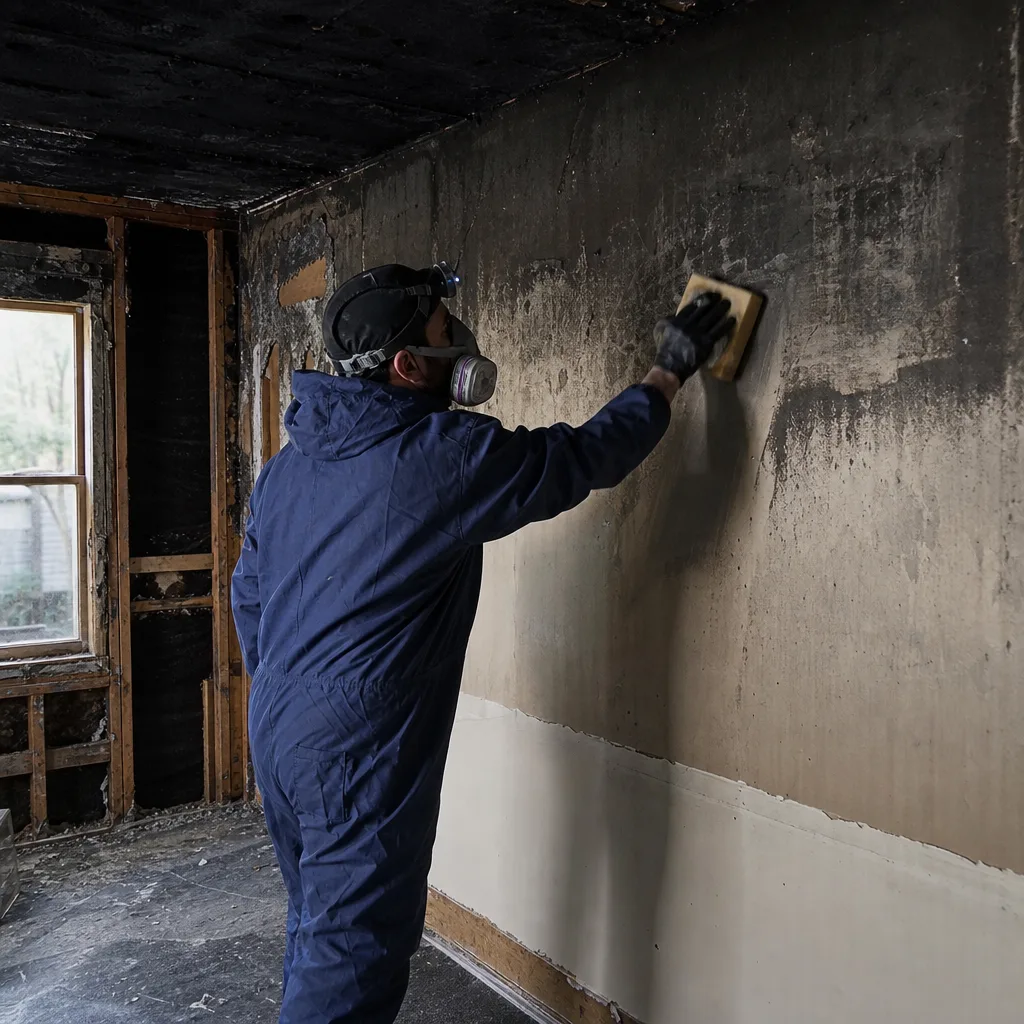
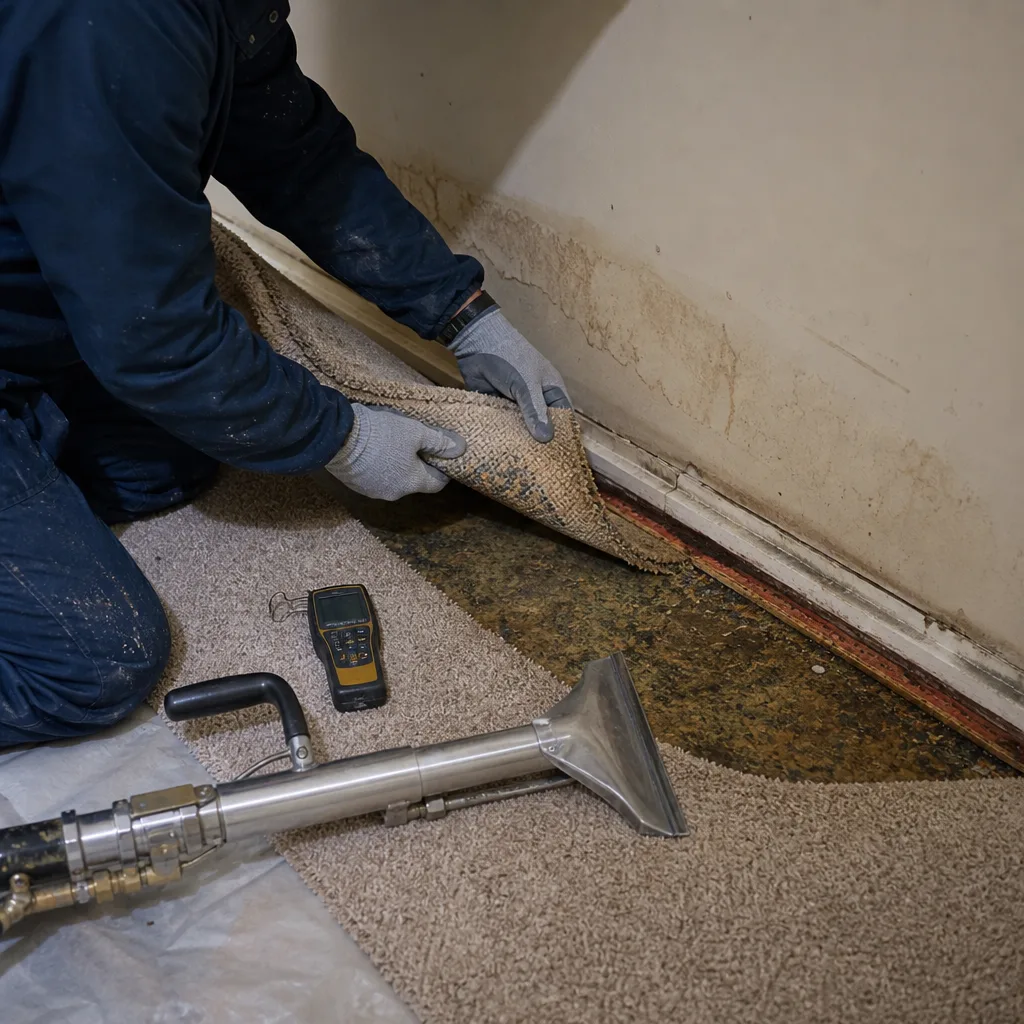
This is where Big Lake’s housing stock demands more than a standard dry-out. The OSB sheathing used throughout the 2000s commuter-rail boom absorbs moisture quickly and releases it slowly, especially in wall cavities that never see airflow. We calculate drying time using moisture-mapped readings, not guesswork. Dri-Eaz dehumidifiers and Phoenix air movers run continuously, and we return for daily readings until the dry standard is confirmed. You get the log. So does your adjuster. Mold can establish in those cavities within about 72 hours of a slow leak that goes undetected while a homeowner commutes to Minneapolis, so we don’t cut drying corners.
Flood Cleanup
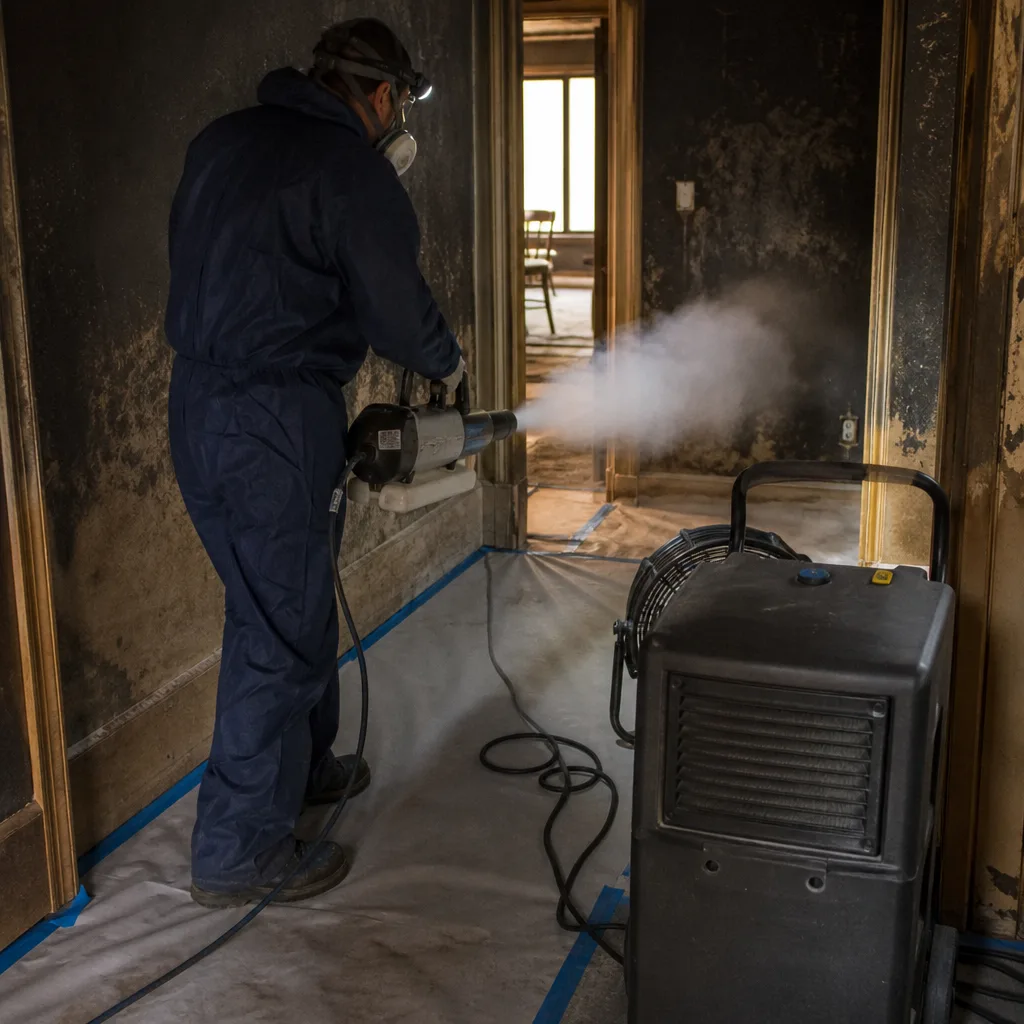
Big Lake’s shoreline properties face a recurring spring flood cycle that inland neighbors don’t. Ice-out on the lake, saturated glacial-outwash soils, and storm surge combine to push water into finished lower levels on the southern shore. Our flood cleanup work starts with extraction, moves through sanitizing and deodorizing, and ends with structural drying. On re-builds in the shoreline subdivisions, we spec mold-resistant drywall and elevated mechanical platforms rather than treating each event as a one-time loss. The crews that work those blocks every April already know what the water does there.
Burst Pipe Restoration
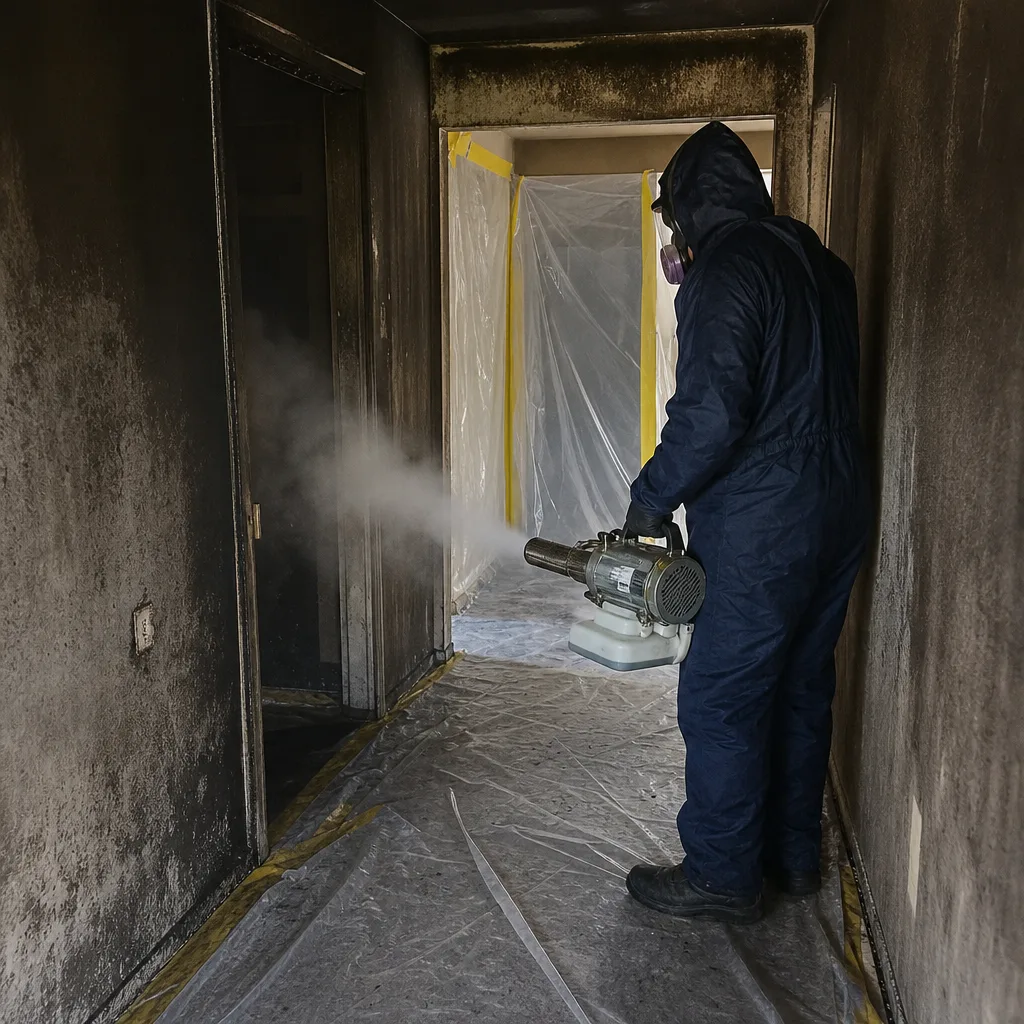
Minnesota winters are hard on supply lines, and Big Lake homes built in the 2000s often have plumbing run through uninsulated rim joists and exterior walls. When a pipe freezes and splits in January, the damage is usually discovered hours later and has already traveled through floor assemblies and wall cavities. Our burst pipe restoration includes source location, extraction, structural drying, and repair coordination. We also handle the insurance documentation from the first photo to the final invoice. A square deal, no surprises on the bill.
Basement Water Removal
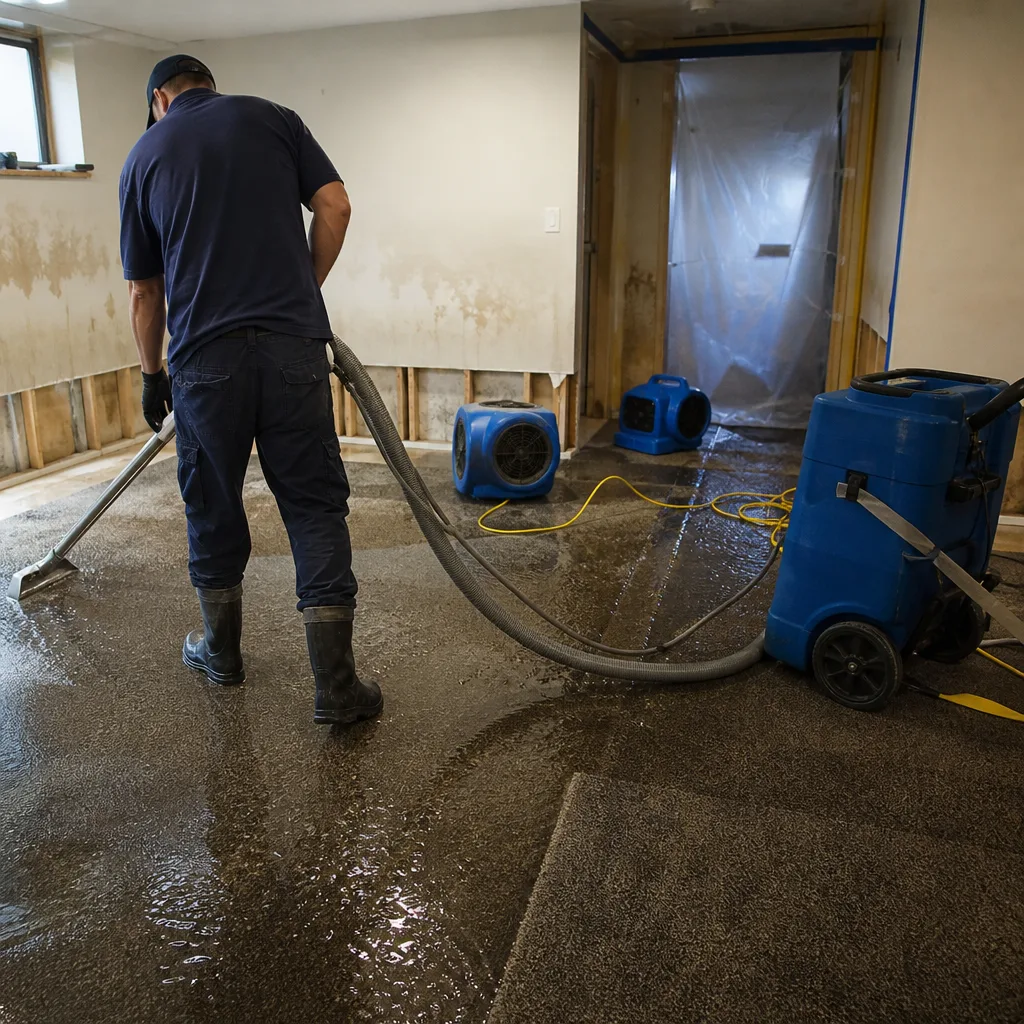
Basement seepage in Big Lake isn’t random. The sandy glacial-outwash soils under Sherburne County drain quickly but allow hydrostatic pressure to build fast during snowmelt. Water presses against foundation walls, finds the joint between footing and wall, and pushes in. We remove the water, dry the space, and identify what let it in. If the sump pump is sitting on the original low slab with an undersized discharge line, we tell you. Raising the pump and the discharge line above the seasonal high-water mark is sometimes the difference between a dry basement and another call next spring.
Ceiling & Roof Leak Water Damage
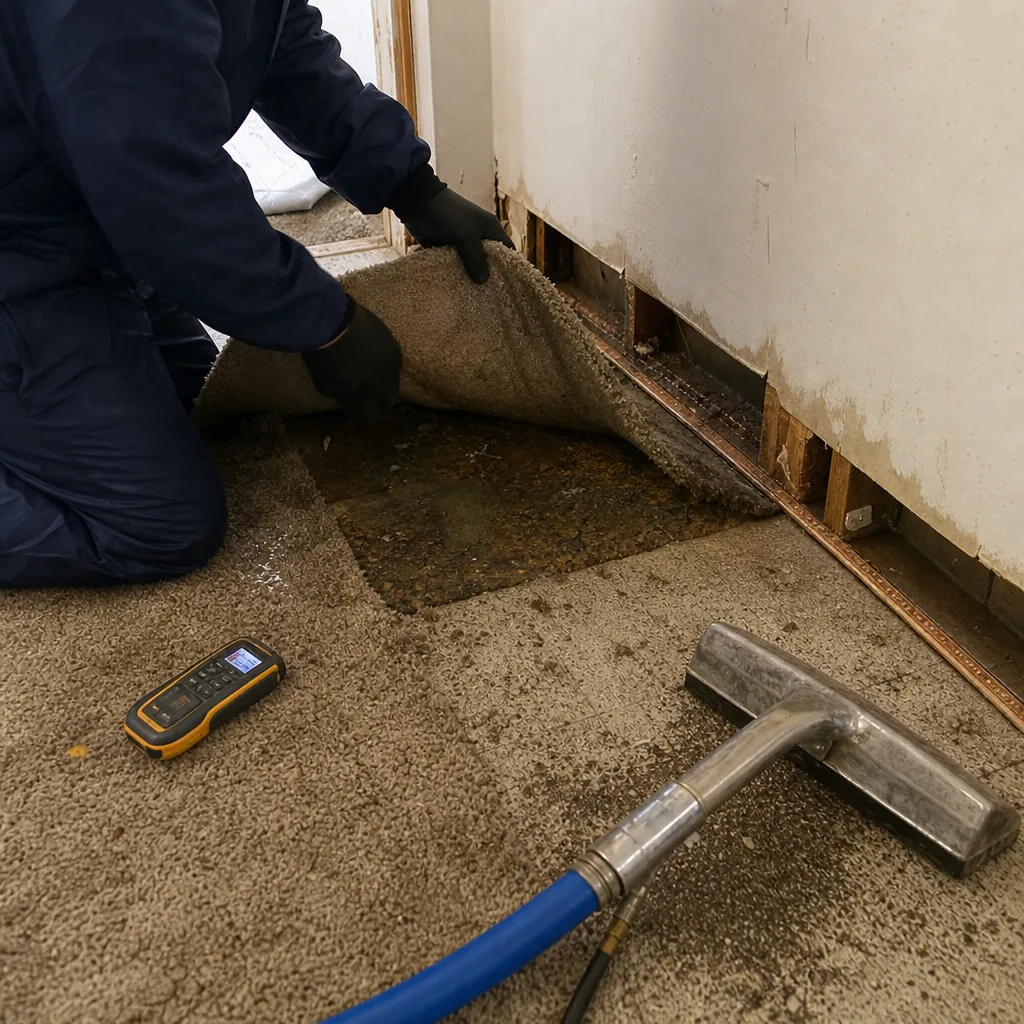
Big Lake’s low-pitched roofs on 2000s tract builds are prone to ice damming. Heat escapes poorly ventilated roof assemblies, melts snow at the upper roof, and refreezes at the cold eaves. Water backs up under shingles and finds its way into ceilings and wall cavities. Our ceiling and roof leak restoration includes extraction from the affected areas, cavity drying, and moisture verification before any drywall goes back. We won’t close a ceiling until the readings say it’s dry.
What happens when you call
- 1
A real person answersNo phone trees - you reach a local pro.
- 2
You get an upfront price rangeHonest numbers before anyone is dispatched.
- 3
A background-checked tech heads outLicensed & insured, dispatched right away.
- 4
You approve before work beginsNothing starts until you say go.
Trusted Brands We Service in Big Lake
The equipment we run in Big Lake homes isn’t rental-counter gear. We use Dri-Eaz, Phoenix, and B-Air drying systems, plus Injectidry floor-mat systems for hardwood and subfloor drying. Our techs train to IICRC and RIA standards on this equipment, and we stock the parts and consumables needed for the homes we see most: the 2000s colonials and ramblers with OSB sheathing and engineered-lumber floor systems. When we tell a Big Lake homeowner we can dry a floor in place rather than tear it out, it’s because we’ve done it on the same model of floor on the next block over.
Common Water Damage Restoration Problems We See in Big Lake Homes
- April lower-level flooding in shoreline subdivisions. Homes platted in the early 2000s on low-lying lots near the lake’s southern shore flood with enough regularity that experienced local crews know the blocks. We don’t treat these as one-time losses; we spec materials and elevations that survive the next spring.
- OSB wall cavities absorbing slow leaks for days. The sheathing in Big Lake’s 2000s-era tract homes wicks moisture fast and hides it well. A slow supply-line leak behind a kitchen cabinet can establish mold before a homeowner commuting to Minneapolis notices the smell. Speedy drying with commercial desiccants is the only way to prevent a much larger remediation job.
- Ice damming on low-pitched roofs. The rooflines common in the 2000-2015 builds are not well suited to Minnesota’s freeze-thaw cycle. Warm attic air melts snow that refreezes at the eaves, and the resulting water intrusion shows up as ceiling stains and wall-cavity moisture every winter.
- Sump pump failures during the March-April snowmelt. Hydrostatic pressure builds quickly in the sandy glacial-outwash soils under Big Lake, and pumps set on the original low slab get overwhelmed. Raising the pump and discharge line above the seasonal high-water mark is a spec we recommend on nearly every spring flood response we run in the 55309 zip code.
Pricing for Water Damage Restoration in Big Lake, MN
Water damage restoration pricing in Big Lake reflects the condition of the housing stock and the speed required to save it. Here’s what we see on the ground:
- Emergency water extraction: $700-$1,900 for a single affected room; $2,200-$4,800 for a finished lower level on a shoreline block.
- Structural drying (including daily monitoring): $1,100-$3,200 depending on the square footage and number of chambers. OSB-heavy builds run longer, which costs more.
- Flood cleanup with sanitizing and deodorizing: $2,500-$6,500 for a typical finished basement on the lake side of County Road 43.
- Burst pipe restoration: $1,600-$4,900 including extraction, drying, and insulation replacement in affected wall cavities.
- Basement water removal with sump pump correction: $1,400-$4,200. If the pump needs raising or the discharge line resizing, that’s scoped separately and agreed in writing before work starts.
Every job gets a written scope before our crew starts, and the price on that scope is the price. No upsell after the walls are open. Estimates are free. Call (888) 861-1852 for an exact quote on your Big Lake home. And remember the standing offers: $50 off any repair over $250, the $89 seasonal tune-up, and a 5% senior and veteran discount, always.
We Also Serve Cities Near Big Lake
Our Big Lake crews also run calls in Big Lake’s neighboring communities, including Monticello, Albertville, Elk River, and Otsego. If you live in one of those towns and water is moving through your house, the same live dispatcher answers the same phone number and sends the same certified team. We service the whole Sherburne County corridor, and we know which homes in each community need the fastest drying response.
Serving Big Lake, MN - Our Local Coverage Area
We’re based in the Big Lake area and know this community well. Use the map below to see our service coverage - if you’re nearby, we can almost certainly help.
FAQs - Water Damage Restoration in Big Lake
Because the flooding on those blocks is usually groundwater, not lake water. The glacial-outwash sandy soils under Big Lake drain fast, but they also let hydrostatic pressure build quickly during snowmelt. Water presses against foundation walls at the same time the lake’s ice is breaking up and ground saturation is peaking. Homes built on low-lying lots during the 2000-2015 growth boom have slab edges and crawl spaces that sit close to the seasonal high-water mark, so the pressure finds the path of least resistance: through the joint where footing meets wall, through the sump pit, through the slab edge. The lake doesn’t have to rise for those finished lower levels to flood. Call (888) 861-1852 if your basement is wet this spring; we’ll be there when we say.
The platted subdivisions along the southern shore, built in the early 2000s, are the blocks where we consistently spec mold-resistant drywall and elevated mechanical platforms on re-builds. Those homes sit low relative to the lake’s seasonal high-water mark, and they flood with enough regularity that standard gypsum board is a known future failure. In a 2007 colonial a block off the southern shore, our crew responded to finished lower level flooding after an April ice-out storm. We used Dri-Eaz dehumidifiers with Injectidry floor-mat systems to pull moisture from the OSB subfloor and wall cavities within 48 hours, then spec’d mold-resistant drywall and raised the furnace platform eight inches above the seasonal high-water mark. That’s the same approach we repeat every spring on those early-2000s lake-adjacent blocks.
Yes. The housing stock in Big Lake is newer on aggregate than Elk River’s mixed inventory, and the 2000s-era production builds used OSB sheathing and engineered lumber throughout. Those materials absorb moisture aggressively and release it slowly. Mold can establish in wall cavities within about 72 hours, and a homeowner commuting to Minneapolis may not notice the wet smell for days. Elk River has older homes with dimensional lumber that dries differently. Monticello has different soil profiles. We calculate drying time based on moisture-mapped readings and the materials we’re actually drying, not a one-size-fits-all formula. For an exact drying plan, call (888) 861-1852.
Ice damming on the low-pitched roofs common in the 2000s tract builds. Heat escapes through poorly ventilated roof assemblies, melts the bottom layer of snow on the roof deck, and the meltwater runs down to the cold eaves where it refreezes. The dam grows, water backs up under the shingles, and it finds its way into ceilings and wall cavities. It’s not a one-off weather event. It’s a design feature of the housing stock meeting a Minnesota winter. If you’re seeing ceiling stains in February, call (888) 861-1852; the water is already where you can’t see it.
Raise the pump and the discharge line above the seasonal high-water mark, and make sure the discharge runs far enough from the foundation that it doesn’t re-enter the footing drain. Most homes in Big Lake were built with the pump set on the original low slab, and during March-April snowmelt the hydrostatic pressure in the sandy glacial-outwash soils overwhelms the pump at the worst possible moment. We see it every spring. A pump raised on a proper base with a correctly sized discharge line is far less likely to fail during the groundwater spike. If you’re not sure how your pump is set, call (888) 861-1852 and we’ll assess it before the next thaw.
Big Lake Water Damage Help, Day or Night
Water in a Big Lake house is never a problem that improves with waiting. The OSB and engineered lumber in your walls and floors are already wicking moisture. The mold clock is running. Our dispatchers answer the phone at two in the morning with a live person, not a recording, and a certified crew can reach your Big Lake address fast. We handle extraction, drying, mold prevention, and rebuild with the same certified team, and we bill your insurance carrier directly. You get a written scope before work starts, a moisture log when the dry standard is met, and the 90-Day Done Right Promise in your hands at the end. That’s the Keystone Standard. Done right, and backed in writing.
Call (888) 861-1852 for a free estimate. A live person answers, every time.
Written by Curt Bowman, Owner at Floodline Restoration Co., serving Big Lake since our first shoreline flood response and every spring since.