

Fast, Reliable Storm & Disaster Restoration Across Saint Louis Park
When a storm tears through Saint Louis Park, the damage doesn’t wait. A microburst can peel back a low-pitch roof edge on a 1950s rambler in minutes. A March ice dam can send water pouring into a finished basement along Minnehaha Creek before you’ve finished your coffee. Our Storm & Disaster Restoration crews live and work in this metro, and we know exactly what Saint Louis Park homes do under wind load, freeze-thaw cycles, and spring snowmelt over clay-heavy soil. Calls are answered by a live person at (888) 861-1852, any hour, any day. When water is moving into your home, the clock starts before you hang up.
Why Floodline Restoration Co. of Minneapolis Is Saint Louis Park’s Preferred Storm & Disaster Restoration Company
Saint Louis Park homeowners tend to stay put. Many of our customers have owned the same rambler for twenty, thirty, sometimes forty years. They’ve watched contractors come and go. They want a name they can hold accountable, a crew that shows up when they say, and work that’s backed in writing. That’s who we are. Floodline Restoration Co. has been built around a dispatch board, not a sales desk, since Curt Bowman founded the company in 2010. We answer the phone with a person at two in the morning. We train our own technicians to IICRC, RIA, and IFA standards. We background-check every uniformed tech who steps onto a Saint Louis Park driveway.
Response time to Saint Louis Park is measured in minutes, not days. Our 24/7 dispatch coordinates crews serving Saint Louis Park directly, and our trucks carry professional-grade Dri-Eaz, Phoenix, XPOWER, B-Air, and Injectidry equipment from day one. More than that, we know this housing stock: low-pitched rooflines, aging footer drains, finished basements with no vapor barrier. We don’t arrive and guess. We arrive and read the moisture map.
Our Storm & Disaster Restoration Services in Saint Louis Park
Storm Damage Cleanup
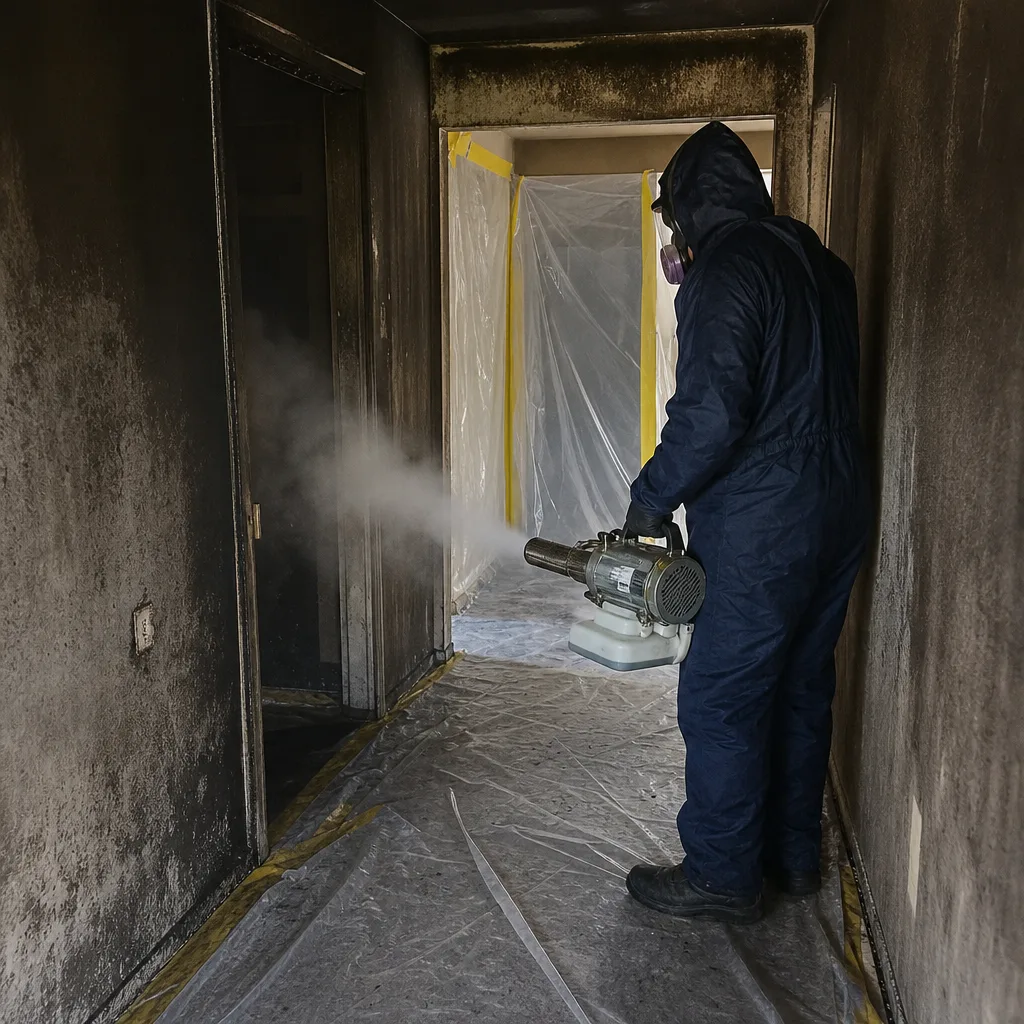
Storm debris, downed limbs, blown-in rain, and soaked drywall are the most common calls we get after a severe thunderstorm rolls across Saint Louis Park. This is not a rake-and-bag job. Storm damage in postwar homes here routinely hides water behind 1950s-era drywall and under original plank subfloor. Our crews document every wet surface, extract what needs extracting, and dry to the IICRC standard before Reconstruction & Cleanup in Saint Louis Park. A typical storm damage cleanup in Saint Louis Park runs $1,800 to $6,500 depending on the square footage affected and whether category-of-water loss dictates removal.
Flood Damage Restoration
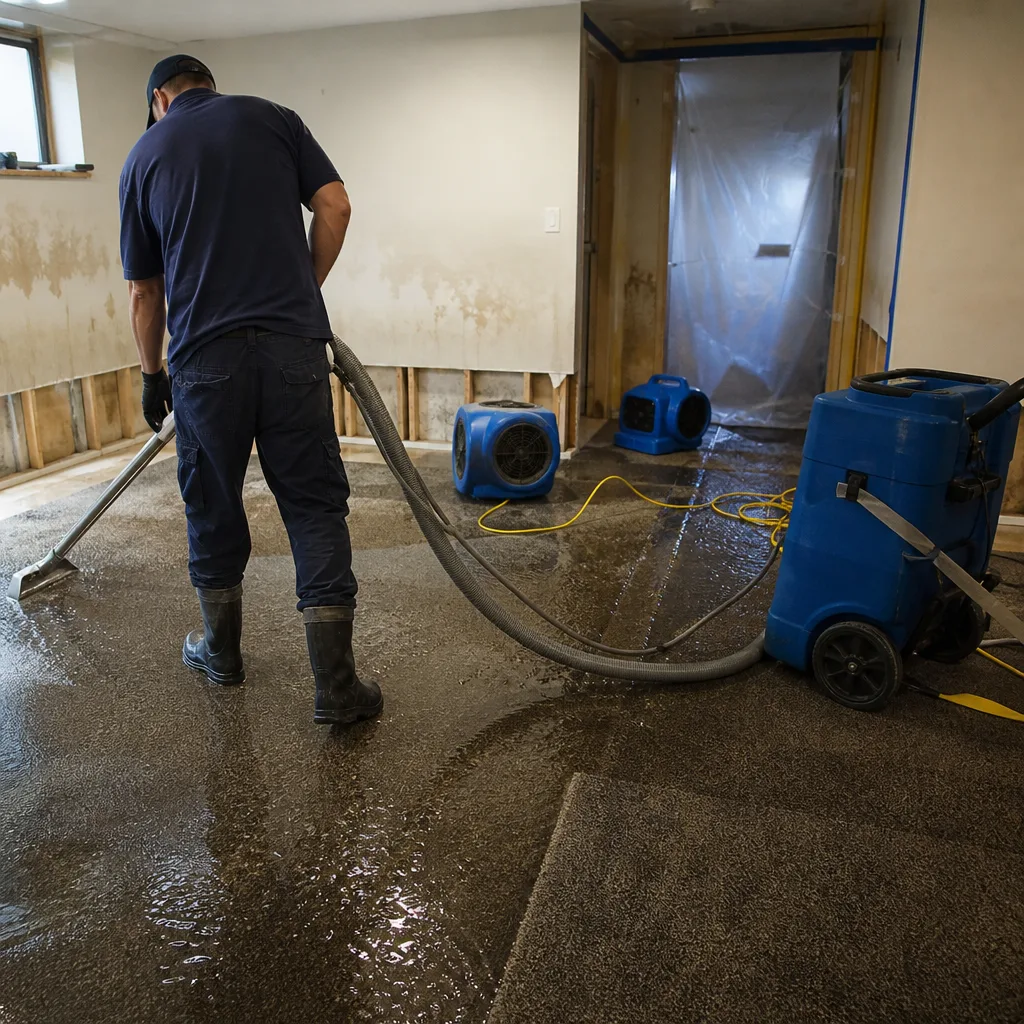
Spring snowmelt over Saint Louis Park’s clay-heavy soils creates real hydrostatic pressure. Basements along the Minnehaha Creek corridor and blocks in 55416 with aging footer drains flood almost cyclically. Our flood restoration process starts with category-of-water assessment, then extraction, structural drying, and moisture documentation logged daily until the dry standard is met, as part of our Water Damage Restoration in Saint Louis Park. Flood damage restoration in Saint Louis Park typically runs $3,500 to $12,000, with repeat-loss documentation built into the file for insurance carriers and future reference. We hand you the moisture log. Not a summary. The log.
Emergency Board-Up
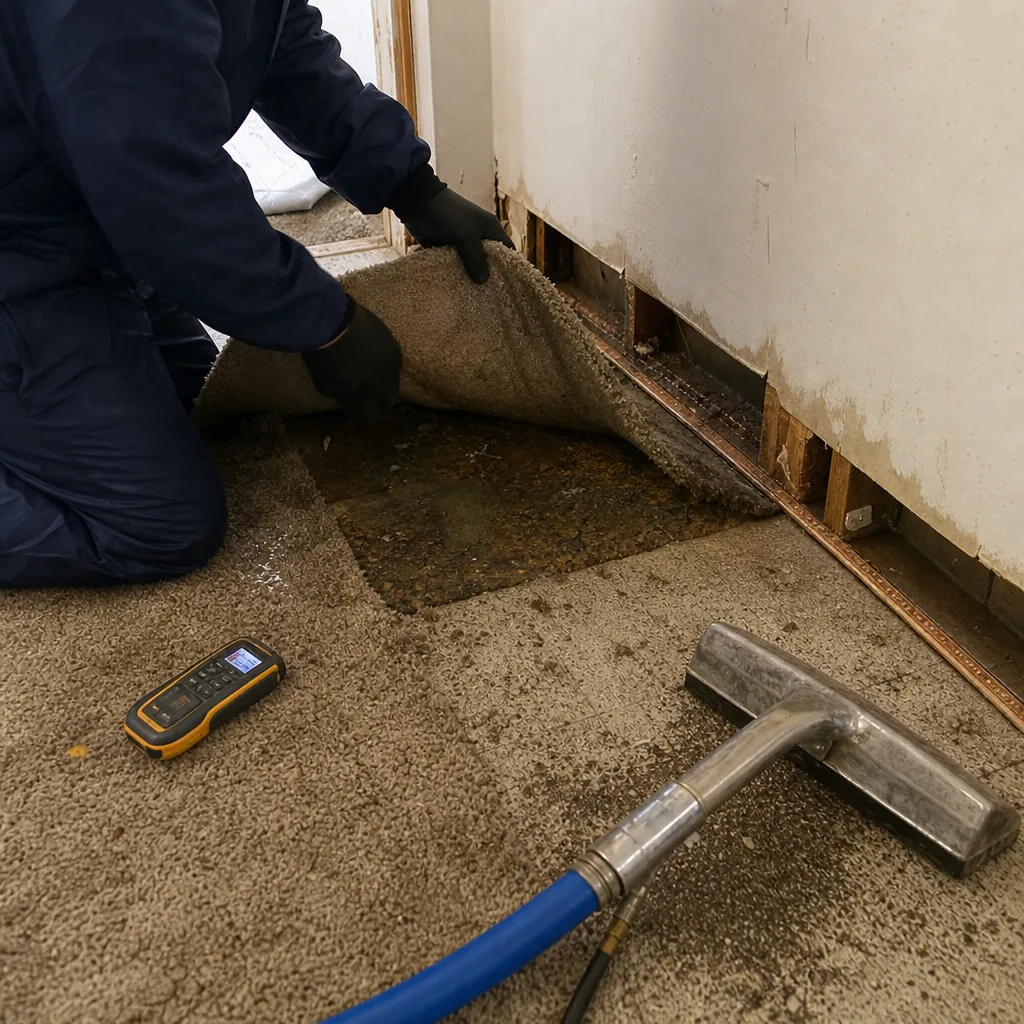
A punctured roof or a blown-in window on a Saint Louis Park Cape Cod needs to be secured before the next rain cell comes through. Our Storm & Disaster Restoration teams carry plywood and hardware for same-visit board-up after a wind event. We board, tarp, and photograph everything for your carrier. Emergency board-up in Saint Louis Park typically costs $450 to $1,200 depending on the number of openings and whether roof tarping is needed in the same visit.
Roof Tarping
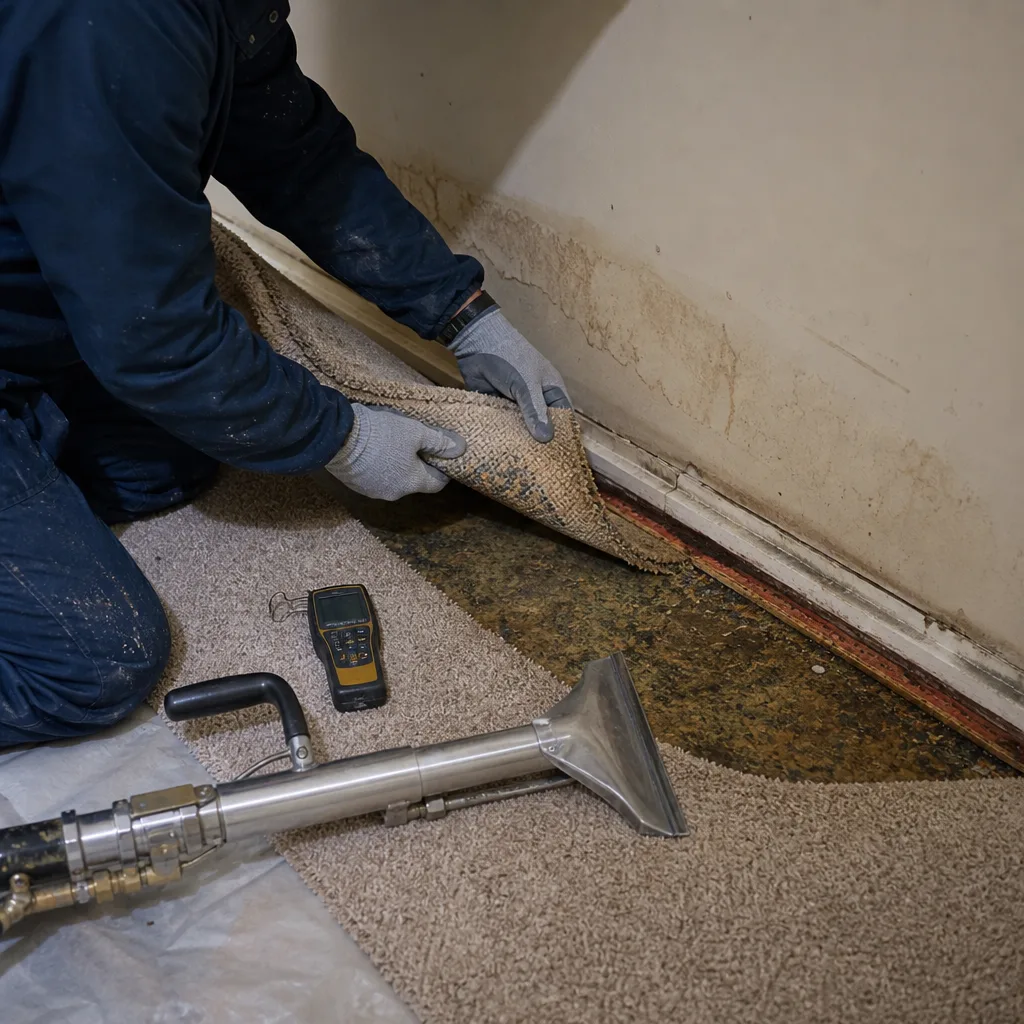
Saint Louis Park’s low-pitch rooflines are notorious for ice dam formation and wind-lifted edges. When a section of tar-and-gravel roof peels back in a March wind event, immediate tarping prevents interior water intrusion from getting catastrophically worse. Our roof tarping service covers exposed roof areas with heavy-gauge poly, secured to code and documented by photo. Roof tarping in Saint Louis Park runs $400 to $1,000 per section, with most jobs completed in a single visit.
What happens when you call
- 1
A real person answersNo phone trees - you reach a local pro.
- 2
You get an upfront price rangeHonest numbers before anyone is dispatched.
- 3
A background-checked tech heads outLicensed & insured, dispatched right away.
- 4
You approve before work beginsNothing starts until you say go.
Trusted Brands We Service in Saint Louis Park
We run XPOWER and B-Air drying equipment because we’ve seen them hold up on hundreds of Saint Louis Park jobs. Injectidry systems are in our trucks for the finished basement problems that are endemic to this area: water behind drywall that won’t dry without mat suction and negative-pressure drying. Our local parts stock and quick restocking through Minneapolis-area suppliers means we’re not waiting on a shipment when you need a second air mover. Same equipment, same standards, same crew from first extraction to finished rebuild.
Common Storm & Disaster Restoration Problems We See in Saint Louis Park Homes
- Wind-rated door and garage-door vulnerability on postwar ramblers. Many homes along Texas Avenue and Louisiana Avenue still have original hollow-core doors that bow inward during microbursts and admit driven rain. We see this almost exclusively on ramblers and split-levels built between 1947 and 1968.
- Basement envelope failure after a single sump failure. Finished lower levels in Saint Louis Park were often added without vapor barriers or professional moisture mitigation. Water that enters behind drywall from a sump pit overflow doesn’t show itself for days. By then, mold is established behind the wall.
- Clay-heavy soil saturation along the Minnehaha Creek corridor. In the 55416 zip code, spring thaw saturates the clay, and hydrostatic pressure overwhelms aging footer drains. Blocks near the creek flood repeatedly, which is why long-term moisture documentation matters so much for repeat customers.
- Asbestos-containing materials in postwar construction. Original floor tiles, pipe insulation, and even drywall joint compound from the late 1940s through 1960s often contain asbestos. When storm water contacts these materials, proper assessment protects the occupants and the dry standard.
Pricing for Storm & Disaster Restoration in Saint Louis Park, MN
Here’s what we see on the ground in Saint Louis Park. Emergency board-up: $450 to $1,200. Roof tarping: $400 to $1,000 per section. Storm damage cleanup: $1,800 to $6,500. Flood damage restoration with full structural drying: $3,500 to $12,000. Those are real ranges, not placeholder numbers. What moves the number is square footage, category of water, whether hidden moisture demands wall opening, and whether asbestos assessment is required on original postwar materials. We give a written scope before work starts. No surprises on the bill. Call (888) 861-1852 for a free estimate, and mention our standing offers: $50 off any repair over $250, or the Senior & Veteran 5% discount, always available.
We Also Serve Cities Near Saint Louis Park
Our crews serve the broader metro from their dispatch center, so when you call from Minneapolis, Edina, Richfield, or Crystal, you get the same live phone answer and the same fast response. The 90-Day Done Right Promise applies to every job we do, whether it’s a flooded rambler in 55416 or a tarped roof two exits away. If you’re in one of those neighboring cities and need storm restoration, call the same number: (888) 861-1852.
Serving Saint Louis Park, MN - Our Local Coverage Area
We’re based in the Saint Louis Park area and know this community well. Use the map below to see our service coverage - if you’re nearby, we can almost certainly help.
FAQs - Storm & Disaster Restoration in Saint Louis Park
Because the clay-heavy soils along the Minnehaha Creek corridor saturate quickly during spring thaw, and the hydrostatic pressure pushes groundwater up through aging footer drains and sump pits. Homes in these blocks, particularly postwar ramblers and split-levels from the 1947-1968 era, often have finished basements without modern waterproofing, so water finds a way in. We respond to repeat flood calls on certain creek-corridor blocks almost every significant spring thaw. If that’s your block, call (888) 861-1852 and ask for long-term moisture documentation before the next big thaw.
Walk your exterior doors during the next good wind. If a hollow-core door bows inward under load, or if you can see daylight around the frame, driven rain is getting past it. On postwar ramblers in Saint Louis Park, original door jambs are often out of square, and wind-rated replacement requires re-hanging the frame, not just swapping the slab. We do wind-rated door reinforcement and replacement as part of our broader Storm & Disaster Restoration scope. A visible gap is the tell. Call us for an in-person assessment.
In Saint Louis Park’s finished postwar basements, water from a sump overflow moves behind the drywall and saturates the insulation and stud cavity. Without vapor barriers, that hidden moisture doesn’t dry on its own, and mold establishes within 48 hours. Simply setting up fans and calling it done leaves an active contamination problem behind the wall. That’s why our process includes moisture mapping, opening affected wall sections when the data says so, and documenting daily readings until the dry standard is met, with full Biohazard & Crime Scene Cleanup - Saint Louis Park protocols when contamination is present.
Saint Louis Park follows Minnesota Building Code requirements, which include structural and wind-load provisions for roof repairs and exterior door replacement. However, code minimums don’t address the specific failure mode we see most: original hollow-core doors and low-pitch roof edges that predate modern wind standards. Our documentation and repair scope reflect what the city expects for compliance. We’ll pull the permit if the scope requires it, and we’ll write the scope so your carrier sees exactly what was done and why.
A garage door that rattles, bows, or doesn’t track square is a liability during a microburst. When wind blows a garage door out of track on a Saint Louis Park rambler, the pressure differential can pop the door into the living space or peel back roof edges around it. We see this pattern mainly on original wood garage doors from the 1950s and 60s. Reinforcing or replacing the door before storm season is a lot cheaper than board-up and interior water cleanup after. Call (888) 861-1852 for a straight assessment.
Written by Curt Bowman, Owner at Floodline Restoration Co. of Minneapolis. We serve Saint Louis Park with the 90-Day Done Right Promise - in writing, no arguing.