

Fast, Reliable Storm & Disaster Restoration Across Lakeville
Storm damage in Lakeville, MN typically requires emergency response within hours, not days. Wind-driven rain, hail, and ice dams hit the city’s 1990s and 2000s housing stock hard, and the damage spreads fast once moisture finds its way behind vinyl siding or into finished basements. Our Storm & Disaster Restoration crews respond to Lakeville within 60-90 minutes with pumps, air movers, and board-up materials already on the truck. Call (888) 861-1852 and a live person picks up, day or night.
Key Takeaways
- Storm cleanup and board-up in Lakeville runs $450-$1,200 for emergency response alone; full restoration after wind or water intrusion averages $4,000-$14,000 depending on wall-cavity mold and finished basement scope.
- Homes built during Lakeville’s 1993-2008 boom often hide moisture behind OSB sheathing for months before you see staining on the drywall.
- Wind-rated exterior doors that fail during one storm will fail worse during the next one. Board-up buys time; proper reinforcement prevents a second loss.
- Every job is backed by the 90-Day Done Right Promise, in writing, with direct insurance billing handled by our office, not by you playing messenger.
Why Floodline Restoration Co. of Minneapolis Is Lakeville’s Preferred Storm & Disaster Restoration Company
Lakeville homeowners call us because we’ve spent 42 years in this region learning how Dakota County weather treats a house. We know what happens on Dodd Road when a straight-line wind event hits, what ice damming does to the steep pitches around Spirit of Brandtjen Farm, and what a finished basement off Kenwood Trail looks like after sump failure during spring melt. That local knowledge means our crews show up knowing what to look for behind the siding, not just what’s visible on the living room wall.
Background-checked, uniformed technicians respond from our Minneapolis-St Paul dispatch office with IICRC, RIA, and IFA training and professional-grade Dri-Eaz, Phoenix, and XPOWER equipment. Every call reaches a live dispatcher at 2 a.m. the same way it does at 2 p.m. When our crew arrives in Lakeville, extraction is running the same visit, moisture readings are logged from day one, and the homeowner keeps a copy of that log until the dry standard is met.
Our Storm & Disaster Restoration Services in Lakeville
Storm Damage Cleanup
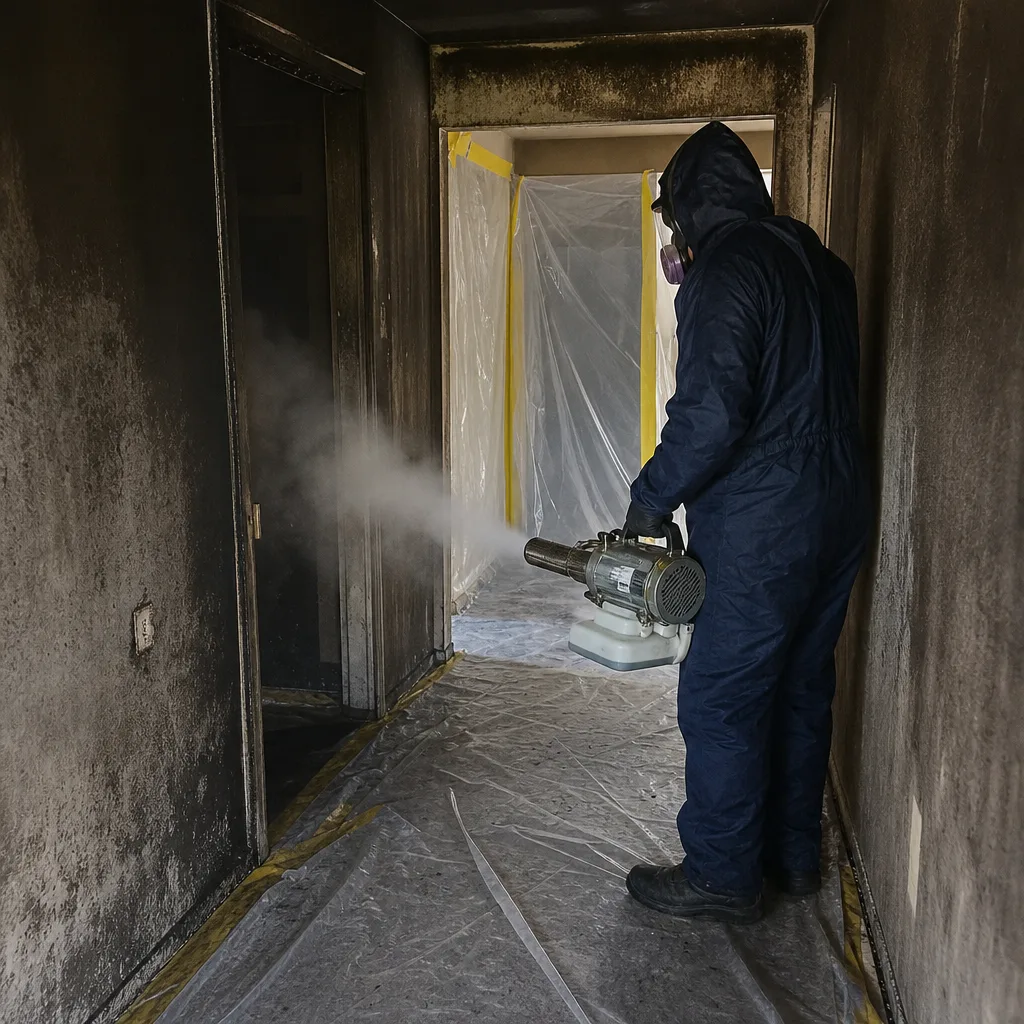
Wind, hail, and rain events in Lakeville leave debris, broken glass, and saturated carpet. Most emergency cleanups here run $450-$1,200 for the first response, and that includes board-up materials, initial water extraction, and equipment placement. Because Lakeville’s 1990s-era homes often have finished lower levels, we prioritize drying the wall assembly and the subfloor before that water migrates into the basement ceiling below.
Flood Damage Restoration
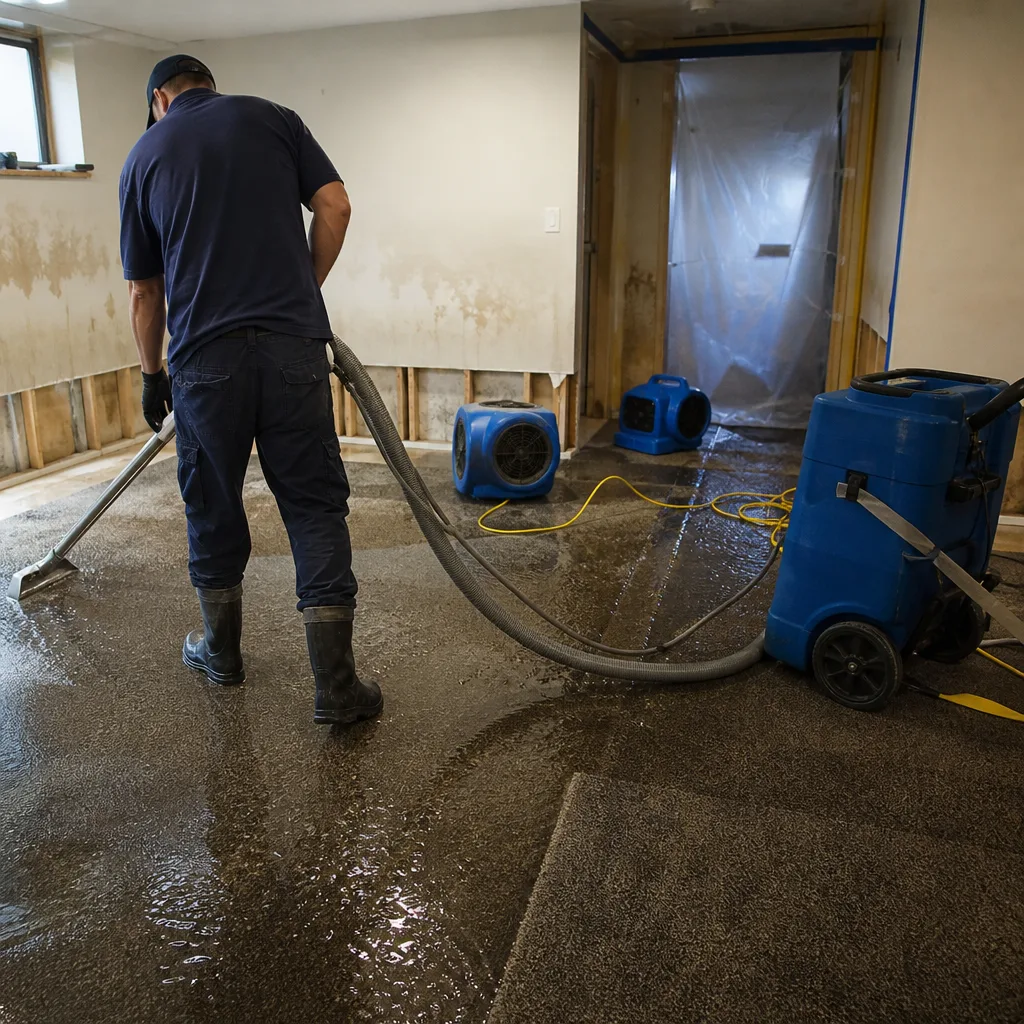
Spring snowmelt on frozen ground overwhelms sump systems across Lakeville’s low-lying and lake-adjacent neighborhoods every March. A failed pump in a home off Cedar Avenue doesn’t mean a damp utility room. It means standing water in a finished family room, saturated carpet pad, and baseboards wicking moisture into drywall. Flood restoration here runs $3,500-$11,000 depending on how far the water traveled and whether your home is in the 55044 zone’s lower-lying sections. We use Phoenix and Dri-Eaz dehumidifiers, XPOWER air movers, and Injectidry drying mats on hardwood and subfloor assemblies.
Emergency Board-Up
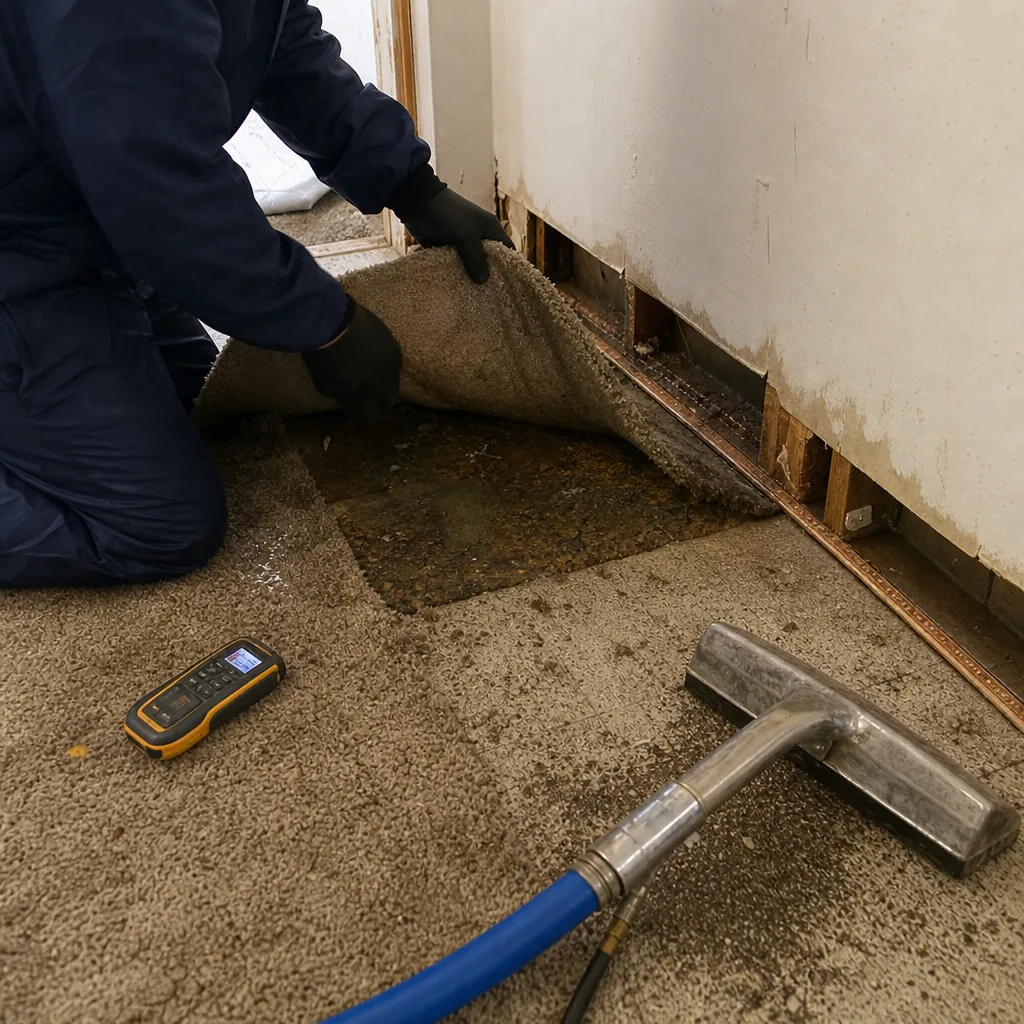
When wind tears a patio door off its track or a tree limb goes through a window off Highview Avenue, the opening needs secured before the next rain cell moves through. Emergency board-up in Lakeville runs $350-$800 per opening and includes plywood cut on site, fastened to IICRC stabilization standards, and documented with photos for your carrier. We always check the surrounding wall framing for wind-driven water intrusion while we board up, because the same wind that broke the glass often forced rain behind the siding above it.
Roof Tarping
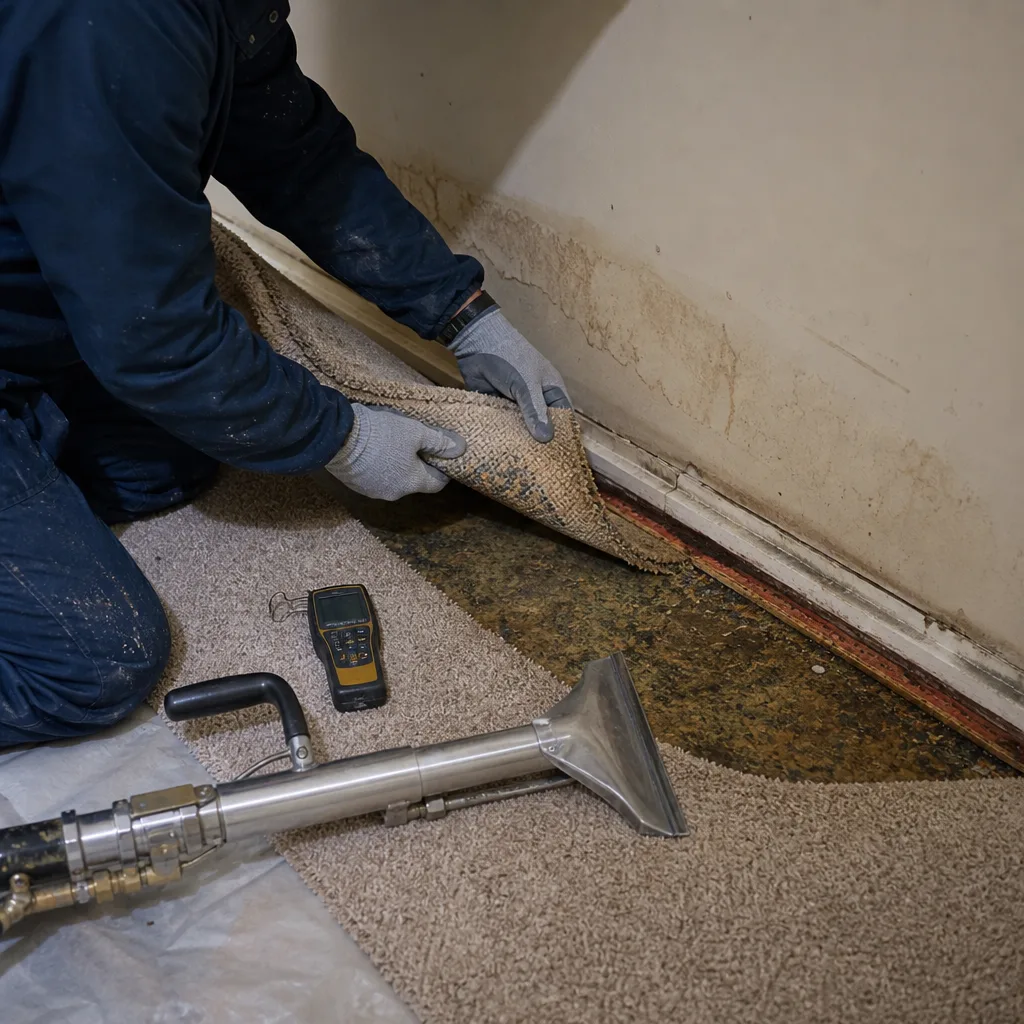
Hail and straight-line winds damage roofs all along the Minnesota River corridor in summer. Lakeville’s steep-pitched suburban roofs make tarping harder than the flatter roofs in older parts of the Twin Cities, and a bad tarp job in January means ice dams freeze-thaw the tarp itself. Roof tarping here runs $600-$1,500 for a typical residential repair, and we use engineered anchoring rather than just cap nails because we know what Lakeville winter does to a loose edge. We also scope the attic and wall assembly below the damaged section for hidden water, because a leak at the roof doesn’t stay at the roof.
What happens when you call
- 1
A real person answersNo phone trees - you reach a local pro.
- 2
You get an upfront price rangeHonest numbers before anyone is dispatched.
- 3
A background-checked tech heads outLicensed & insured, dispatched right away.
- 4
You approve before work beginsNothing starts until you say go.
What a Failing Door Means Before the Storm - and After It
Most Lakeville homeowners don’t think about wind-rated exterior doors until one fails. During severe weather, an impact-rated door that won’t latch or seal becomes a wind tunnel: pressure differentials drive rain through the threshold, down the framing, and into the finished basement below. In Lakeville’s 1990s tract homes with finished lower levels, that means a door issue at dusk becomes a Category 1 water loss in the family room by midnight. After the storm, we inspect door framing, jamb anchors, and threshold flashing to confirm the opening is wind-ready for the next event, not just patched until it fails again.
Common Storm & Disaster Restoration Problems We See in Lakeville Homes
- OSB sheathing that holds moisture for months. Homes built along the Dodd Road corridor in the late-1990s and early-2000s boom used OSB wall sheathing behind vinyl siding with minimal drainage plane detailing. Wind-driven rain or ice dam water wets that sheathing, and because there’s no gap for drainage, it stays wet long after the storm passes. Mold is often active behind the siding before any staining shows inside.
- Finished basements that turn a small sump failure into a full restoration. Lakeville’s housing stock from the 1993-2008 boom almost universally included finished lower levels. One failed sump during spring snowmelt in a neighborhood off Dodd Road or near Spirit of Brandtjen Farm means carpet, pad, drywall, and trim in a finished living space, not a damp concrete corner.
- Wind-damaged doors that get re-latched instead of re-anchored. A door that blew open once will blow open again with more force. Lakeville’s severe summer storms routinely expose door frames that were never properly shimmed or anchored to wind-rated standards, especially in homes built during the fastest phases of the boom when inspection volume outpaced attention to flashing details.
- Spray-foam homes that hide moisture until it smells. Newer construction in Lakeville’s southern and eastern growth corridors, 2010s to present, often uses spray-foam insulation and tight building envelopes. When wind or hail breaches the exterior, that tight envelope traps moisture inside the wall cavity, and hidden mold accelerates before you ever see a stain. We scope these walls with moisture meters and IICRC S520 protocols rather than waiting for visible damage.
Pricing for Storm & Disaster Restoration in Lakeville, MN
Storm restoration pricing in Lakeville reflects the city’s specific housing stock. Emergency response (board-up, tarping, initial extraction) runs $450-$1,500. Full flood or storm restoration with wall-cavity drying runs $4,000-$14,000. Here’s what we typically see across the 55044 service area:
- Emergency board-up per opening: $350-$800
- Roof tarping, typical residential: $600-$1,500
- Storm water extraction and drying (single room): $1,800-$3,500
- Full finished basement flood restoration: $5,000-$14,000
- Wall-cavity mold remediation after wind-driven rain hidden behind OSB: $2,500-$8,000 depending on how far the moisture traveled through the wall assembly
Every job gets a written scope before work starts. No surprises on the bill. We bill your insurance carrier directly and send photos and daily moisture readings to your adjuster, so you’re not the one chasing paperwork. Estimates are free. Call (888) 861-1852.
Trusted Brands We Service in Lakeville
Lakeville homeowners call us about storm damage to all major exterior door and window lines, including Andersen, Pella, Marvin, and Therma-Tru, plus vinyl siding systems from CertainTeed, Mastic, and Alside. We stock common repair components for Lakeville’s 1990s tract homes, so board-up and temporary repair happens the same visit rather than after a parts run. For drying, we run Dri-Eaz LGR 7000XLi dehumidifiers, Phoenix 200s, XPOWER air movers, and Injectidry systems on wood floors and cavity drying.
How a Lakeville Storm Restores Differently Because of the Housing
Here’s the piece that matters for anyone in the 55044 ZIP. Lakeville experienced one of Minnesota’s most explosive suburban growth booms from roughly 1993 through 2008. That means the city’s housing stock is now hitting the 15-30 year mark simultaneously, which is exactly when original sump pumps fail, waterproofing membranes degrade, and OSB sheathing shows its vulnerability to moisture. And because finished basements were standard in virtually every home built during that boom, a single sump pump failure during spring snowmelt doesn’t mean a wet utility room. It means a fully finished living space requiring complete Category 1/2 restoration. Average job scope and cost in Lakeville runs considerably higher than in older Twin Cities suburbs with less uniformly finished lower levels.
The hidden problem is behind the siding. Homes built along Dodd Road and around developments like Spirit of Brandtjen Farm often used OSB wall sheathing behind vinyl siding with minimal drainage plane detailing. When ice dam water or window flashing failures wet that sheathing, it holds moisture for months and can harbor mold colonies well before any visible interior staining appears. That’s why restoration scopes routinely expand significantly once walls are opened, and why a cheap fix that ignores the wall cavity turns into a second claim six months later.
After a July 2023 straight-line wind event, our crew responded to a home off Dodd Road near Lakeville North High School where wind-driven rain had saturated the OSB behind vinyl siding. We removed the siding, set Dri-Eaz LGR 7000XLi dehumidifiers and XPOWER AX-60 air movers to dry the wall assembly, then scoped for mold using IICRC S520 protocols. The sheathing needed replacement, but we saved the framing and avoided a full interior tearout. That’s the difference between a restoration company that knows Lakeville’s walls and one that only sees the water on the floor.
How Much Does Storm Damage Cleanup Cost in Lakeville, MN?
A typical storm damage cleanup in Lakeville runs $450-$1,200 for first response and $1,800-$3,500 per affected room once drying equipment and labor are included. Board-up adds $350-$800 per opening, and roof tarping runs $600-$1,500 for a typical home. The biggest cost driver in Lakeville specifically is hidden wall-cavity moisture behind OSB sheathing, because what looks like a simple siding repair often requires opening the wall, drying the cavity, and treating mold before closing it back up.
We Also Serve Cities Near Lakeville
Our crews cover the entire southern metro, including Storm & Disaster Restoration in Lakeville and the surrounding communities. We regularly respond to storm events in Burnsville, Farmington, Apple Valley, and Savage, arriving with the same equipment, the same 24/7 live dispatch, and the same written scope before we start.
Serving Lakeville, MN - Our Local Coverage Area
We’re based in the Lakeville area and know this community well. Use the map below to see our service coverage - if you’re nearby, we can almost certainly help.
FAQs - Storm & Disaster Restoration in Lakeville
Lakeville requires wind-rated doors because the city’s severe summer storms and freeze-thaw cycles put enormous pressure on exterior openings. To check yours, look for a label on the door edge or frame showing a design pressure (DP) rating, typically DP-35 or higher for this part of Dakota County. A door that’s lost its rating, or one that was never properly anchored during a fast boom-era installation, will fail during the next straight-line wind event. If you’re unsure whether your door is wind-rated, call (888) 861-1852 and we’ll check it while we’re on site.
Call before you touch it. Wind-exposed OSB in Lakeville’s 1990s-era homes wicks moisture fast, and the sheathing behind that open section is likely already saturated from wind-driven rain. The immediate step is emergency board-up or a temporary weather barrier to stop further water intrusion, then moisture mapping and cavity drying. Waiting even a few days in Lakeville’s humid summer air lets mold get established behind the siding. Call (888) 861-1852 and a crew responds to Lakeville the same visit.
Yes. Lakeville’s 1993-2008 growth boom standardized finished basements across nearly every new build, so a single sump failure or wind-driven water intrusion reaches finished living space rather than a bare utility room. Carpet, pad, drywall, trim, and sometimes cabinetry all come into scope. That’s why average restoration costs in Lakeville run higher than in older Twin Cities suburbs with unfinished lower levels, and why drying the wall assembly properly matters more here than almost anywhere else in the metro.
Lakeville’s January-March ice dam season repeatedly freezes and thaws the roof surface. A standard tarp nailed down with cap nails shifts under that cycle, the edges lift, and water gets underneath, creating a new leak path where the tarp was supposed to stop the old one. Proper roof tarping on Lakeville’s steep pitches requires engineered anchoring and sealing at the perimeter, plus regular re-inspection until the permanent roof repair is scheduled. We tarp for Lakeville’s winter, not for a dry week in July.
Look for musty odors, bubbling paint, or soft drywall near the exterior walls, especially on the windward side of the house. Spray-foam insulation in Lakeville’s newer construction creates a tight building envelope that traps moisture when wind or hail breaches the exterior, and the first sign is often smell rather than stain. Hidden mold accelerates inside the wall cavity before it ever reaches the visible drywall surface. If you smell something after a wind storm, call (888) 861-1852 for a moisture inspection rather than waiting for the stain to show.
For a free estimate on storm damage cleanup, flood restoration, emergency board-up, or roof tarping in Lakeville, call Floodline Restoration Co. of Minneapolis at (888) 861-1852. A live person answers, day or night. We’ll be there when we say, and we’ll stand behind the result in writing.
Written by Curt Bowman, Owner at Floodline Restoration Co., serving Lakeville and the surrounding southern metro.