

Storm & Disaster Restoration in Buffalo, MN: Fast Response When Weather Turns Against You
Storm damage in Buffalo rarely announces itself politely. A January thaw pushes meltwater under your shingles. An April rain-on-snow event swells the Crow River and the water table climbs into your finished basement. When it happens, you need a crew that knows exactly what they’re walking into, because Buffalo’s lake-and-river geography creates failure patterns that drier Wright County towns never see. Floodline Restoration Co. answers the phone with a live dispatcher at 2 a.m., and our certified crews reach Buffalo homes fast, with extraction equipment running the same visit. Call (888) 861-1852 any hour. We’ll be there when we say.
Why Buffalo Homeowners Call Floodline Restoration Co. First
We’ve spent years working Buffalo’s 55313 zip code, from the Lake Ridge subdivisions off Pulaski Road to the older downtown blocks near Buffalo Lake’s north shore. That matters, because storm restoration here isn’t a generic water extraction job. The hydrostatic pressure profile around Buffalo Lake and the South Fork of the Crow River changes how basements fail, how fast water rises, and what it takes to dry a structure properly. A tech who’s never worked a lake-tier walkout will misdiagnose a cold-joint seep as a surface leak. Ours don’t.
We’re a full-cycle Storm & Disaster Restoration company, which means the crew that extracts the water is the same background-checked crew that dries your framing, logs moisture readings daily, and rebuilds what needs rebuilding. No handoff to a stranger. No playing messenger between your insurer and a subcontractor. Customers in Buffalo repeatedly tell us the same thing: they’d rather deal with one name they can hold accountable. We stand behind that name, in writing, with our 90-Day Done Right Promise.
Our Storm & Disaster Restoration Services in Buffalo
Flood Damage Restoration
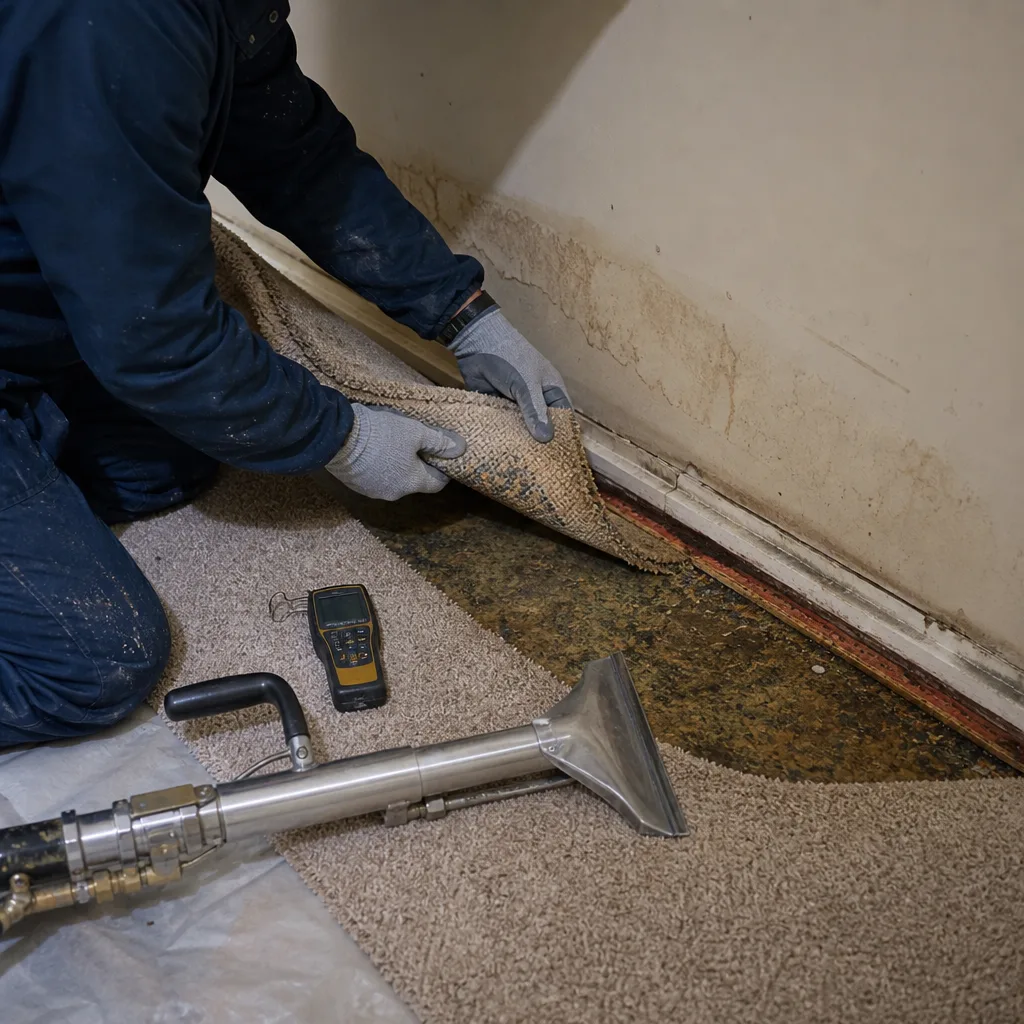
Flood damage in Buffalo splits into two distinct problems. Lake-tier homes on Buffalo Lake fight year-round groundwater pressure that pushes water through block walls and floor joints. River-corridor properties near the South Fork of the Crow River absorb spring flood surges carrying silt, mud, and debris. Our techs routinely move between both in the same week. We extract standing water with professional-grade equipment, then dry the structure to a documented standard, logging daily moisture readings until the dry standard is met. That log goes to you and your carrier, in writing.
Storm Damage Cleanup
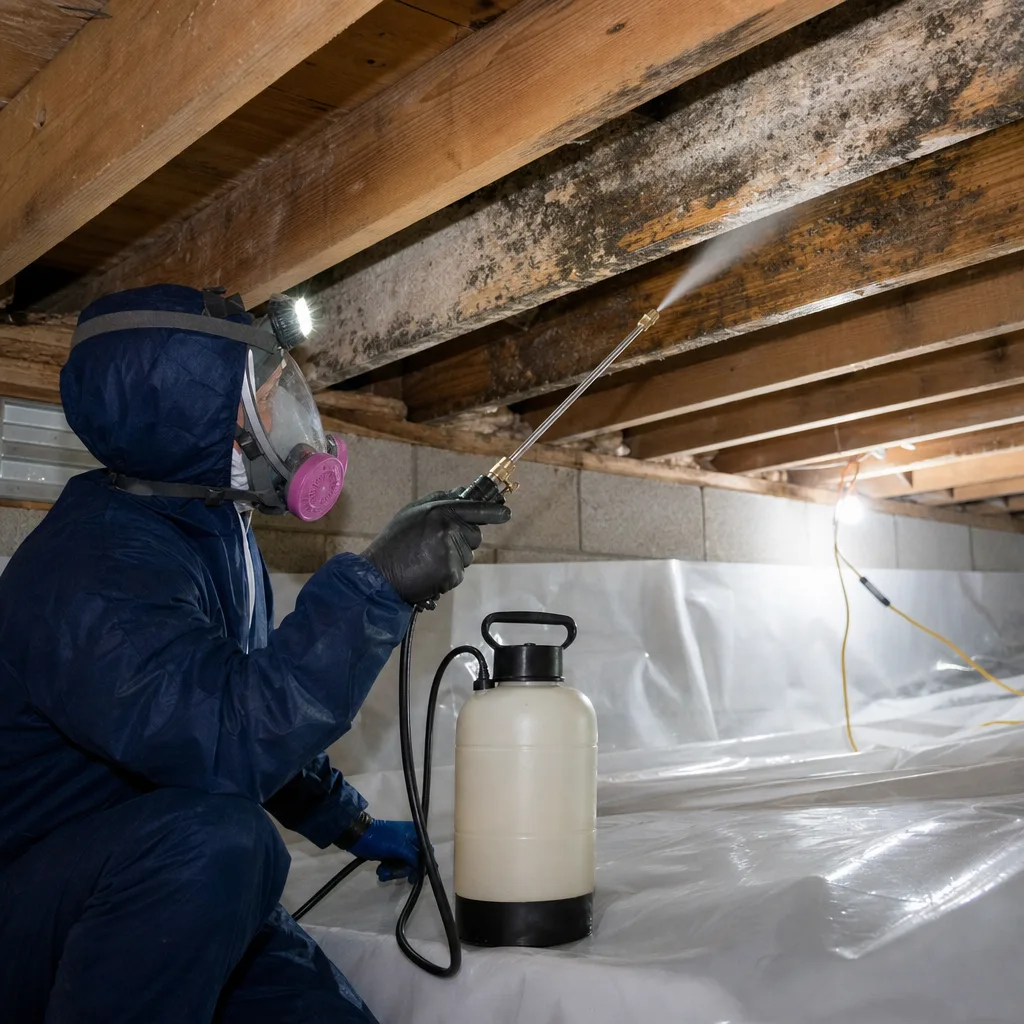
When wind tears a branch through a window or a downburst strips shingles off a low-pitched 1990s tract roof, the mess doesn’t wait for business hours. Neither do we. Storm damage cleanup in Buffalo means securing the opening, removing waterlogged drywall and insulation before mold gets established, and drying what remains. Our crews are uniformed, background-checked, and trained to IICRC standards. You’ll know who’s in your home and what they’re doing at every step.
Emergency Board-Up
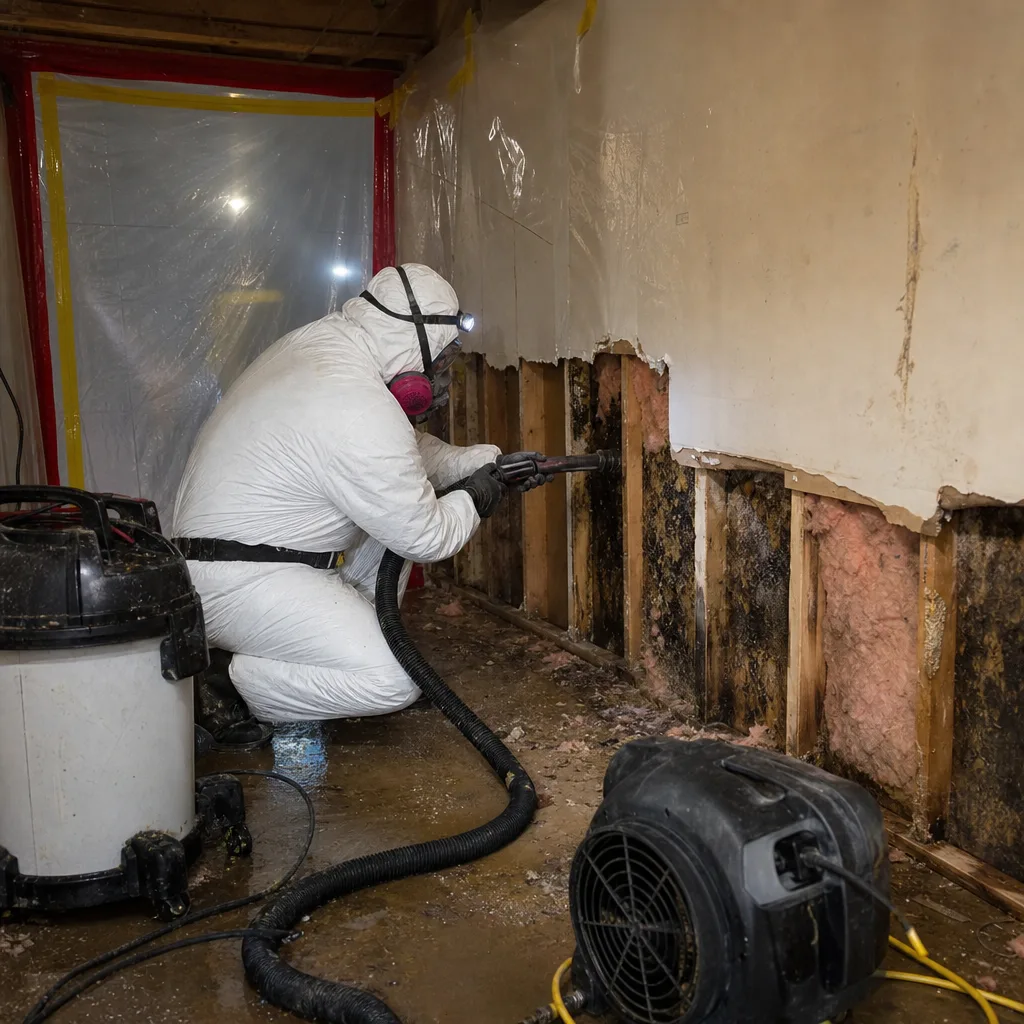
A broken window or compromised door is an open invitation: rain, animals, squatters, and opportunistic theft. Emergency board-up in Buffalo stabilizes the opening within hours, not days. We use professional-grade materials and secure the property so the damage stops compounding. This matters in Buffalo’s older downtown homes, where an exposed interior can mean soaked plaster and lathe that will need to come out. Board-up first. Then we scope the restoration, in writing, before work starts.
Roof Tarping
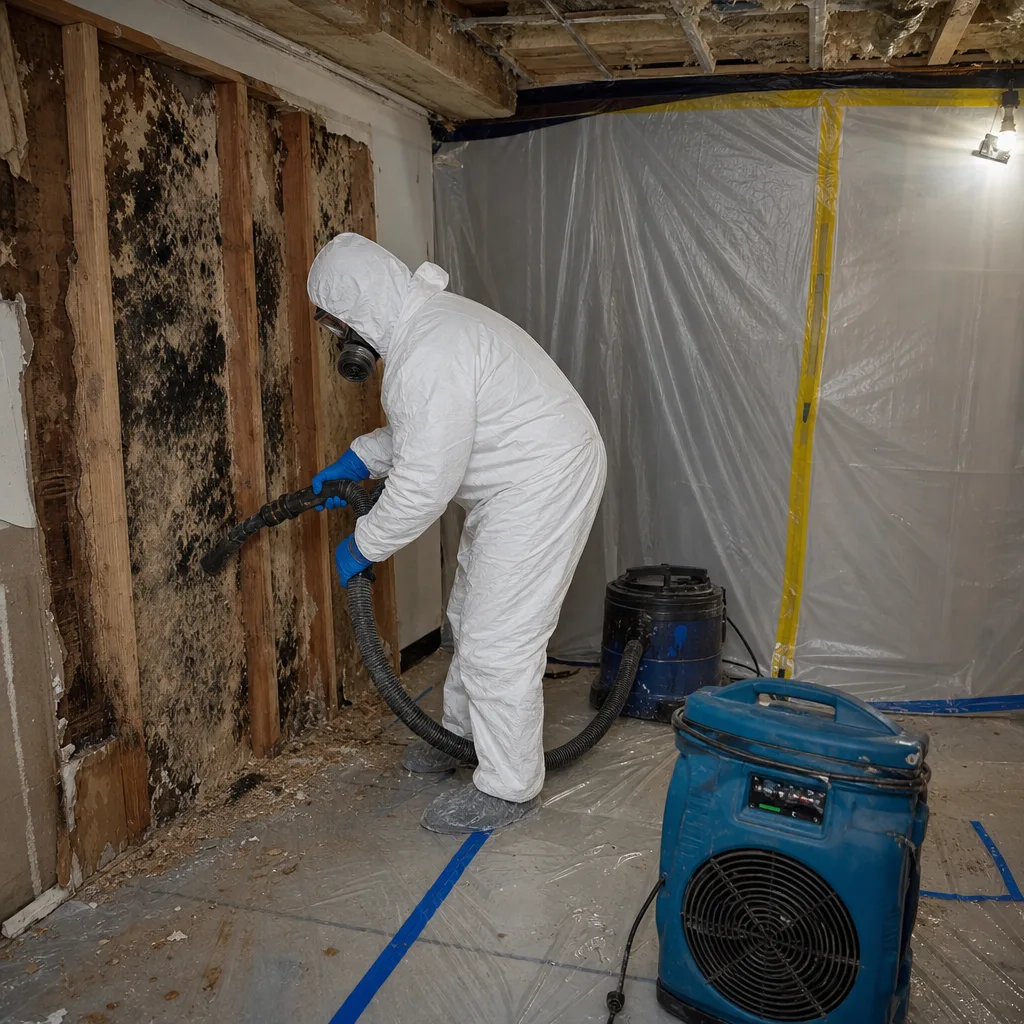
Buffalo’s Wright County winters produce aggressive ice-dam conditions on the low-pitched rooflines common in 1990s-era subdivisions. When meltwater pushes under shingles during a January partial thaw, it drips into the attic and runs down interior walls until you notice the stain. Roof tarping stops the intrusion, and we coordinate directly with your adjuster on the permanent repair so you don’t carry that conversation alone. Most jobs are completed in a single visit, using a professional-grade setup that holds through the next storm.
What happens when you call
- 1
A real person answersNo phone trees - you reach a local pro.
- 2
You get an upfront price rangeHonest numbers before anyone is dispatched.
- 3
A background-checked tech heads outLicensed & insured, dispatched right away.
- 4
You approve before work beginsNothing starts until you say go.
Trusted Brands We Stock for Buffalo Customers
We run Dri-Eaz and Phoenix drying equipment, XPOWER air movers, B-Air dehumidifiers, and Injectidry drying mats on Buffalo jobs. These aren’t rental-counter machines with unknown maintenance history. They’re commercial-grade units we own, maintain, and trust. When we respond to a flooded Lake Ridge walkout, we arrive with LGR dehumidifiers and drying mats sized for the square footage, not whatever was left on the shelf. For Buffalo homeowners, that means faster drying times and less secondary damage.
Common Storm & Disaster Restoration Problems We See in Buffalo Homes
- April basement flooding on Buffalo Lake. Finished lake-tier basements flood almost every April when hydrostatic pressure overwhelms poured walls and floor joints. A standard sump pump can’t keep up. Our techs identify the actual entry points and dry to a documented standard.
- Ice-dam meltwater intrusion in 1990s tract homes. Original roof membranes on low-pitched Buffalo subdivisions fail in waves. January thaws push water under shingles and into attics before spring runoff even begins.
- Silt and mud infiltration near the South Fork of the Crow River. Floodplain structures take on sediment that standard water extraction doesn’t address. We remediate silt and mud, then sanitize and dry the structure properly.
- Freeze-thaw damage in early-1900s downtown homes. Older balloon-frame and block-foundation houses lack modern moisture barriers. Winter freeze-thaw cycles force water into foundation cracks, and the damage shows up as spring seepage in basements and crawlspaces.
Pricing for Storm & Disaster Restoration in Buffalo, MN
We give square-deal pricing, in writing, before work begins. No surprises on the bill. Here are honest ranges for Buffalo’s market. Emergency board-up in Buffalo typically runs $350-$750 depending on opening size and materials. Roof tarping runs $300-$650 for a standard single-family home. Flood water extraction and drying in a finished basement typically runs $1,800-$3,500, depending on square footage and how far water wicked into drywall and framing. Storm cleanup with debris removal runs $500-$1,800 for a typical single-room intrusion. Call (888) 861-1852 for an exact scope and written estimate. We bill your carrier directly when coverage applies, and our 90-Day Done Right Promise is yours in writing.
We Also Serve Cities Near Buffalo
Our crews dispatch from the Minneapolis-St Paul office and serve Buffalo locally, along with nearby Wright County communities: Monticello, Saint Michael, Delano, and Albertville. If you’re within reach of Buffalo, we can get a certified crew to you fast.
Serving Buffalo, MN - Our Local Coverage Area
We’re based in the Buffalo area and know this community well. Use the map below to see our service coverage - if you’re nearby, we can almost certainly help.
FAQs - Storm & Disaster Restoration in Buffalo
Your basement is flooding because hydrostatic pressure from Buffalo Lake’s elevated water table pushes groundwater through cracks and cold joints in your foundation walls and floor. This happens year-round on lake-tier lots, but it spikes every April when snowmelt raises the water table faster than your sump pump can discharge. The fix is proper extraction, drying, and often a drainage or waterproofing correction. Call (888) 861-1852 to have a tech assess your exact entry points.
We remove the silt and mud first, then assess what the water touched. River sediment carries contaminants, so we sanitize affected surfaces before drying. We then dry the structure to a documented standard, logging daily moisture readings. You’ll receive the moisture log, in writing, before we close the job.
Yes, and the sooner the better. An open window lets rain, pests, and people in. Emergency board-up stabilizes the opening within hours, and we scope the full restoration in writing afterward. In Buffalo’s older homes, quick board-up often means saving plaster that would otherwise need to come out.
Professional extraction with a Dri-Eaz LGR dehumidifier and Injectidry drying mats is the fastest, most reliable method. We pull standing water, set drying equipment sized for your square footage, and monitor daily until the dry standard is met. Our crews have done this exact work in Buffalo’s Lake Ridge neighborhood and across the 55313 zip code.
Often, yes. We assess the water’s path, remove only what’s unsalvageable, and use controlled drying to preserve original plaster and lathe where possible. Older balloon-frame homes need a tech who understands how moisture moves in those wall cavities. We do. Call (888) 861-1852 for an honest assessment.
Call Floodline Restoration Co. When Buffalo Weather Does Its Worst
Storm and disaster restoration in Buffalo doesn’t wait for convenient hours. A live dispatcher answers our phone at 2 a.m., every day, and a certified crew heads your way. We’re licensed, insured, and the work carries our 90-Day Done Right Promise, in writing, no arguing. We serve Buffalo with background-checked, uniformed technicians trained to IICRC, RIA, and IFA standards. Call (888) 861-1852 for a free estimate. The line the water left is where we start.
Written by Curt Bowman, Owner at Floodline Restoration Co., serving Buffalo since our founding in 2010.