

Sewage Cleanup in Saint Paul Park: Backed by 42 Years on the River
Sewage backup in your Saint Paul Park home needs attention within hours, not days. Contaminated water from black water carries E. coli, hepatitis A, and mold spores that spread fast through basements and wall cavities. Floodline Restoration Co. of Minneapolis answers live 24/7, and our certified sewage cleanup crews reach Saint Paul Park properties in about 60 to 90 minutes, most of them within a single visit. Call (888) 861-1852 and a real dispatcher picks up, any hour, any day.
We serve Saint Paul Park, Minnesota, including the neighborhoods near Pullman Avenue, Summit Avenue, and the residential blocks off Broadway Avenue, all in the 55071 ZIP. Our crews know the difference between a routine toilet overflow and a river-driven backwater event. That kind of local knowledge means we don’t waste your time, and we don’t miss the secondary moisture hiding behind old plaster walls.
What Makes Sewage Cleanup Different in Saint Paul Park
Most national restoration guides treat sewage cleanup as a generic pump-and-spray job. Saint Paul Park won’t let you get away with that. The city sits directly on the Mississippi River floodplain in Washington County, and homes in the lower elevations off the river side of 70th Street and along the 55071 corridor face a completely different failure path than the inland suburbs just ten minutes north.
Every April and May, snowmelt from the headwaters pushes the Mississippi up against the local sanitary sewer system. When the river rises, municipal sewer lines can surcharge, pushing black water back through floor drains in basements of low-lying Saint Paul Park homes. That’s not a plumbing problem. It’s a geography problem. A sewage backup that happens during a spring surge requires sanitization and disinfection protocols specific to pathogen-heavy river backwater, not just the cleaning you’d do after a toilet overflow in January. If you want Sewage Cleanup done right in this city, you need a crew that knows which river levels trigger backwater events in which blocks.
Then there’s the housing stock. Saint Paul Park grew up in the 1920s through 1950s as a working-class railroad and river town. The bungalows and two-stories have full basements with original plaster-on-lath walls, cast-iron plumbing, and poured concrete floors. Plaster and lath pull moisture out of the air and hold it inside the wall cavity for weeks. After any sewage event, that hidden moisture becomes a mold incubator behind the same walls you thought were dry. A surface reading can look fine while active mold grows in the lath cavity. That’s exactly what we check for on every Saint Paul Park job.
We mention this because our crews see it repeatedly. We handled a sewage backup in a 1940s bungalow off Pullman Avenue where the basement floor drain backed up with black water after heavy spring rain. A homeowner had already shop-vacced the floor before we arrived, but the real damage was in the lath behind the cove base. We pulled the base, drilled small inspection holes into the wall cavities, and ran a Dri-Eaz HEPA 500 air scrubber and an XPOWER AX-300 blower until moisture readings dropped below the dry standard. Then we applied our IICRC-compliant sanitization and disinfection protocol. The homeowner did not need to tear out the entire basement. They did need someone who knew plaster walls don’t dry like drywall.
Why Floodline Restoration Co. of Minneapolis Is Saint Paul Park’s Preferred Sewage Cleanup Company
We’ve been in restoration for over 42 years, and Curt Bowman founded this company to run like a dispatch board, not a sales desk. That matters in Saint Paul Park, where a basement filling with sewage at 2 a.m. needs a fast crew and a straight answer. Our dispatchers are live people, not recordings. Call (888) 861-1852 and you’ll get the same person you’d talk to at noon on a Tuesday. They’ll tell you exactly when the crew is rolling, and the crew arrives when we say.
Every technician on a Saint Paul Park job is background-checked and uniformed, trained to IICRC, RIA, and IFA standards. We run Phoenix and B-Air drying equipment when the job calls for it, and we keep moisture logs with daily readings until the dry standard is met. That written log goes into your hands and to your insurance carrier, so nobody has to guess what was done. And every job, including small toilet overflows, comes with our 90-Day Done Right Promise, known as the Keystone Standard. If it’s not done right, we make it right. In writing, no argument, no paperwork battle.
We don’t hand your job off to a different company midway. The same certified crew that extracts sewage from your Saint Paul Park basement handles sanitization, drying, and any rebuild needed after. Homeowners who’ve been through a restoration job before know what that means: no playing messenger between a mitigation crew and a reconstruction sub who doesn’t answer the phone.
As far as Saint Paul Park homeowners are concerned, a restoration contractor is only as good as its reputation after the invoice clears. We stand behind our work with the 90-Day Done Right Promise, and we’ve built our name on it across Washington County for over four decades.
Our Sewage Cleanup Services in Saint Paul Park
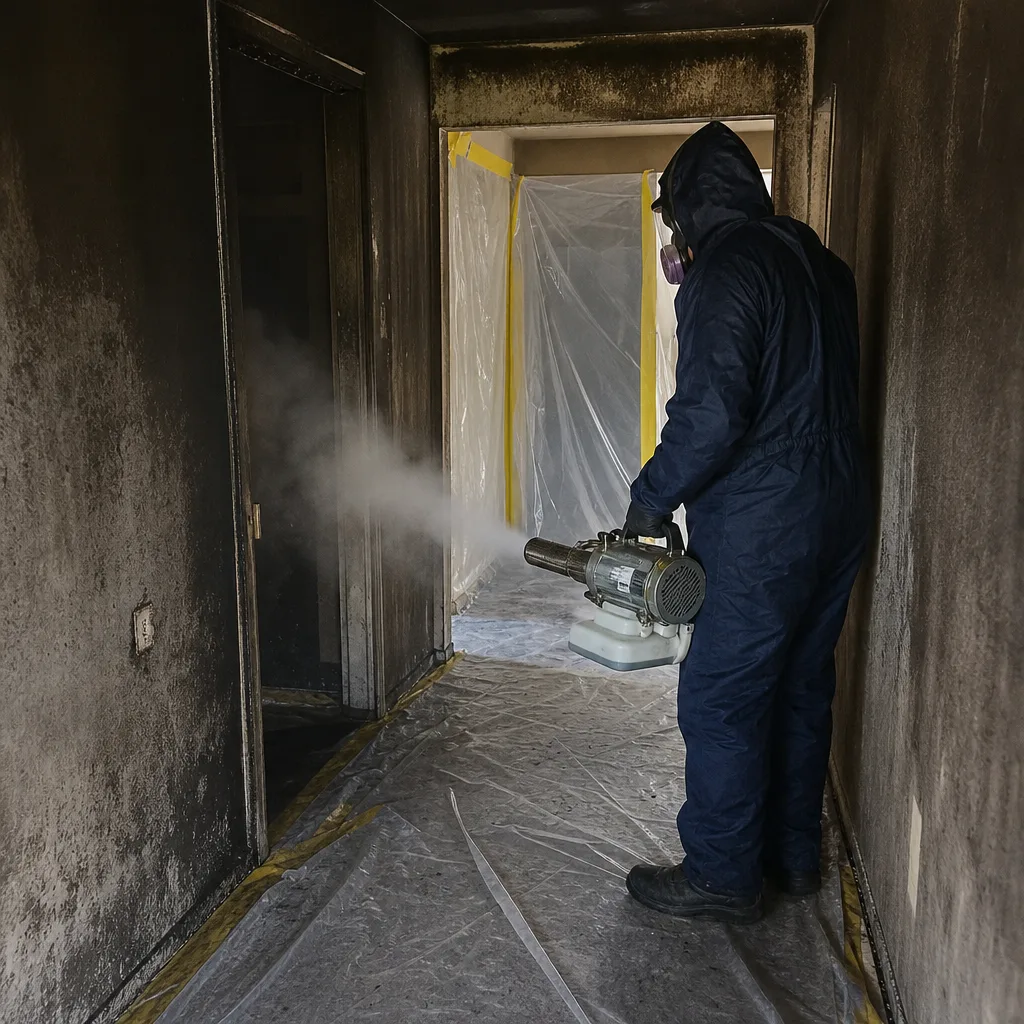
Sewage Backup Cleanup
A sewage backup in a Saint Paul Park basement is time-sensitive for a reason you may not expect. The black water wicks into old framing and original plaster-on-lath, not just into the concrete floor. A slow response means contaminated moisture settles into wall cavities where you can’t see it. Our crews extract the standing waste, remove contaminated materials if needed, sanitize every affected surface, and dry the structure to the IICRC standard. We serve all of Saint Paul Park, 55071, including homes on the lower blocks near the river and the compact lots off Pullman and Broadway.
Toilet Overflow Cleanup
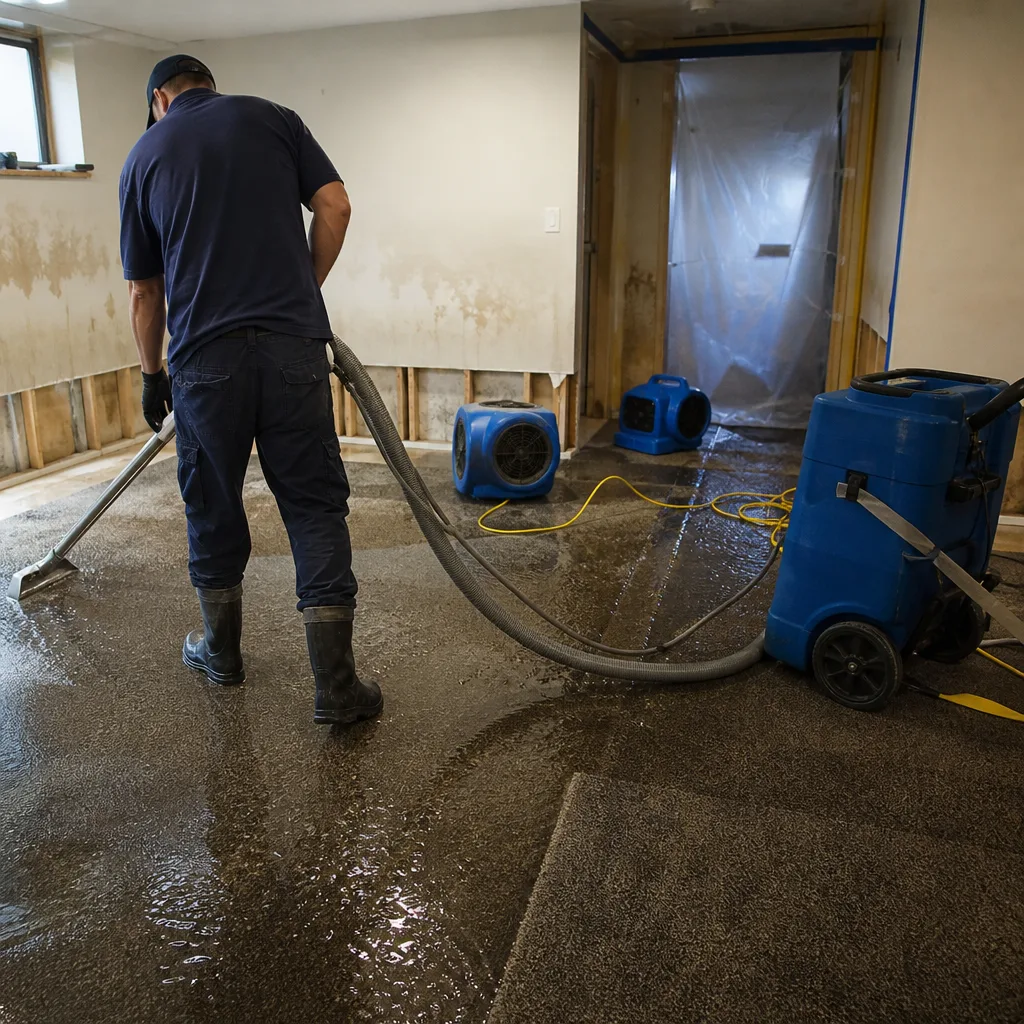
A toilet overflow in a Saint Paul Park home is often described as “clean” because the source is in the bathroom, not the sewer line. That descriptor is wrong. The waste is still Category 2 water at best, and often Category 3 if it’s been sitting. We treat every toilet overflow in Saint Paul Park as a potential pathogen source, extracting, sanitizing, and drying before recommending whether flooring or base trim needs to come out.
Septic Failure Cleanup
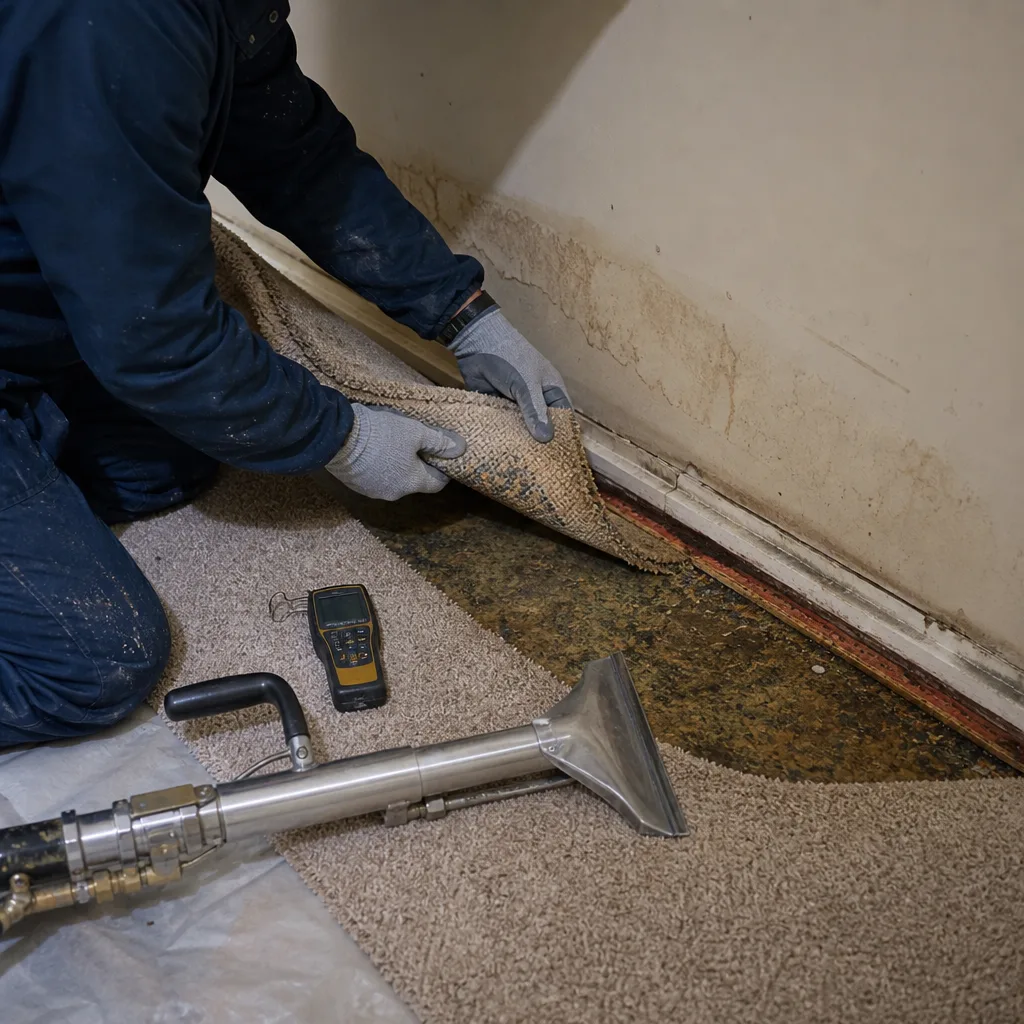
Older Saint Paul Park homes sit close together, and many still on the original plumbing have septic or aging drainfield systems that fail under spring saturation. When the ground is already soaked from snowmelt and the Mississippi is high, drainfields can’t percolate, and waste backs up into the house. We coordinate with local septic service companies while managing the indoor cleanup, because protecting the home’s interior can’t wait for a drainfield repair to be scheduled a week out.
Black Water Extraction
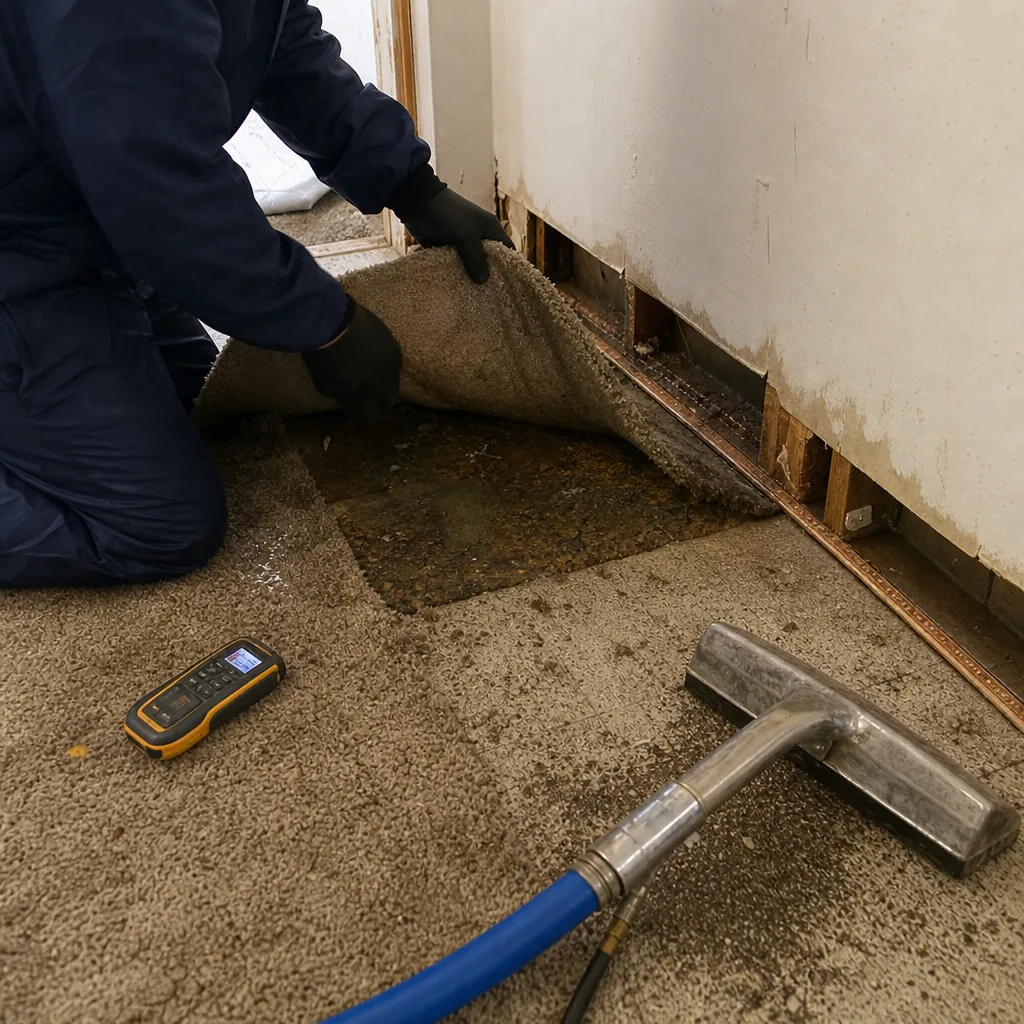
Black water is sewage water, plain and simple. It contains pathogens that require full PPE, specialized extraction equipment, and a sanitization protocol that meets IICRC standards. In Saint Paul Park, black water extraction often means removing water that came into the basement through a floor drain during a sewer surcharge, not just waste from a broken pipe. We run Injectidry systems when the contamination has wicked into wall bases or under cabinets, pulling moisture and pathogens out before demolition becomes necessary.
What happens when you call
- 1
A real person answersNo phone trees - you reach a local pro.
- 2
You get an upfront price rangeHonest numbers before anyone is dispatched.
- 3
A background-checked tech heads outLicensed & insured, dispatched right away.
- 4
You approve before work beginsNothing starts until you say go.
Sanitization, Disinfection, and Crawl Space Sewage Removal
Saint Paul Park homes built before 1960 often have shallow crawl spaces under the front porch or utility areas, and those spaces collect moisture and sewage residue in ways nobody sees until the smell comes back. Our Sanitization & Disinfection protocol uses EPA-registered antimicrobials appropriate for the surface, with dwell times logged. For Crawl Space Sewage Removal, we extract standing waste, remove contaminated debris, dry the space with B-Air or XPOWER equipment, and apply a broad-spectrum sanitizer to prevent mold and odor from returning.
Pricing for Sewage Cleanup in Saint Paul Park, MN
A small toilet overflow cleanup in a Saint Paul Park basement typically runs $400 to $900, depending on whether flooring or base trim needs removal. A moderate sewage backup involving extraction, sanitization, and structural drying of one or two rooms usually lands between $1,800 and $4,200. A full black water event from a river-driven sewer surcharge, where contaminated water has wicked into plaster walls and requires cavity inspection plus drying and potential rebuild of lower wall sections, can range from $5,500 to $12,000 or more, depending on the square footage affected and the materials involved. Homes with original plaster and lath cost more to dry properly, because we don’t cut corners on hidden moisture. Estimates are free, and we write a clear scope of work before anything starts. Call (888) 861-1852 for an exact quote on your Saint Paul Park property.
Common Sewage Cleanup Problems We See in Saint Paul Park Homes
- Plaster traps moisture behind the surface. The original plaster-on-lath walls in 1920s through 1950s Saint Paul Park bungalows soak up sewage vapor and hold it inside the wall cavity. Surface-only cleaning leaves mold to grow unseen. Our cavity inspection is standard on any affected wall in this area.
- River backwater pushes sewage up through floor drains. During April and May snowmelt surges, the Mississippi rises and local sewer lines can surcharge. Homes on the low blocks of Saint Paul Park near the river see black water come up through basement floor drains even when their own plumbing is fine. That water is Category 3 and needs full sanitization, not just mopping.
- Tight lots and narrow driveways make professional cleanup harder. Saint Paul Park’s compact lots and alley-load garages sometimes make a full-size service van impractical. Homeowners then delay calling and try a shop vac. That leaves pathogens and moisture in the slab and walls. We run smaller extraction units and portable drying equipment for these tight access situations, and we’ve done it enough to know how to get equipment in without damaging fences or landscaping.
- Musty odor returns weeks after a “successful” cleanup. The smell is coming from sewage residue that was never extracted from the wall cavity or the slab edge. We pull cove base, inspect behind plaster, and don’t sign off until the moisture log and odor check confirm the job is actually done.
Trusted Equipment Brands We Use in Saint Paul Park
We run professional-grade equipment on Saint Paul Park jobs: XPOWER air movers and low-profile blowers for tight basements, B-Air dryers for crawl spaces, and Injectidry systems for wall cavities and under-cabinet extraction. Phoenix dehumidifiers handle the high humidity that follows sewage extraction in spring, when the river is up and outside air won’t help. We stock these units on the trucks serving Saint Paul Park, so there’s no waiting for equipment to be delivered from a warehouse across town. The right machine, on site, same visit.
We Also Serve Cities Near Saint Paul Park
Our crews cover the surrounding Washington County area daily, including Cottage Grove, Inver Grove Heights, South Saint Paul, and Woodbury. If you live in one of those communities and need sewage or water damage help, call the same number, (888) 861-1852, and we’ll route the nearest available crew.
Serving Saint Paul Park, MN - Our Local Coverage Area
We’re based in the Saint Paul Park area and know this community well. Use the map below to see our service coverage - if you’re nearby, we can almost certainly help.
FAQs - Sewage Cleanup in Saint Paul Park
If the backup happens during an April or May rise on the Mississippi and the water is coming up through a floor drain rather than a toilet or sink, it’s very likely river-driven backwater, not a broken soil line. Saint Paul Park’s position on the floodplain means municipal sewer surcharges push water back into low-lying basements even when the home’s own plumbing is sound. A technician can confirm the source by checking the cleanout and the drain path, but the timing and the river level are the first clues. Call (888) 861-1852 and we’ll tell you what we’re seeing at your elevation.
Because the original plaster-on-lath walls absorbed sewage vapor and moisture during the event, and the previous cleanup only addressed what was visible on the floor. The lath cavity behind the plaster holds moisture for weeks, and the odor returns as microbial growth develops inside the wall. We drill inspection holes, check cavity moisture with penetrating meters, and run drying equipment until the cavity is below the dry standard. If someone already cleaned the floor but the smell is back, the walls are usually the reason.
No. Bleach is not an EPA-registered sanitizer for porous surfaces like concrete and wood, and a wet vac cannot reach water that has already soaked into the slab or under vinyl flooring. A toilet overflow in a basement should be treated as Category 2 or 3 water. Without proper extraction, sanitization, and drying, you’re leaving pathogens in the concrete and creating a mold risk that shows up as odor and staining later. It’s not worth the risk to your home, and the cost of a proper small-job cleanup is far less than repairing rot or mold damage later.
We respond the same day, and during spring flood season we keep extra crews staged for Washington County river-adjacent zones including Saint Paul Park. Call (888) 861-1852 and the dispatcher will give you a straight arrival window, usually 60 to 90 minutes for Saint Paul Park addresses in 55071. When the river is up and multiple homes are affected, our priority goes to properties with active black water or sewage still standing, because the health risk and structural damage compound by the hour.
Yes. Sewage that pooled in a crawl space under an older Saint Paul Park home gets into the soil, the floor joists, and any insulation, and it’ll keep off-gassing into the house until it’s removed and the space sanitized. We extract standing waste from crawl spaces, remove contaminated insulation, dry the space with B-Air or XPOWER equipment, and apply a broad-spectrum sanitizer before closing it up. In spring, when the water table is high and the Mississippi is up, crawl spaces take longer to dry, so getting extraction started the same day matters a lot.
Call Floodline Restoration Co. for Sewage Cleanup in Saint Paul Park
You don’t have to figure out what to do next. Call (888) 861-1852 and a live dispatcher answers, day or night. We’ll tell you what we’re seeing for Saint Paul Park addresses right now, schedule a crew, and give you a written scope before work starts. All our work is backed by the 90-Day Done Right Promise. Estimates are free. And our current offers, the $50 Off Any Repair Over $250 and the Senior & Veteran 5% Discount, apply to Saint Paul Park sewage cleanup jobs as well. We’ll be there when we say.
Written by Curt Bowman, Owner at Floodline Restoration Co., serving Saint Paul Park and the surrounding Washington County area.