

Fast, Reliable Mold Remediation Across Victoria
Mold remediation in Victoria, MN typically costs $1,800-$6,200 depending on how far the colony has spread and whether it’s hiding behind finished walls or under radiant-heated slabs. Most jobs in Victoria are completed within 3-7 days, with the first containment and HEPA filtration running within 24 hours of your call. If you’ve spotted dark staining near a baseboard, caught a musty smell in a finished lower level, or had a sump pump quit during spring thaw, call (888) 861-1852 and a live dispatcher answers, day or night. We know Victoria’s lake-edge lots and the specific ways water moves through them.
Why Floodline Restoration Co. of Minneapolis Is Victoria’s Preferred Mold Remediation Company
We have spent 42 years in Minnesota basements, and a good share of that work now happens in Victoria’s newer executive homes around Lake Bavaria, Clearwater Lake, and the Carver Park Reserve edge. What we learned early: a Victoria mold problem rarely starts as a mold problem. It starts as a water problem, and if you don’t understand the water, you’ll chase the mold forever.
Our background-checked, uniformed technicians train to IICRC, RIA, and IFA standards, and they bring the same professional-grade equipment on every Victoria call: Dri-EZ dehumidifiers, XPOWER air movers, B-Air scrubbers, and Injectidry vacuum panels. More than the equipment, they bring a moisture map made on day one, updated with daily readings until the dry standard is met. You get the log. Your insurance carrier gets the log. Nobody guesses.
Every job carries the 90-Day Done Right Promise, the Keystone Standard, in writing. If it is not done right, we make it right. No arguing, no paperwork battles. That guarantee is why homeowners in Victoria call us after a bad experience with someone else, and why they tell their neighbors on Rolling Acres Road and around Lake Auburn to call the same crew.
Our Mold Remediation Services in Victoria
Mold Inspection & Testing in Victoria
A proper mold inspection in Victoria starts with moisture, not spores. We look at hydrostatic pressure against the foundation, discharge lines from sump baskets, and the way a walkout basement slopes toward the house. Then we sample. Air samples, surface swabs, and if a wall cavity is suspect, we get a borescope behind the custom bar cabinetry or theater riser where colonies hide. Most Victoria homeowners are not dealing with a visible patch on drywall; they are dealing with something behind the finishes.
Black Mold Remediation in Victoria
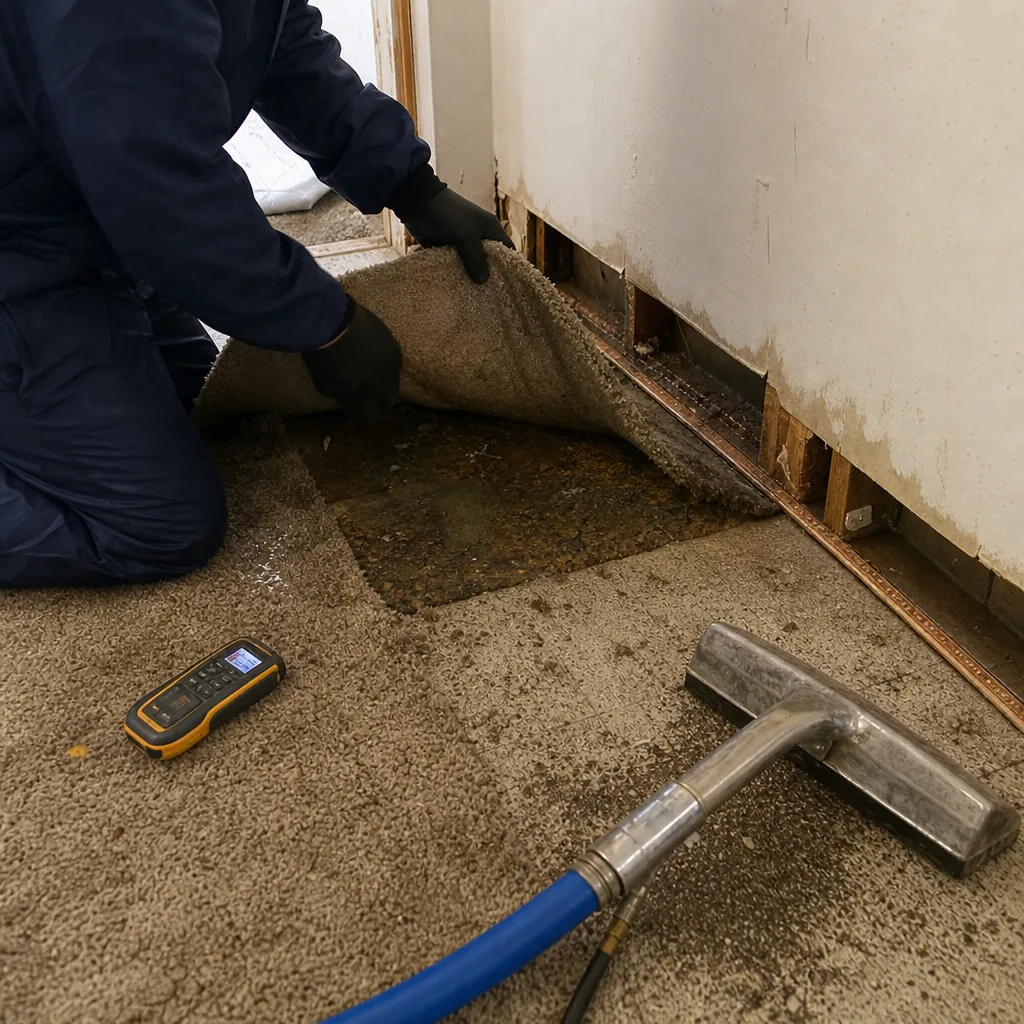
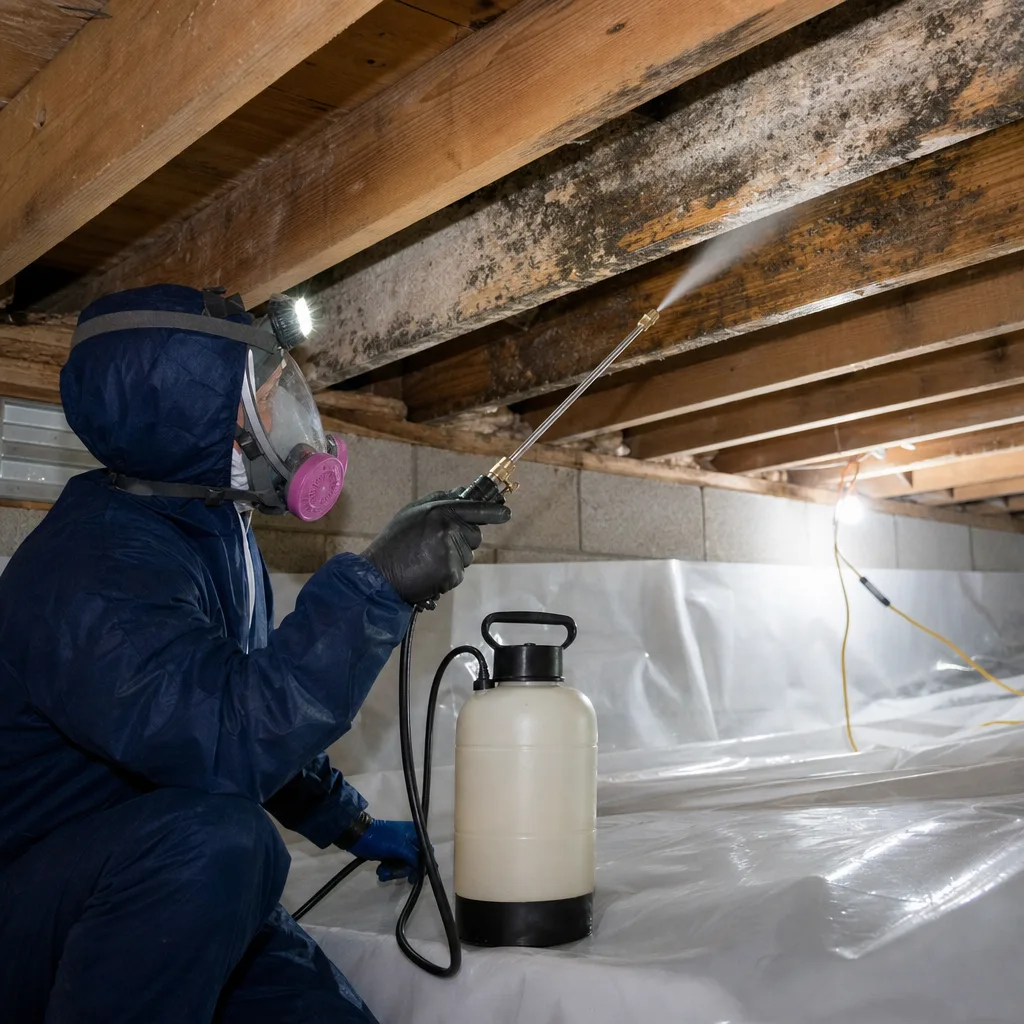
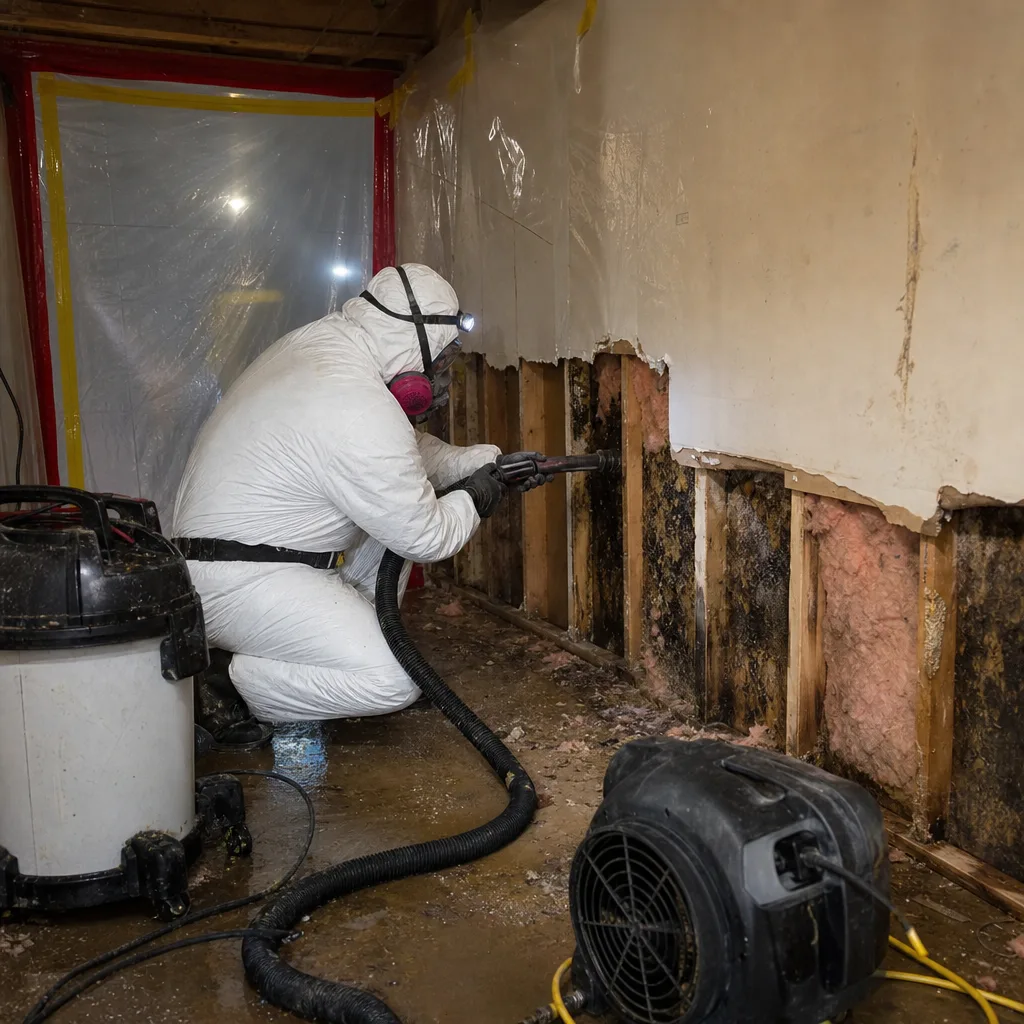
Black mold, Stachybotrys, loves the conditions Victoria creates every spring: a damp, warm, organic food source behind trim or under carpet pad. Our remediation protocol is full containment, negative air pressure, HEPA filtration, removal of affected materials, and treatment of the framing. In finished lower levels, that often means pulling the wet bar, the built-in theater seating, or a section of the in-law suite wall. We set a containment barrier so spores don’t travel through the rest of the house during removal.
Air Quality Restoration in Victoria
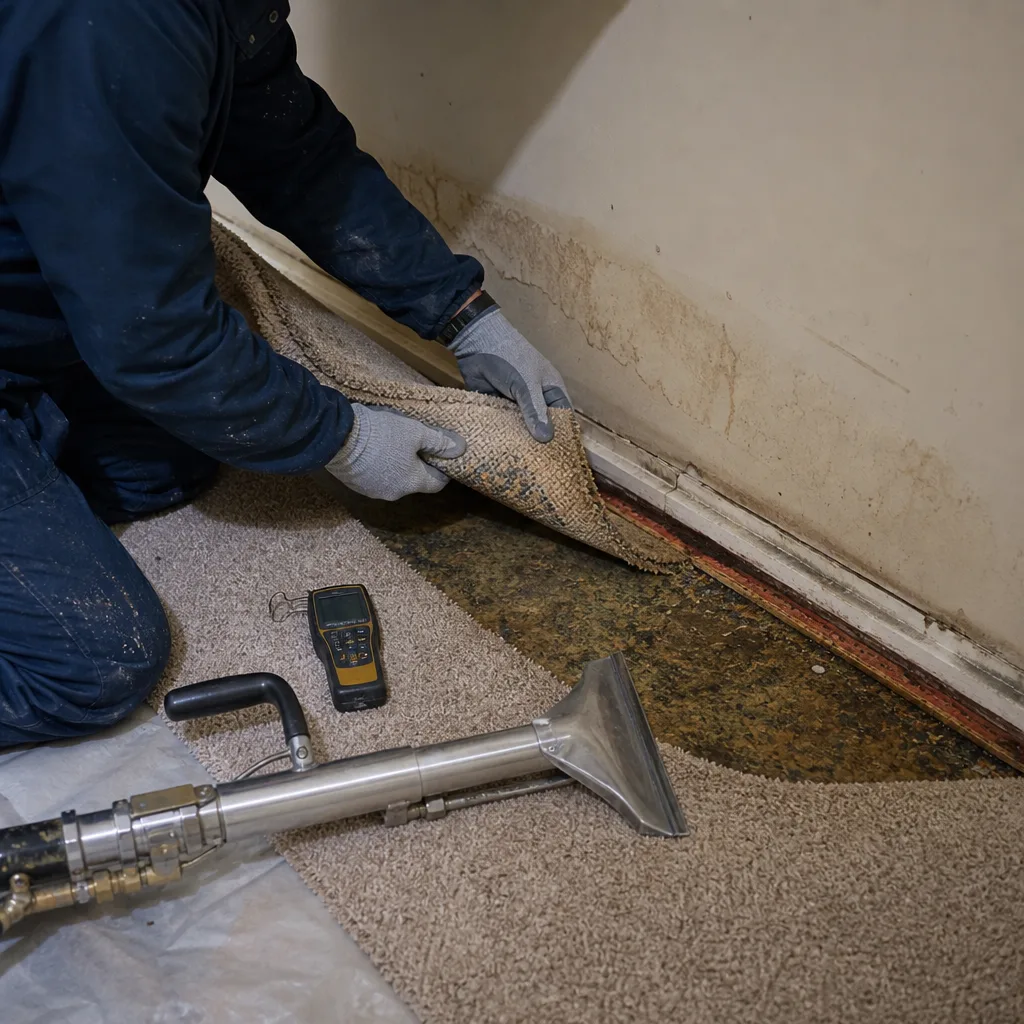
After materials are removed and surfaces cleaned, we run HEPA air scrubbers until post-remediation verification shows clear air. The standard we aim for in Victoria: under 10 spores per cubic meter on clearance testing. For a homeowner with allergies, asthma, or an immunocompromised family member, that clearance number is the difference between a house that smells right and a house that still feels wrong. We don’t walk away until the log says the space is dry and the air is clean.
Moisture & Humidity Control in Victoria
Mold is a moisture problem with a slow ending. In Victoria, where high water tables and finished walkouts meet, controlling humidity is the only way to keep a remediated space from relapsing. We map the moisture in concrete, wood, and drywall, then design the drying. Radiant in-floor heat complicates this, which most crews learn the hard way. We account for it from day one, setting target dew points and drying goals that work for Victoria’s slab construction.
What happens when you call
- 1
A real person answersNo phone trees - you reach a local pro.
- 2
You get an upfront price rangeHonest numbers before anyone is dispatched.
- 3
A background-checked tech heads outLicensed & insured, dispatched right away.
- 4
You approve before work beginsNothing starts until you say go.
Trusted Brands We Service in Victoria
Our crews work around the equipment that already lives in Victoria homes. If your house on a Carver Park Reserve-adjacent lot has a custom wet bar with a built-in ice maker, a theater room with tiered flooring, or a finished office with wood-paneled soffits, our techs know how those assemblies come apart and go back together. We stock the supplies for Injectidry vacuum panel setups and XPOWER air movers on our trucks, so when a Victoria call comes in at 2 a.m., the equipment is on-site the same visit, not ordered in next week.
Common Mold Remediation Problems We See in Victoria Homes
- Mold behind custom bar cabinetry and theater risers. A sump pump fails overnight during an April rain, water spreads across the finished lower level, and by the time anyone notices the smell, mold is already feeding on the plywood behind the wet bar. Victoria’s high-end basements hide moisture better than almost any construction style we work on.
- Radiant in-floor heat defeating standard drying. Warm slabs keep damp concrete comfortable for mold growth even while room air reads dry. Standard air-drying timelines don’t hold in Victoria’s radiant-heated walkouts, which is why we use vacuum panels and targeted dehumidification that pull moisture from the slab itself.
- Ice-dam leakage into tray ceilings and soffits. Victoria’s newer executive homes often have steep, pitched rooflines that ice up in late winter. Water backs up under shingles, follows the framing, and drips into ceiling cavities above offices, bonus rooms, and bedrooms. By the time a stain shows, the colony is months old.
- Concealed colonies inspectors miss without borescope access. We regularly find mold inside wall cavities that tested fine on air samples alone. Without a borescope inspection behind custom trim or above a drop ceiling, a standard inspector can miss the colony entirely and clear a home that isn’t clear.
Pricing for Mold Remediation in Victoria, MN
Here’s what actual numbers look like for Victoria, based on the work we do there. A contained mold cleanup in a single bathroom or closet typically runs $1,800-$3,400. A finished basement with mold behind a wet bar, along baseboards, and in a wall cavity usually falls between $4,000 and $7,500. When colonies spread behind theater risers or into ductwork, scopes climb higher, and when a sump failure floods an entire finished lower level, we are often looking at $10,000-$25,000 by the time remediation and rebuild are complete.
Three things move the price in Victoria more than anything: the size of the finished space involved, whether radiant heat is in the slab, and how long the water sat before discovery. Our estimates are free and written, with no surprises on the bill. We bill insurance carriers directly, and we hand you the moisture log so every dollar is documented. Call (888) 861-1852 for an exact quote.
We Also Serve Cities Near Victoria
Our crews serve Victoria and the surrounding communities, including Chaska, Shorewood, Mound, and Minnetrista. If you live on a lake-edge lot, in a newer subdivision, or in an older farmstead-era home, our Mold Remediation team can reach you quickly. Dispatch is coordinated from our Minneapolis-St Paul office, and the crew that arrives is the crew that finishes the job.
Serving Victoria, MN - Our Local Coverage Area
We’re based in the Victoria area and know this community well. Use the map below to see our service coverage - if you’re nearby, we can almost certainly help.
FAQs - Mold Remediation in Victoria
A single sump pump failure during Victoria’s compressed spring thaw can put an inch of standing water across a finished lower level in under 48 hours. The water saturates carpet pad, wicks up drywall, and seeps into the plywood behind built-in cabinetry and theater risers. Mold germination starts within 24-48 hours if the space is not dried properly. In Victoria’s high-water-table lots, the concrete slab itself stays damp for weeks after the visible water is gone, which is why standard air drying fails. Call (888) 861-1852 the moment you see water, and we’ll get containment and extraction running the same visit.
Yes, in most Victoria cases. The key is pulling moisture from the concrete itself, not just the air above it. We use Injectidry vacuum panels laid directly on the slab surface, which create negative pressure and draw moisture out of the concrete’s pores. Combined with Dri-Eaz dehumidifiers sized for the space, this gets a radiant-heated slab to a dry standard without breaking it out. If the slab is severely saturated and readings won’t drop, we’ll talk plainly about scope before cutting anything. You get the moisture log either way, so the numbers decide, not a sales pitch.
Victoria’s newer homes often have steep, pitched rooflines with valleys and dormers that trap snow. During late winter, heat loss melts snow at the ridge, water runs down, refreezes at the eave, and backs up under the shingles. The water travels along the roof deck and into wall cavities, tray ceilings, and soffits above finished rooms. The leak is often small and slow, so it never shows on a ceiling. The first sign is usually a musty smell in an upstairs office or bedroom months after the snow is gone. If a stain ever appears on a ceiling in spring, the water has been there far longer.
Homes near Carver Park Reserve and Victoria’s lakes sit on high-water-table lots, which means the concrete slab and foundation walls are already carrying more moisture than homes in Chaska or other inland suburbs. When a pump fails or a spring rain saturates the soil, that groundwater pushes against the foundation from below and beside the house. Remediation has to address the slab, not just the air and the drywall. In drier suburbs, standard air movers and dehumidifiers can do the job. In Victoria, we plan for sub-slab drying from the first day.
They carry a different risk profile. Older farmstead-era homes and legacy lake-cabin-style properties near Victoria’s shorelines often have shallow foundations, no perimeter drain tile, and wood framing that has cycled through decades of wet springs. That chronic moisture history makes them more likely to harbor established black mold colonies in sill plates, floor joists, and crawl spaces. Newer builds tend to fail in specific, fast ways: sump failures, ice dams, and construction defects. Both need a real moisture inspection, not a surface check. Call (888) 861-1852 and we’ll come look.
Written by Curt Bowman, Owner at Floodline Restoration Co., serving Victoria and the surrounding lake communities.