

Fast, Reliable Mold Remediation Across Stillwater
Mold remediation in Stillwater typically runs $1,800-$6,500 depending on how far the growth has spread and whether it’s behind original plaster walls or inside a crawl space. Most jobs in the 55082 and 55083 ZIP codes are completed within 3 to 5 days, with same-day emergency response available when a spring ice-jam surge pushes river water into a lower downtown basement. We know the St. Croix River valley’s flooding patterns cold, and we know how Stillwater’s 1870s-to-1920s housing stock holds moisture in ways modern drywall never will. If you’ve got visible mold, a musty smell that won’t quit, or water that came in during the last thaw, call (888) 861-1852 and a live dispatcher will answer, day or night.
Why Floodline Restoration Co. of Minneapolis Is Stillwater’s Preferred Mold Remediation Company
Stillwater homeowners tend to have long memories. Many have lived in the same house on the North Hill or near Pioneer Park for twenty, thirty years, and they’ve seen what a rushed drying job does to original horsehair plaster and balloon-frame cavities. We’ve built our reputation here by not rushing what can’t be rushed. Our crews are background-checked, uniformed, and trained to IICRC, RIA, and IFA standards, and every job ends with a written moisture log showing the dry standard was actually met, not just claimed.
Our response time to Stillwater neighborhoods like the South Hill, the riverfront district, and the newer developments up along Highway 36 is consistently under 90 minutes for emergency calls. When your basement takes on river water at 2 a.m. during an ice-jam event, you get a live person on the phone, not a recording. Curt Bowman founded this company around a dispatch board, not a sales desk, and that’s why our crews reach Stillwater fast when the St. Croix decides to climb. The 90-Day Done Right Promise stands behind every job in writing, so if mold returns or drying wasn’t complete, we make it right without paperwork battles.
Our Mold Remediation Services in Stillwater
Mold Inspection & Testing
Before we touch a wall in Stillwater, we identify exactly where the moisture is coming from. In a bluff-side home on 2nd Street South or Orleans Street, that often means two sources: river water rising from below and groundwater seeping laterally through limestone block foundations from above. Testing tells us which species we’re dealing with and how far spores have traveled through balloon-frame wall cavities, and it gives your insurance carrier the documentation they need to process a claim without guesswork.
Mold Removal
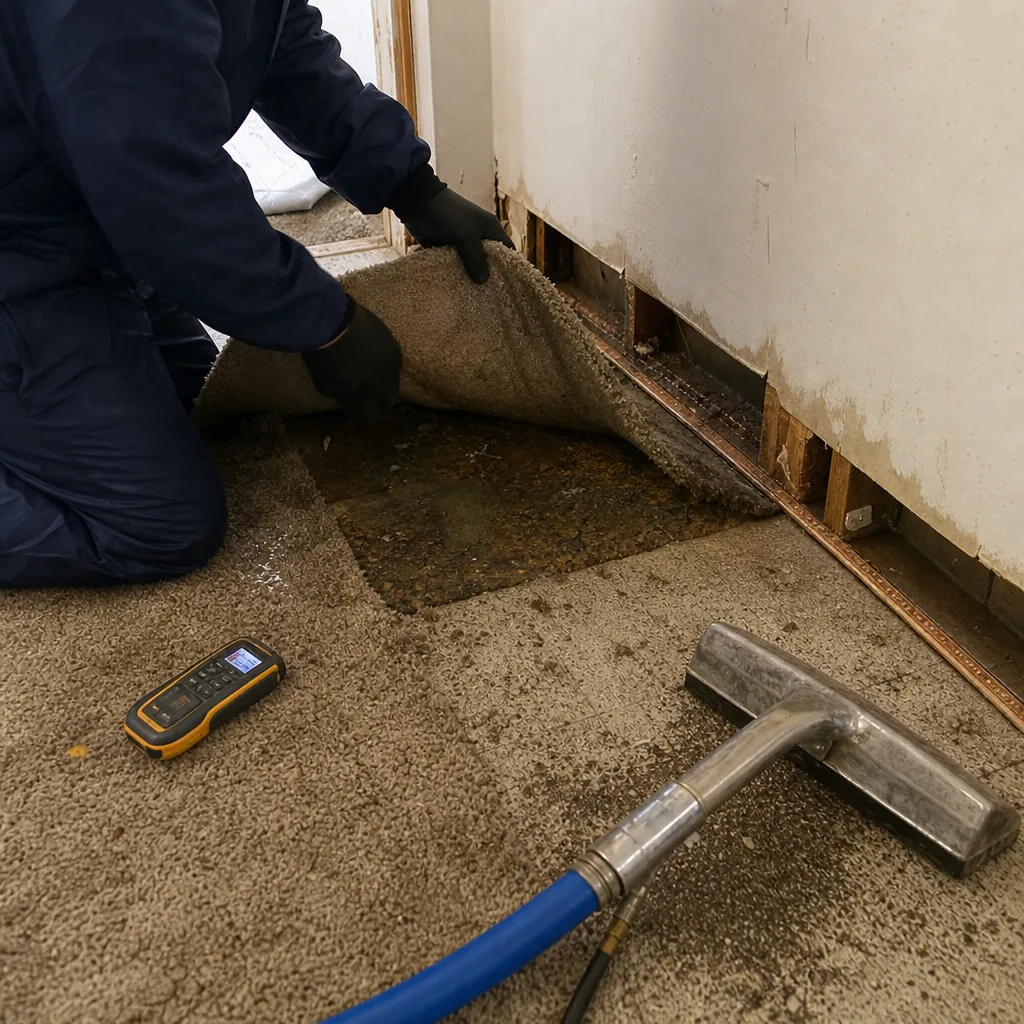
Removing mold from Stillwater’s older homes means working around horsehair plaster, old-growth lath, and Victorian stairwells that were never designed for modern equipment staging. We cut access panels behind baseboards where necessary, treat affected cavities, and run professional-grade Dri-Eaz LGR dehumidifiers with XPOWER air movers positioned for tight clearances. The same crew that reads the moisture map on day one handles daily readings until the structure actually dries.
Black Mold Remediation
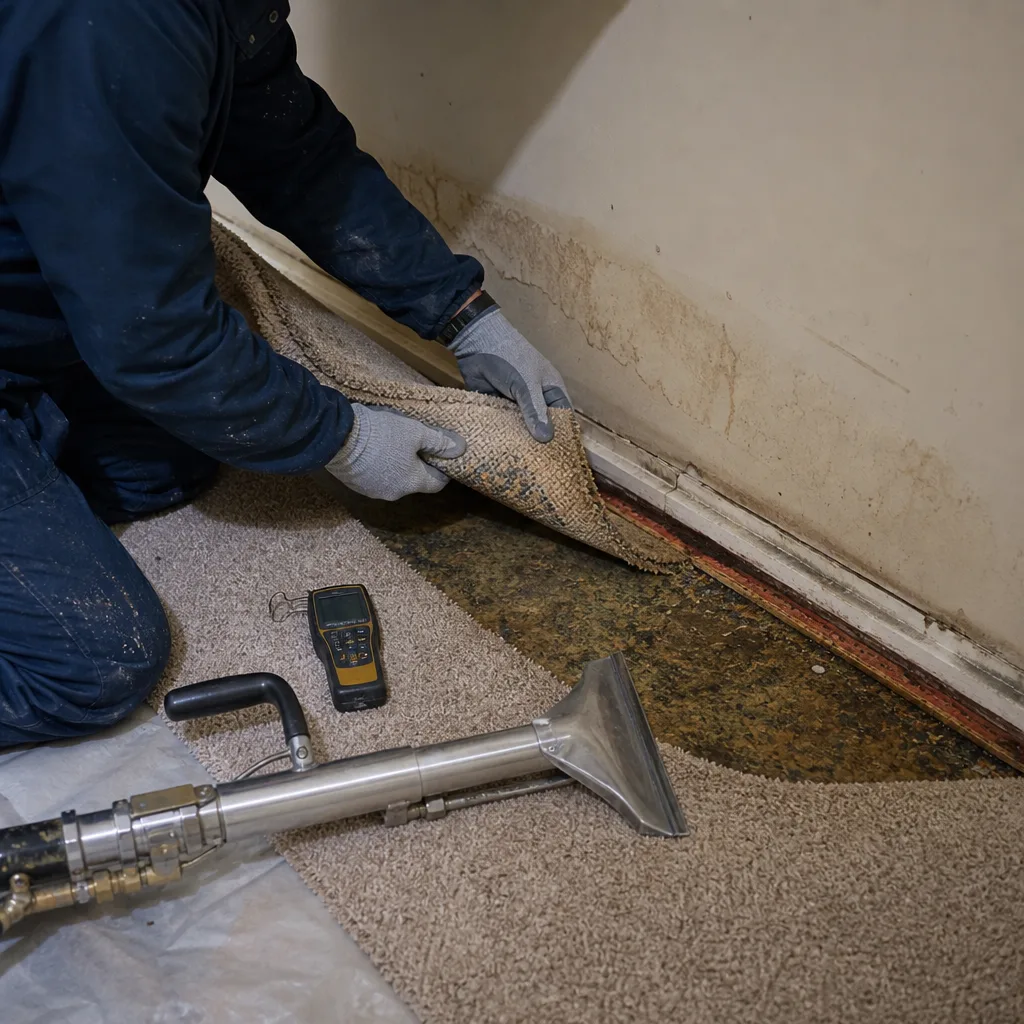
Black mold is the call we get most often from Stillwater homeowners after a spring flood or a slow plumbing leak in an old basement. It’s not something to clean with bleach and a sponge. We contain affected areas, filter the air, remove contaminated material, and treat surfaces so spores don’t recolonize. On a 1910 Craftsman near the riverfront, our techs found black mold blooming inside plaster walls after an ice-jam surge pushed river water through the limestone foundation while snowmelt seeped down from the bluff above. That’s a two-source problem, and treating only one side of it guarantees the mold comes back.
Air Quality Restoration
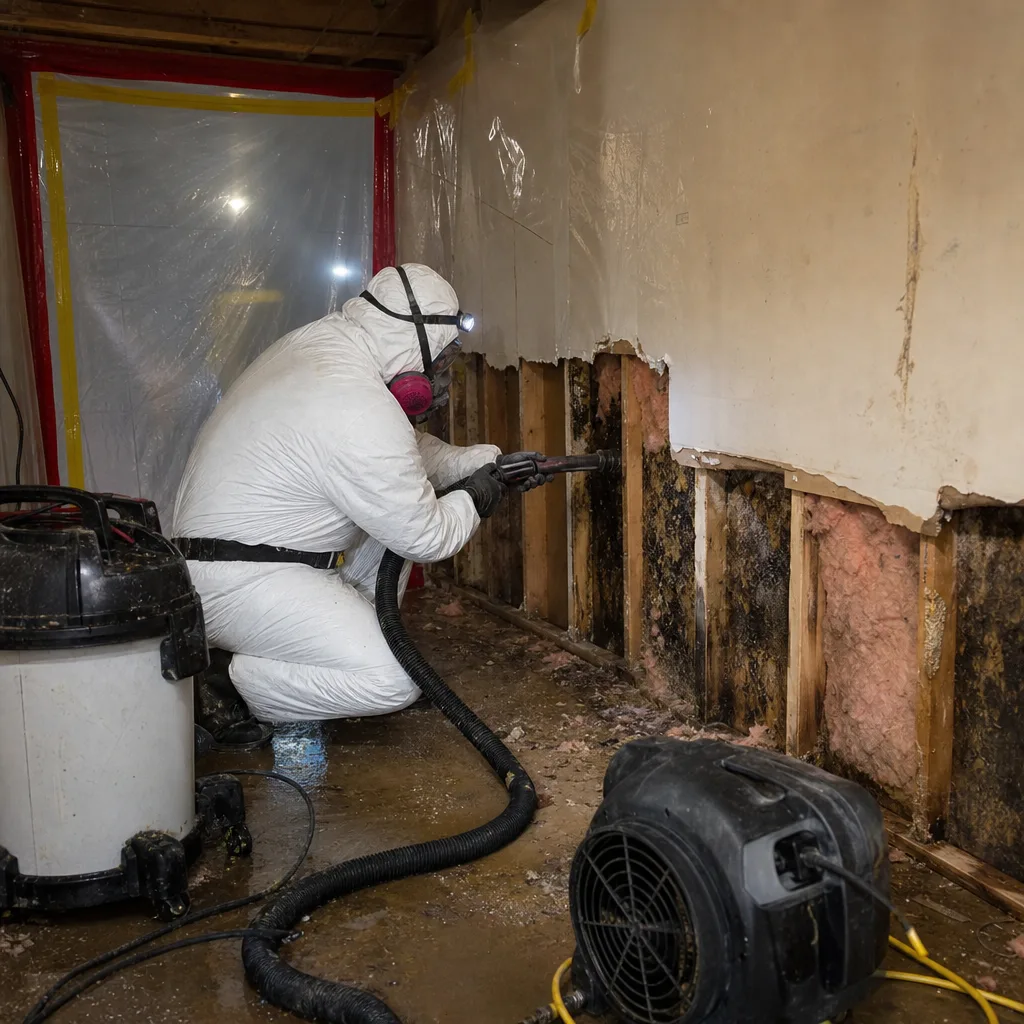
After mold is removed, the air in your Stillwater home still carries spores that settled in ductwork, carpet fibers, and dead-air pockets inside balloon-frame walls. We run professional air scrubbers during and after remediation, then verify with clearance testing. Our goal is a home that smells clean and tests clean, not one that just looks better until the next humid July.
What happens when you call
- 1
A real person answersNo phone trees - you reach a local pro.
- 2
You get an upfront price rangeHonest numbers before anyone is dispatched.
- 3
A background-checked tech heads outLicensed & insured, dispatched right away.
- 4
You approve before work beginsNothing starts until you say go.
Trusted Brands We Service in Stillwater
Our crews arrive in Stillwater with the equipment that gets the job done right: Dri-Eaz dehumidifiers, Phoenix axial air movers, and XPOWER air scrubbers, sized for the tight crawl spaces and narrow doorways common in Stillwater’s older housing stock. We don’t show up with rental-store gear and hope for the best. The equipment is commercial grade, moisture-mapped from day one, and every unit’s performance is logged daily until the dry standard is met. For Stillwater homeowners, that means no second-guessing whether the drying actually finished.
Common Mold Remediation Problems We See in Stillwater Homes
- The one-source mistake. A homeowner treats the river water in the basement but never addresses groundwater seeping laterally through the limestone foundation on the bluff side. Mold returns within weeks because the moisture source never stopped. We identify and mitigate both paths before drying begins.
- Rushed drying on plaster and lath. Horsehair plaster and balloon-frame walls hide dead-air cavities that hold moisture for weeks after surface materials feel dry. Rushing the drying cycle leaves pockets where mold quietly regrows behind untouched walls. We run extended cycles with daily moisture readings until the old-growth lath actually hits the dry standard.
- Equipment that can’t fit the house. Standard remediation setups don’t fit through a Stillwater alley-load townhome door or up a narrow Victorian stairwell. Staging delays let mold spread while crews wrestle equipment. We plan access before we arrive, and our gear is sized for tight clearances.
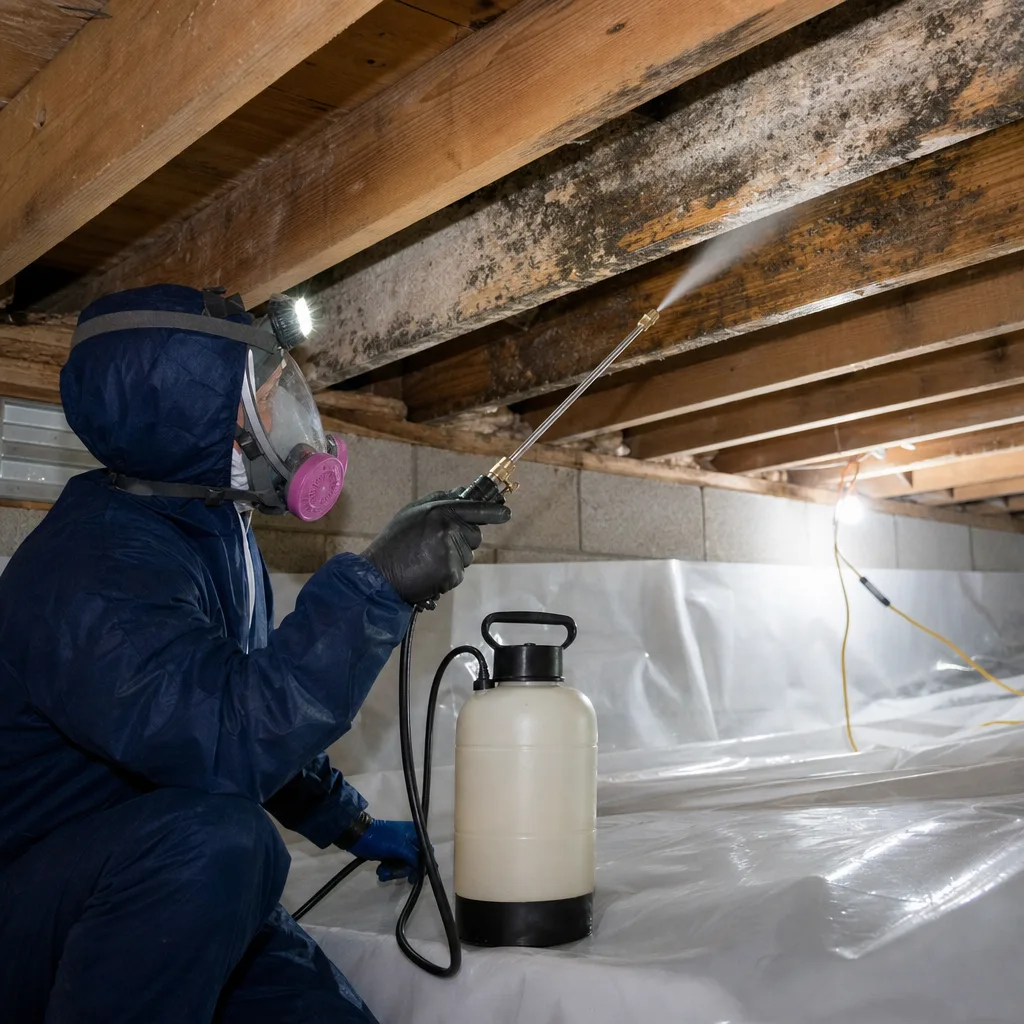
- Ignoring the crawl space. Many Stillwater homes from the 1870s through the 1920s have crawl spaces with 24-inch clearance or less. Mold in a crawl space feeds spores into the living space above through floor gaps and rim joists. We treat crawl spaces as part of the envelope, not an afterthought.
There’s a pattern here that’s specific to Stillwater, and it’s worth saying plainly. Homes on the bluff faces between upper Stillwater and the riverfront regularly experience dual water intrusion: rising St. Croix River flooding from below and groundwater seeping laterally through limestone block foundations from above. Restoration crews have to identify and mitigate both sources before structural drying can succeed. In flat neighboring communities like Oakdale or Lake Elmo, you rarely see this combination. In Stillwater, it’s a recurring spring event, and missing it means remediation fails. This is the only Stillwater-focused mold remediation guide that addresses the dual river-and-bluff moisture pattern of the St. Croix Riverway and the unique drying requirements of pre-1930 plaster-and-balloon-frame homes.
Pricing for Mold Remediation in Stillwater, MN
A typical mold inspection and air test in Stillwater runs $350-$600. Small, contained removal jobs start around $1,800, while full black mold remediation behind plaster walls in a flooded lower downtown basement commonly lands between $4,000 and $6,500. Crawl space treatment with encapsulation typically runs $2,500-$5,000 depending on square footage and access. What moves the number is how far the mold has traveled through wall cavities, whether asbestos-era materials need abatement, and whether both water sources (river and groundwater) must be addressed. We provide a written scope before work starts, and we bill your insurance carrier directly so you’re not playing messenger. Current standing offers apply in Stillwater: $50 off any repair over $250, the $89 seasonal tune-up, and a 5% senior and veteran discount, always.
We Also Serve Cities Near Stillwater
Our Mold Remediation crews work across the St. Croix River valley and the surrounding communities. If you’re in Mahtomedi, Lake Elmo, North Saint Paul, or Oakdale, we’re your local team too. The bluff-and-river moisture pattern is a Stillwater specialty, but the drying standards and the 90-Day Done Right Promise travel with us. Mold Remediation in Stillwater is our focus, and the same certified crews handle every nearby community with the same written guarantee.
Serving Stillwater, MN - Our Local Coverage Area
We’re based in the Stillwater area and know this community well. Use the map below to see our service coverage - if you’re nearby, we can almost certainly help.
FAQs - Mold Remediation in Stillwater
It adds a permitting layer that restoration contractors in neighboring cities never face. Because Stillwater sits on a tight bend of the St. Croix River, a federally designated Wild and Scenic Riverway, any structural work in the lower downtown floodplain may require state and federal floodplain compliance review before remediation can proceed. We handle that paperwork as part of the job, so you’re not left navigating agency requirements alone. Call (888) 861-1852 and we’ll tell you exactly what applies to your address.
Because they take on water from two directions at once: river flooding from below and groundwater seeping laterally through limestone block foundations from above. Treating only one source leaves the other actively feeding mold, and the problem returns within weeks. A real remediation on a bluff-side home means identifying both moisture paths, mitigating both, and drying until the structure itself, not just the surface, is stable. That’s the difference between a repair that holds and one that fails.
Yes, and it usually does. Horsehair plaster absorbs moisture differently than modern drywall, and balloon-frame construction leaves vertical cavities that run from basement to attic, letting spores travel far from the original water source. We’ve found black mold blooming behind Victorian baseboards with zero visible sign on the wall surface. Clearance testing and cavity inspection are the only ways to know for sure. Our techs cut access panels where needed and treat the full affected path, not just the visible patch.
They bring water fast, with little warning, and often at night in late winter or early spring. When an ice jam breaks upstream, the river can surge into lower downtown basements within minutes, and the water saturates limestone foundations, wood framing, and any stored belongings before a homeowner even wakes up. That sudden saturation, followed by slow natural drying in a confined basement, creates ideal mold conditions within 48 to 72 hours. Speed matters, and so does complete drying. Call (888) 861-1852 the moment you see water, and a live person answers.
They treat the visible water and stop. Snowmelt on Stillwater’s steep limestone bluffs concentrates runoff into lower streets and basements, but on bluff-side homes, groundwater keeps seeping through foundation blocks long after the floor is mopped dry. Without addressing that lateral seepage, the moisture never actually stops, and mold takes hold inside walls and under flooring where it can’t be seen. The fix is a proper moisture map, a drying plan, and daily readings until the structure meets the dry standard, not just until the floor feels dry.
Call Floodline Restoration Co. for Mold Remediation in Stillwater
If you’ve got mold, a damp crawl space, or standing water in a Stillwater basement, don’t wait for it to spread behind walls you can’t see. Call (888) 861-1852 and a live dispatcher will answer, 24/7. We’ll send a certified, background-checked crew to your home, assess both moisture sources, and put a written scope in your hands before work begins. The 90-Day Done Right Promise backs every job, with no arguing and no fine print runaround. Floodline Restoration Co. of Minneapolis serves Stillwater with the same standard we’ve held for over 42 years: done right, and backed in writing.
Written by Curt Bowman, Owner at Floodline Restoration Co., serving Stillwater and the St. Croix River valley.