

Fast, Reliable Mold Remediation Across Saint Paul
Mold remediation in Saint Paul typically runs $1,800 to $6,500 for a standard basement or wall-cavity job, with inspection and testing starting around $350 to $600. Most Saint Paul homes we treat were built before 1940, which changes the scope entirely: horsehair-lime plaster, rubble-stone foundations, and clay tile laterals all hold moisture differently than modern construction. If you’re seeing mold in a Summit Hill rowhouse or a West Side bungalow, call (888) 861-1852 and a live dispatcher will put a certified crew on it same-day.
We know Saint Paul’s housing stock because we work in it every week. The houses here are beautiful and stubborn. They reward patience and punish shortcuts. Our Mold Remediation team has spent years learning exactly where moisture hides in pre-1940 plaster assemblies, and we bring that knowledge to every job from Lowertown to Highland Park.
Why Floodline Restoration Co. of Minneapolis Is Saint Paul’s Preferred Mold Remediation Company
Saint Paul homeowners call us because we answer the phone at 2 a.m. with a real person, not a recording. When a combined sewer line surcharges during a July thunderstorm and raw sewage backs up through the floor drain in a 1920s basement, nobody wants to leave a voicemail. Our dispatch board runs 24/7. A background-checked, uniformed technician reaches your door fast, and the crew starts containment and extraction the same visit.
We’re backed by the 90-Day Done Right Promise, in writing. If the mold returns or the drying wasn’t complete, we come back and make it right without arguing about paperwork. That guarantee is called the Keystone Standard, and it’s built on four words: Krafted right, Every time, Your home first, Standing behind it. We’ve earned our reputation in Saint Paul one plaster wall at a time.
Curt Bowman founded Floodline Restoration Co. in 2010 around a dispatch board, not a sales desk. That’s why you’ll never get a high-pressure pitch from us. You’ll get a moisture map, a written scope, and direct insurance billing so you never play messenger between us and your carrier.
Our Mold Remediation Services in Saint Paul
Mold Inspection & Testing
A proper mold inspection in Saint Paul starts with understanding the house, not just the stain. In Cathedral Hill and Summit Hill, we check plaster depth, foundation type, and the condition of clay tile laterals before we even take an air sample. Testing runs $350 to $600 depending on how many rooms and whether lab analysis is needed. We don’t test where we don’t need to, and we explain every result in plain English.
Mold Removal
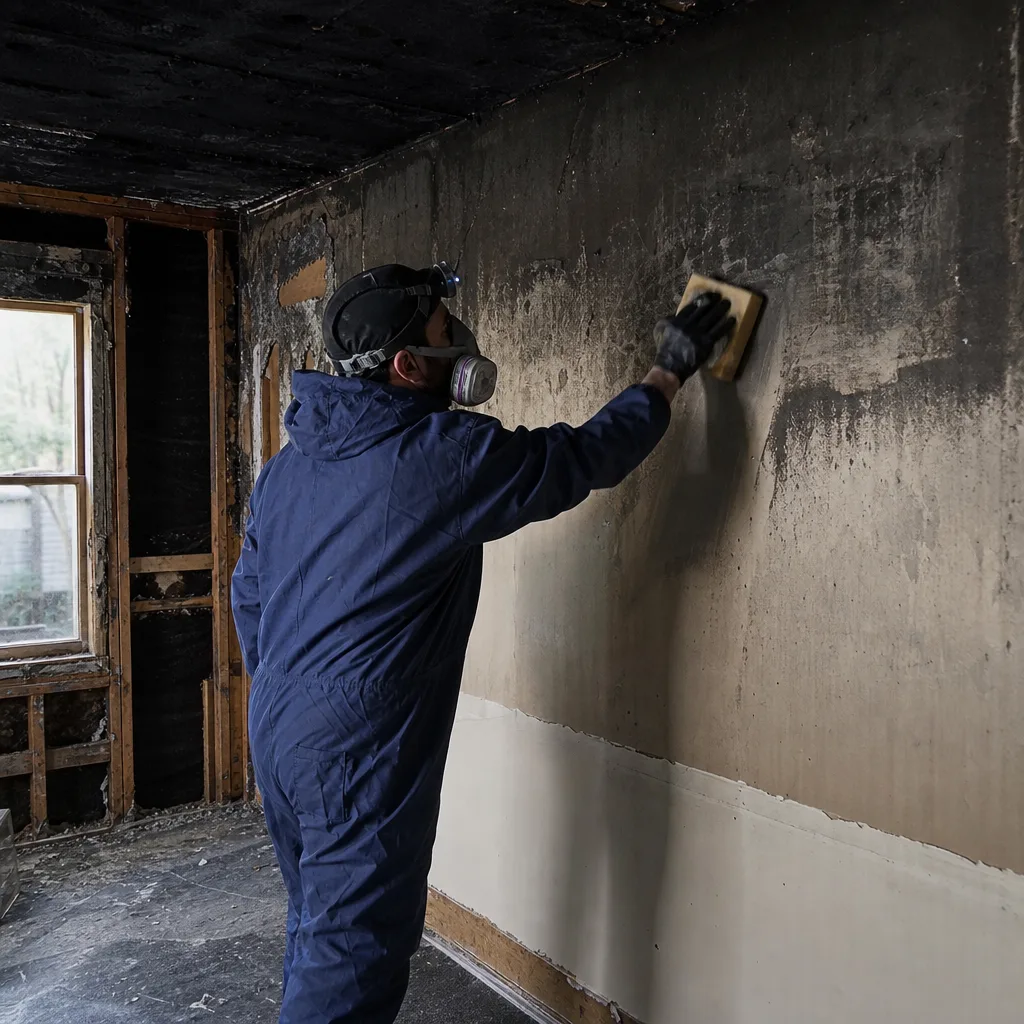
Mold removal in Saint Paul homes usually means opening plaster walls, not just spraying the surface. Horsehair-lime plaster is dense. It can read “dry” on a pin meter while holding moisture an inch deep, quietly feeding mold inside the cavity. We remove contaminated material, dry the structure with Dri-Eaz LGR dehumidifiers and Injectidry panels, and log moisture readings daily until the assembly actually stabilizes. Typical removal jobs run $1,800 to $4,200.
Black Mold Remediation
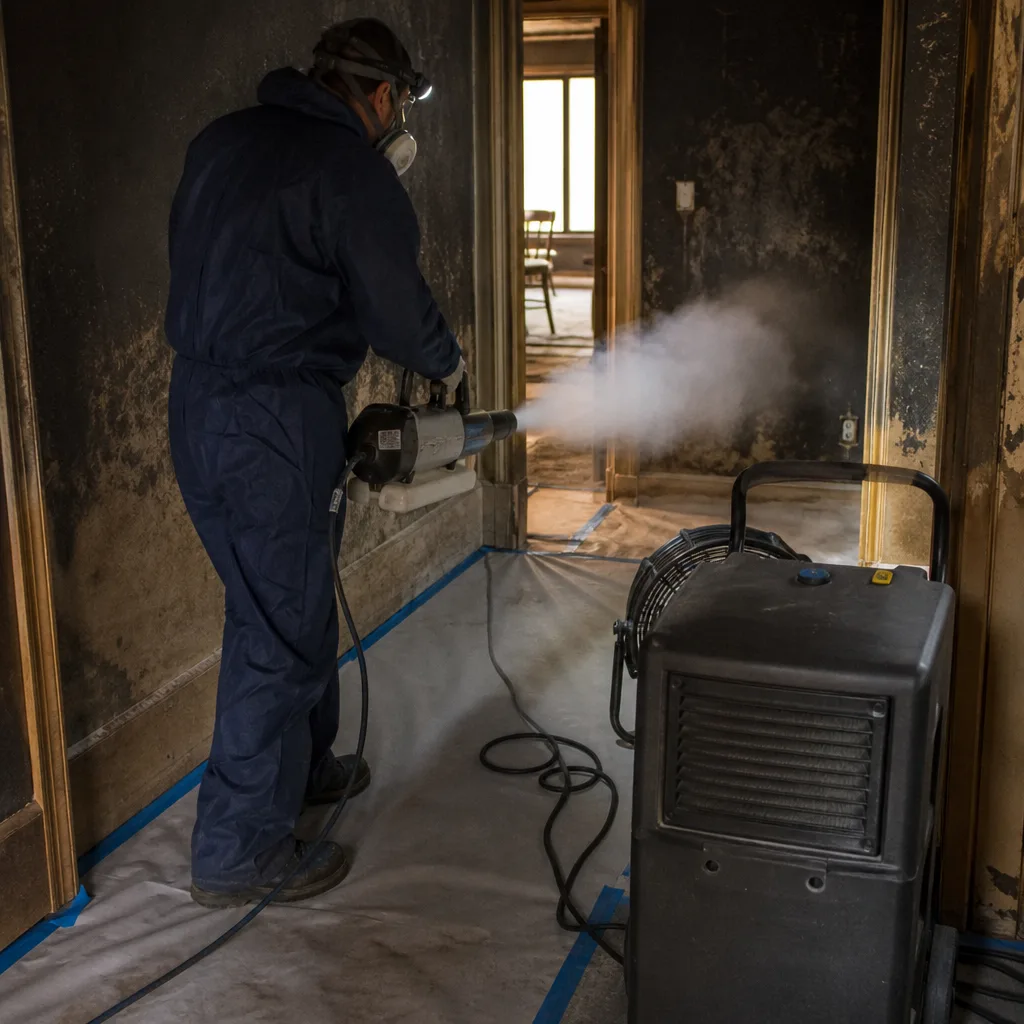
Black mold in a Saint Paul basement often traces back to one of two sources: a floor drain that still gurgles during storms, or a failed clay tile lateral that’s been saturating the foundation wall for years. We contain the affected area under negative air pressure, remove the contaminated material, and treat the cavity. Then we address the source so it doesn’t come back. Black mold remediation in Saint Paul typically costs $2,500 to $6,500 depending on square footage and whether sewage contamination is present.
Air Quality Restoration
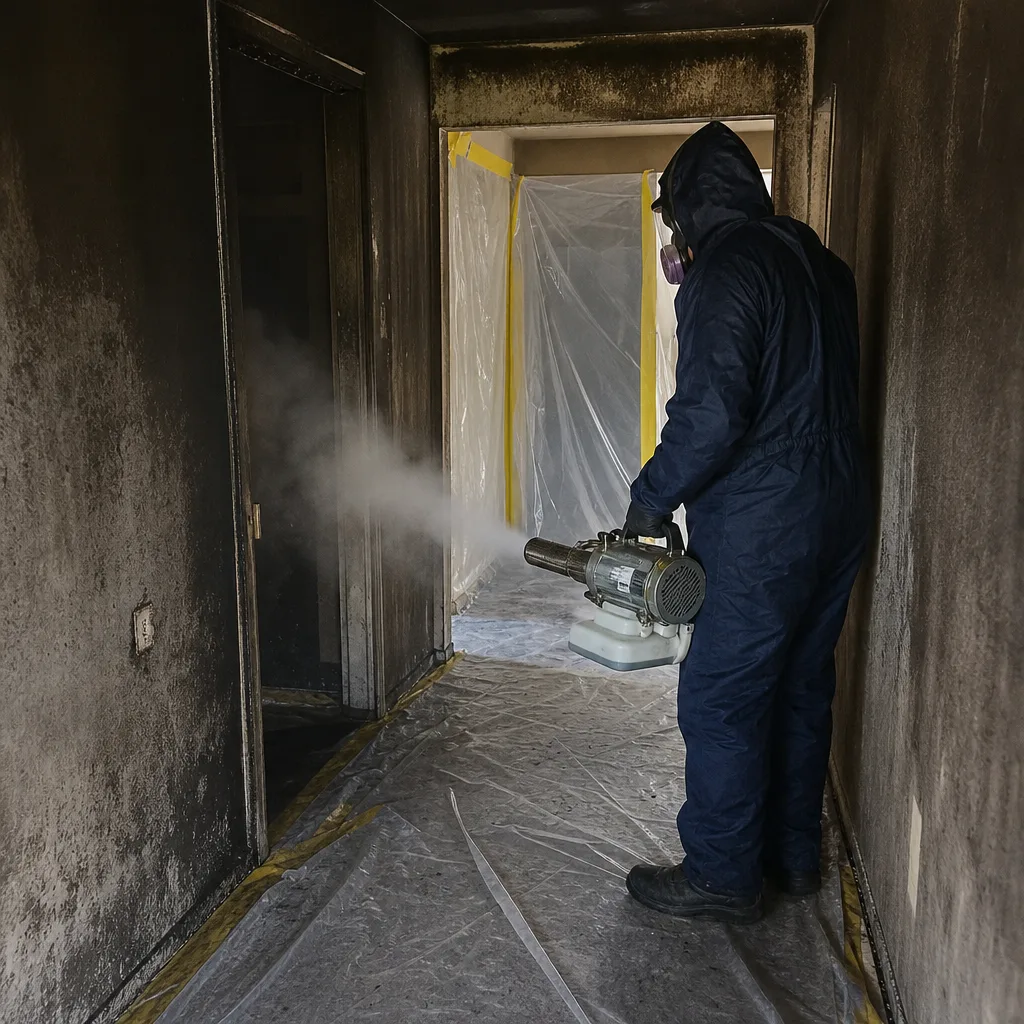
After remediation, the air in your home should be measurably cleaner than before. We run HEPA air scrubbers during the job and verify results with post-remediation air sampling. For Lowertown condos near the Mississippi, we also check humidity loads from below-grade construction and river-adjacent air. Air quality restoration runs $400 to $900 as a standalone service and is included in most full remediation scopes.
What happens when you call
- 1
A real person answersNo phone trees - you reach a local pro.
- 2
You get an upfront price rangeHonest numbers before anyone is dispatched.
- 3
A background-checked tech heads outLicensed & insured, dispatched right away.
- 4
You approve before work beginsNothing starts until you say go.
Common Mold Remediation Problems We See in Saint Paul Homes
Crawl Space Treatment
Crawl spaces under Saint Paul bungalows and Foursquares are usually damp, dark, and poorly vented. We install vapor barriers, seal vents where appropriate, and run dehumidifiers until the space holds below 60% relative humidity. That’s the threshold below which mold stops growing. Crawl space treatment in Saint Paul runs $1,200 to $3,500 depending on square footage and access.
Moisture & Humidity Control
Mold doesn’t need a flood. It needs sustained moisture above 60% relative humidity. In Saint Paul’s freeze-thaw climate, that moisture comes from pipe bursts in exterior walls, ice dams on Victorian rooflines, and spring snowmelt against rubble-stone foundations. We install whole-home dehumidifiers, improve drainage, and seal foundation penetrations. Humidity control work in Saint Paul typically costs $800 to $2,800.
Trusted Brands We Service in Saint Paul
We run Dri-Eaz and Phoenix LGR dehumidifiers, XPOWER air movers, B-Air scrubbers, and Injectidry drying panels on Saint Paul jobs every week. Our crews are trained to IICRC and RIA standards, which means the equipment gets used the way the manufacturers specified, not thrown at a wall and left running. We stock parts and filters locally so Saint Paul jobs don’t stall waiting on a shipment. The equipment matters. The person running it matters more.
Pricing for Mold Remediation in Saint Paul, MN
Here’s what Saint Paul homeowners can expect to pay in the current market:
- Mold inspection and testing: $350-$600
- Mold removal, single room or wall cavity: $1,800-$4,200
- Black mold remediation with sewage contamination: $2,500-$6,500
- Crawl space encapsulation and drying: $1,200-$3,500
- Whole-home moisture and humidity control: $800-$2,800
- Air quality restoration with post-remediation verification: $400-$900
What moves the number is the age of your house and what’s behind the walls. A drywall basement in a 1990s townhome is a simpler job than a 1910 Foursquare with horsehair plaster, rubble-stone foundation, and a clay lateral that’s been failing for a decade. We give you a written scope before work starts, and we bill your insurance carrier directly. Current standing offers apply: $50 off any repair over $250, and a 5% senior and veteran discount, always. Call (888) 861-1852 for a free estimate.
Why Mold Keeps Returning in Saint Paul’s Older Homes
Saint Paul’s core ZIP codes from 55101 through 55107 are served by a combined sewer system that dates to the 1880s. That means stormwater and raw sewage share the same pipes. During spring snowmelt or a heavy summer storm, the system surcharges and pushes sewage back through floor drains into basements. What looks like a water-loss call is actually a Category 3 biohazard. Mold that grows after a sewage backup in a Saint Paul basement isn’t a standard mold job. It requires full contamination containment, disposal of saturated porous materials, and structural drying that accounts for what the sewage left behind.
Those same pre-1940 homes were built with rubble-stone or brick foundations, plaster-on-lath walls, and original clay tile drain laterals. Clay tile cracks, separates, and invites root intrusion. When the lateral fails, sewage and groundwater saturate the foundation wall from the outside, feeding mold inside the wall cavity for months or years before you ever see a stain. A newer Twin Cities suburb with separated storm sewers and modern foundation waterproofing doesn’t have this failure mode. Saint Paul does, and any mold remediation company working here needs to understand it.
A Field Note From Crocus Hill
On a pre-1900 Foursquare in Crocus Hill, our crew traced recurrent mold behind horsehair-lime plaster to a failed clay tile lateral that had let sewage backflow saturate the foundation wall for years. We removed the contaminated plaster, dried the rubble-stone assembly with Dri-Eaz LGRs and Injectidry panels for three weeks, and logged moisture readings until the dense lime matrix actually stabilized, not just the surface pins. That’s the difference between a remediation that holds and one that shows up again eight months after repainting. In Cathedral Hill and Summit Hill, we’ve learned that original horsehair-lime plaster registers “dry” on a pin meter long before it actually is. The dense lime matrix can conceal moisture one to two inches deep for weeks. Extended post-remediation monitoring isn’t an upsell on these jobs. It’s the only way to know the wall is actually dry.
We Also Serve Cities Near Saint Paul
Our crews work across the metro and bring the same written scope and 90-Day Done Right Promise to every job. That includes Saint Paul proper, West Saint Paul, Falcon Heights, Little Canada, and South Saint Paul. If your home sits in one of those communities and you’re seeing mold, the same live dispatch line applies. Call (888) 861-1852.
Serving Saint Paul, MN - Our Local Coverage Area
We’re based in the Saint Paul area and know this community well. Use the map below to see our service coverage - if you’re nearby, we can almost certainly help.
FAQs - Mold Remediation in Saint Paul
Mold returns in Cathedral Hill rowhouses for one primary reason: the previous crew stopped drying when the surface read dry, but the horsehair-lime plaster behind it was still holding moisture an inch deep. Pin meters lie on old plaster. We log readings until the dense lime matrix stabilizes, not just the surface. If a floor drain still gurgles during storms, that’s a secondary source reintroducing spores after every rain event. Call (888) 861-1852 and we’ll trace the actual source.
Yes, and it usually is. Lowertown sits near the river, and below-grade condos there carry elevated humidity loads from river-adjacent air and older foundation construction. Musty smells without visible mold often mean mold is growing inside a wall cavity or behind a vapor barrier. Air testing and a moisture survey will find it. We serve 55101 weekly and know exactly where to look.
They can, but only if the drying cycle is run long enough. Horsehair-lime plaster is extremely dense and holds moisture deep in the matrix. We use Injectidry panels and LGR dehumidifiers to pull moisture from inside the plaster, not just the surface, and we run daily moisture logs for two to three weeks on sewage-backup jobs. Rushing this step is why mold returns after repainting. We don’t rush it.
We dry it in place whenever possible. Old-growth wood framing in a 1920s bungalow is worth preserving, and we treat it with the same patience we’d give a piece of furniture. We use controlled drying, not demolition, and we clean and seal the wood rather than replacing it unless it’s structurally compromised. Then we address the moisture source so the framing never gets wet again.
No. A capped floor drain that still gurgles during storms is an active mold reservoir. The cap blocks the visible path, but sewage and spores still push through the trap and into the basement air. In pre-1940 Saint Paul basements, this is one of the most common sources of recurring black mold. We’ll inspect the drain, the lateral, and the foundation wall as one connected system. Call (888) 861-1852 for a free estimate.
Get a Free Mold Inspection Estimate in Saint Paul
If you’re seeing mold, smelling must, or noticing a basement that never quite dries out, call (888) 861-1852. A live dispatcher answers 24/7. We’ll send a background-checked, IICRC-trained crew to your home in Saint Paul, give you a written scope with an honest price, and if we do the work, it’s backed by the 90-Day Done Right Promise in writing. No surprises on the bill. No messenger duty with your insurance company. Just a square deal and the work done right, down to the last moisture reading.
Written by Curt Bowman, Owner at Floodline Restoration Co., serving Saint Paul and the surrounding metro since 2010.