

Fast, Reliable Mold Remediation Across Saint Francis
Mold remediation in Saint Francis, MN typically costs $1,850 to $6,200 for a full containment and removal job, with inspection and testing running $350 to $650. Most basements and crawl spaces we treat are dry and cleared within three to five days. If you’re seeing staining on walls, smelling something musty, or dealing with water that came through this spring, call (888) 861-1852 for Saint Francis Storm & Disaster Restoration. A live person answers, day or night, and we can have a certified crew at your Saint Francis home the same day you call.
Saint Francis is different from older Twin Cities suburbs, and that difference matters when mold takes hold. The housing stock here went up fast in the 1990s and 2000s, much of it with OSB sheathing and engineered lumber that soaks up water and molds far quicker than the solid-lumber framing you’d find in closer-in communities. Add the Rum River corridor running right through town, and you have a set of conditions that rewards speed and punishes waiting. We know these homes. We work in them every week.
This page explains what mold remediation costs here, why local response time matters more than in neighboring towns like Bethel or Nowthen, and how our Mold Remediation process keeps the job contained, documented, and done right. If you’re in the 55070 ZIP code, this is written for you.
Why Floodline Restoration Co. of Minneapolis Is Saint Francis’s Preferred Mold Remediation Company
We’ve spent more than 42 years answering the phone with a person, not a recording, and it shows in how Saint Francis homeowners describe working with us. The calls we get from 229th Lane NW, Rum River Boulevard, and the acreage parcels west of Highway 47 usually start the same way: a homeowner noticed a smell, or a stain, or a damp spot that won’t dry, and they want someone who will take it seriously without overcharging them. That’s the job.
Our mold remediation work in Saint Francis is handled by background-checked, uniformed technicians certified to IICRC standards. They arrive in marked trucks, lay out a containment zone before disturbing any affected material, and run daily moisture readings until the dry standard is met. You get a written moisture log at the end of the job, and you get the 90-Day Done Right Promise in writing. If it isn’t done right, we make it right. No paperwork battles, no arguing.
Response time to Saint Francis is the same as to any Anoka County community we serve: same-day dispatch in most cases, with live phone coverage at 2 a.m. when a sump pump fails during a thaw. We coordinate scheduling from our Minneapolis-St Paul office, but the crews who show up know the roads, the building styles, and the failure patterns here. That local familiarity matters when you’re deciding whether to open a finished basement wall or dry it in place.
Our Mold Remediation Services in Saint Francis
Mold Inspection & Testing
Mold inspection and testing in Saint Francis runs $350 to $650 for a full visual assessment with air or surface sampling, depending on square footage and whether you need both indoor and outdoor baseline samples. We don’t sell tests for their own sake. We start with the moisture source: a foundation crack, a rim-joist air leak, an ice dam leak from last winter. In Saint Francis homes built in the 1990s and 2000s, the failure point is often the OSB sheathing behind finished walls, and that requires a different inspection approach than an open-joist older basement.
Mold Removal
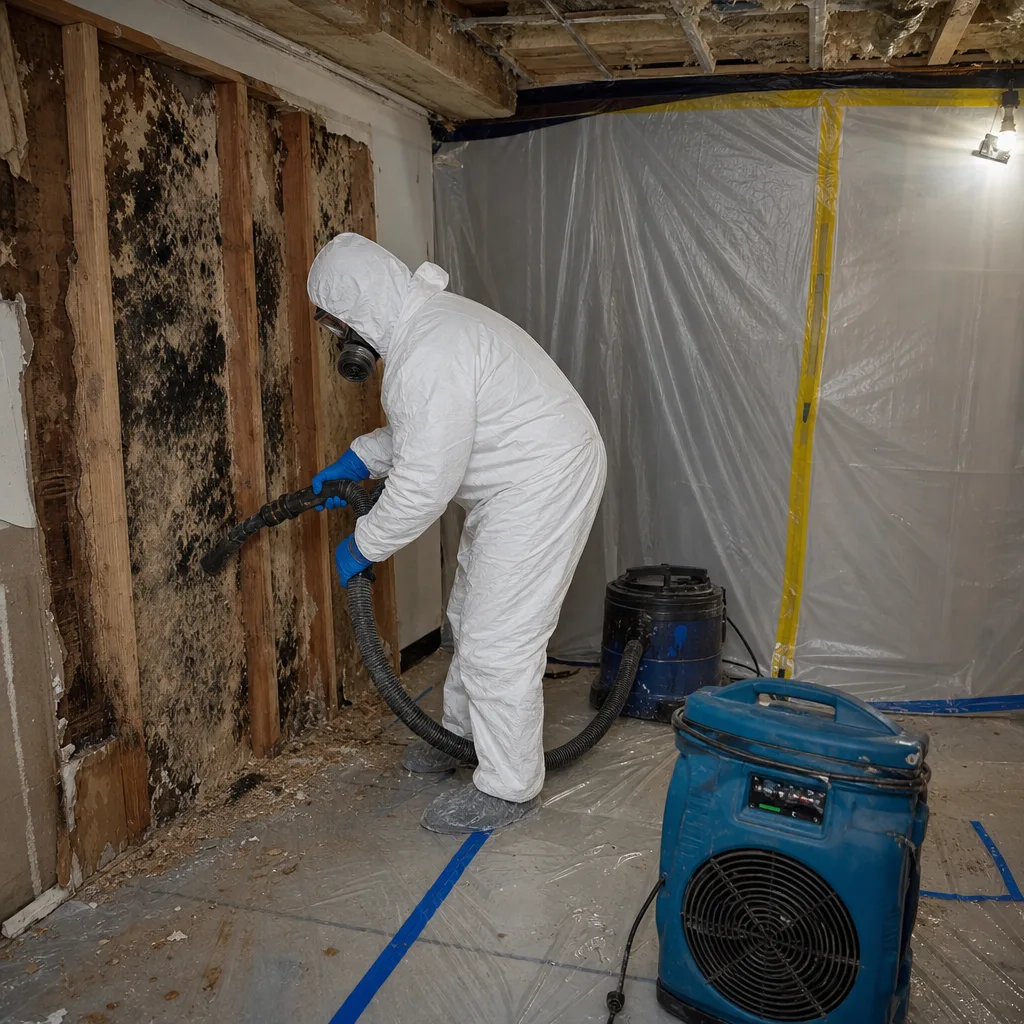
Mold removal on a typical Saint Francis basement wall section costs $1,200 to $3,400, including containment, HEPA air scrubbing, removal of affected drywall or insulation, treatment of remaining structure, and drying verification. Full basement remediation with finished-wall reconstruction commonly runs $4,500 to $6,200. Our crews use XPOWER air movers and Dri-Eaz dehumidifiers sized for the actual cubic footage, not a one-size-fits-all setup. The moisture map we build on day one drives every decision after it.
Black Mold Remediation
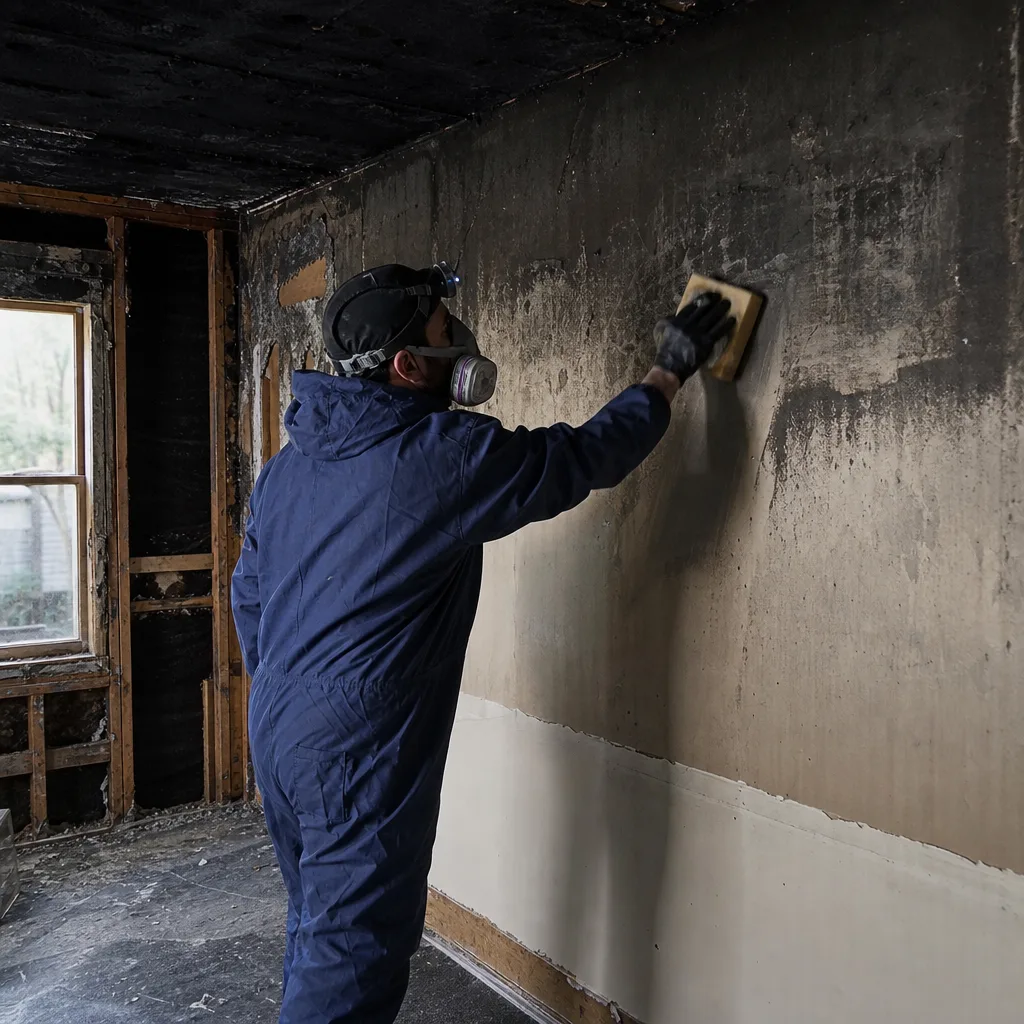
Black mold remediation in Saint Francis generally adds 15% to 25% to a standard removal estimate because the containment requirements are stricter and the affected materials are more likely to include sheetrock, carpet pad, and furniture-level porous items. We treat every suspected stachybotrys growth as a full containment job until testing says otherwise. That’s not an upsell. That’s the difference between cleaning a stain and actually removing spores from the air column your family breathes.
Air Quality Restoration
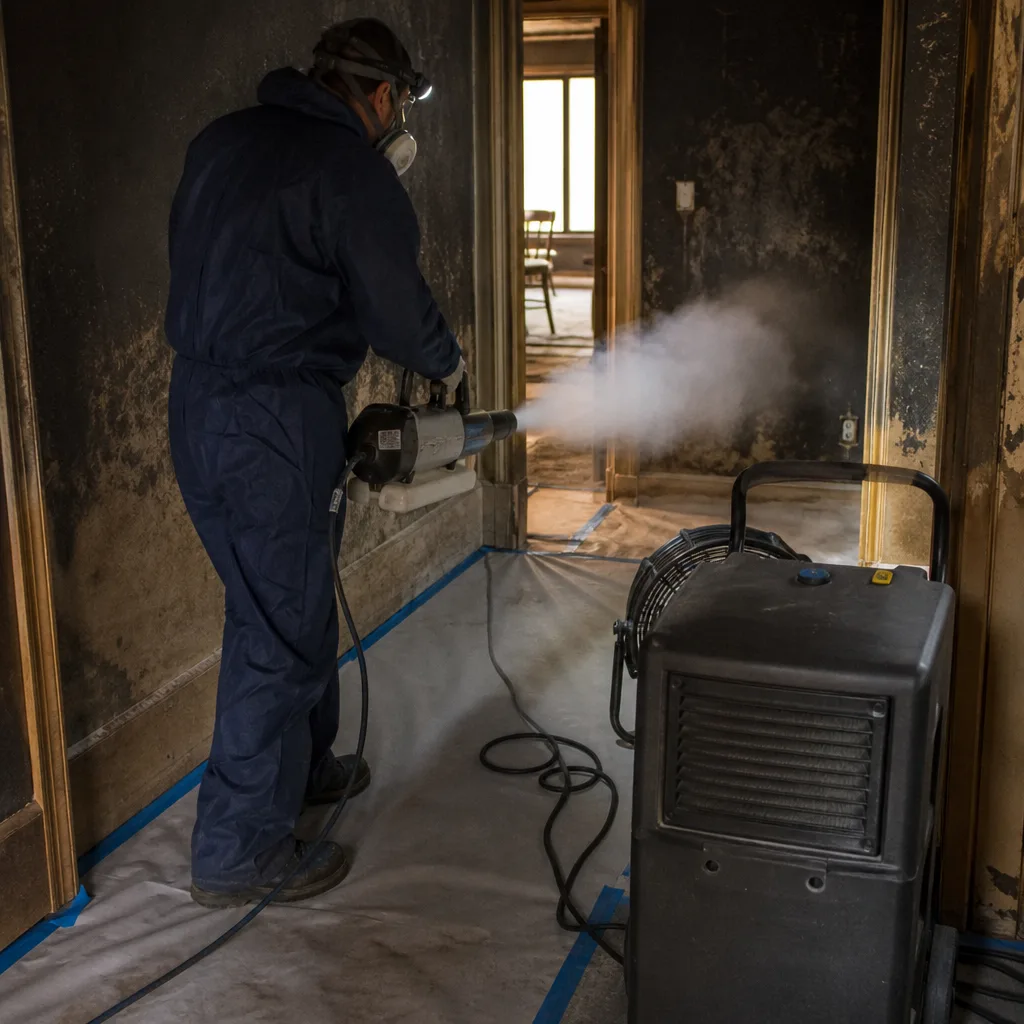
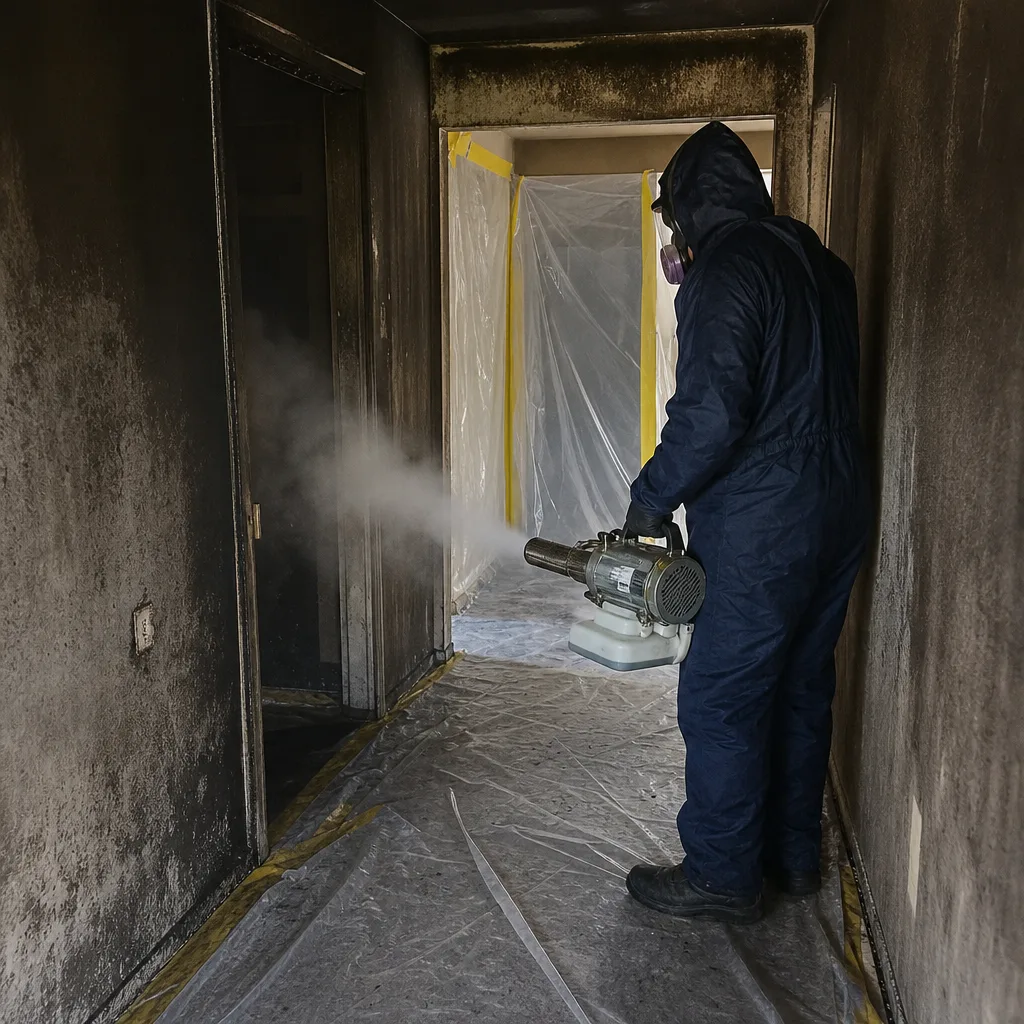
After physical removal, we scrub the air with HEPA filtration sized for the space and run moisture logging until the air itself meets the dry standard for your home’s construction type. Air quality restoration in Saint Francis typically adds $400 to $900 to a job, and it’s where most low-budget remediators cut corners. In a house built with engineered lumber and OSB, cutting that corner means the musty smell comes back in four months. We log the numbers and hand you the sheet.
What happens when you call
- 1
A real person answersNo phone trees - you reach a local pro.
- 2
You get an upfront price rangeHonest numbers before anyone is dispatched.
- 3
A background-checked tech heads outLicensed & insured, dispatched right away.
- 4
You approve before work beginsNothing starts until you say go.
Trusted Brands We Service in Saint Francis
We run Dri-Eaz dehumidifiers, XPOWER air movers, and B-Air filtration units on almost every Saint Francis job because they’re built for the kind of cold-spring, high-humidity conditions we work in here. Our equipment is commercial-grade, not rental-counter leftovers. We stock the filters, hoses, and replacement parts needed to keep equipment running on multi-day drying jobs in the 55070 ZIP code, which means no waiting on a shipment from the distributor when your basement is half-dry and the humidity is climbing. The equipment matters less than the person reading the moisture meter, but both have to be right on the same day.
Common Mold Remediation Problems We See in Saint Francis Homes
- Fast-molding OSB sheathing behind finished basement walls. The 1990s and 2000s tract homes across Saint Francis were framed and sheathed with OSB and engineered I-joists, materials that absorb water quickly and lose structural integrity faster than solid lumber. If a seepage leak or ice dam leak goes three weeks without drying, the mold has often already colonized the back side of the sheathing before any ceiling stain appears.
- Failed DIY crack-injection attempts on Rum River snowmelt seepage. Foundation seepage near the Rum River corridor often follows the same path year after year, and homeowners sometimes patch the visible crack without stopping the water on the outside. The mold behind that finished wall keeps growing while the patch looks fine from the inside. We regularly find waterline bands at multiple heights on basement drywall, evidence of repeated floods, paired with old injection scars that never addressed the source.
- Ice dam leaks on lower-pitch 1990s and 2000s roofs. Saint Francis gets the full Minnesota freeze-thaw cycle, and the shallower roof pitches common on this era of construction hold snow and form ice dams along the eaves. When the melt water works under the shingles, it soaks the attic sheathing and ceiling drywall. Mold establishes in the attic cavity months before most homeowners see a stain on the bedroom ceiling.
- Undersized drying equipment in detached workshops and outbuildings. A suburban basement with standard equipment dries in a few days. A 30-by-40 detached workshop with a concrete slab, no vapor barrier, and OSB-sheathed walls needs more air movement and more moisture removal than a standard residential setup delivers. When a crew treats an acreage outbuilding like a townhouse basement, the surface dries and the mold returns. We size equipment for the building, not for the category.
Pricing for Mold Remediation in Saint Francis, MN
Here’s what we charge for common mold work in Saint Francis:
- Mold inspection and testing: $350-$650
- Mold removal, single wall section with containment: $1,200-$3,400
- Full basement mold remediation with rebuild: $4,500-$6,200
- Black mold remediation (add-on to removal): 15%-25% above standard rate
- Crawl space treatment and encapsulation prep: $2,800-$5,400
- Air quality restoration and HEPA scrubbing: $400-$900
What moves the number is the square footage of affected surface, whether containment requires a full room or a whole basement, and whether the framing itself must be treated versus removed. We give a written scope before any work starts, and estimates are free. Call (888) 861-1852 and we’ll send someone out to measure, photograph, and write it up. You’ll know the number before you agree to anything.
We Also Serve Cities Near Saint Francis
Our crews work throughout northern Anoka County, including Oak Grove, East Bethel, Anoka, and Ramsey. If you’re on the west side of Saint Francis or out toward the county line, the same dispatch number reaches the same certified team. Mold remediation in Saint Francis is our focus here, but the service area covers the surrounding communities without any change in response time or pricing structure.
Serving Saint Francis, MN - Our Local Coverage Area
We’re based in the Saint Francis area and know this community well. Use the map below to see our service coverage - if you’re nearby, we can almost certainly help.
FAQs - Mold Remediation in Saint Francis
OSB sheathing in Saint Francis homes needs drying begun within 48 to 72 hours of water contact to prevent mold colonization, and faster is better when temperatures hover in the 40s and 50s. OSB absorbs water faster than plywood or solid lumber, and the resin-bonded wood fibers hold that moisture longer, which is why engineered-lumber homes from the 1990s and 2000s are more vulnerable than the older solid-lumber houses in closer-in suburbs. If you saw water in your basement during the April or May thaw and you’re just now noticing a smell in July, call (888) 861-1852 for an inspection before the damage spreads behind the drywall.
Repeated waterline staining in Rum River-area basements typically comes from foundation seepage that was patched from the inside without addressing the exterior water path, so the water returns each spring and the mold behind the finished wall reestablishes itself. The freeze-thaw cycle opens and closes foundation cracks every year, and crack injection done without excavating or re-grading the exterior only hides the problem temporarily. We find old DIY patches with active mold growing behind them on a regular basis in lower-terrain parcels along the river corridor. The fix is source-first: find the water, stop the water, then remove and treat the mold.
Detached workshops and acreage outbuildings in Saint Francis are more complex because they usually lack modern vapor barriers, sit on slab foundations without perimeter drainage, and have OSB wall sheathing that absorbs moisture from both exterior rain and interior condensation. Standard residential drying equipment is undersized for these larger, leakier structures, and surface-level cleaning without full moisture mapping lets mold return within months. Our crews size Dri-Eaz dehumidifiers and XPOWER air movers to the actual cubic footage and air-sealing profile of the building, not to a generic room baseline. That’s the difference between a one-trip fix and a call you have to make again next spring.
Low-pitch roofs common on 1990s and 2000s Saint Francis tract homes hold snow longer and form ice dams along the eaves during every freeze-thaw cycle, forcing melt water under the shingles and into the attic sheathing. The first sign of trouble is usually not a ceiling stain but a faint musty odor in an upstairs hallway or a dark patch visible only from inside the attic access. By the time a stain shows through the drywall, the OSB roof sheathing has often been wet for weeks or months. If you suspect an ice dam leak from last winter, call (888) 861-1852 for an attic inspection before the next freeze season locks the moisture in place.
Speed matters more in Saint Francis because the town’s 1990s and 2000s housing stock uses OSB sheathing and engineered lumber that molds faster than the solid-lumber construction more common in older neighboring communities like Nowthen and Bethel, and because the Rum River spring-snowmelt pattern floods multiple low-lying properties at once, creating a surge in demand every April and May. A delay of even a week during that window can mean the difference between drying a basement in place and tearing out finished walls. Our dispatch operates 24/7, and we keep crews routed through Anoka County daily during the thaw season specifically because the demand spike here is predictable and severe.
A Field Note From a Saint Francis Job
Our crew responded to a 2003-built home on 229th Lane NW after repeated spring snowmelt from the Rum River saturated the OSB wall sheathing behind a finished basement. The homeowner had tried injecting a foundation crack the previous fall, and the water had simply found a new path. We removed the failed DIY patches, opened the affected wall section, and ran Dri-Eaz dehumidifiers with XPOWER air movers sized to the basement’s actual load. The drying window dropped by days, not hours, and we treated the I-joist cavities before mold could spread beyond the initial waterline band. That’s what aggressive, source-first remediation looks like in this housing stock.
How Saint Francis’s Building History Shapes Mold Risk
The town’s expansion during the 1990s and 2000s produced a very specific kind of house: OSB-sheathed walls and roof decks, engineered I-joist floor systems, LVL beams, and foundation walls that went in fast on land that had been farm fields a generation earlier. Those materials perform well when dry and fail predictably when wet. OSB swells at the edges, delaminates under repeated moisture exposure, and holds water long enough for mold to establish beneath paint and behind vapor barriers. The older farmhouses and outbuildings that predate the subdivision era present their own set of problems: hand-framed lumber, sometimes no vapor barrier at all, and basements or cellars never designed for modern humidity loads.
The Rum River corridor layers a second risk on top. Spring snowmelt from the broader watershed funnels through Saint Francis, elevating the water table in low-lying parcels and pushing groundwater against foundation walls in a pattern that repeats year after year. Homes on the lower terrain near the river see waterline staining at multiple heights on basement drywall, and that’s more than a cosmetic issue. It’s a record of repeated water intrusion events, and where repeated water goes, mold follows. Neighboring communities like Bethel and Nowthen, further from the river’s direct influence, don’t share this same spring surge pattern. Saint Francis does, and every remediation plan we write here accounts for it.
The Floodline Restoration Co. Approach
We don’t hand the job off between a water-damage crew and a mold crew and a rebuild crew. The same certified technicians who contain the affected area and remove the mold also dry the structure, log the daily moisture readings, and rebuild what needs rebuilding. That continuity matters in Saint Francis because the homes here require a full cycle of work, from source correction to air scrubbing to replacing what was removed. A partial job that leaves hidden moisture behind is not a bargain. It’s a liability that matures over the next year.
Every job we do here is backed by the 90-Day Done Right Promise, what we call the Keystone Standard internally. It’s not a warranty buried in fine print, and it’s not a vague assurance. It’s a written commitment: if it isn’t done right, we make it right. We also bill your insurance carrier directly when coverage applies, so you’re not playing messenger between our paperwork and your adjuster. Photo documentation, written scope, and moisture logs are standard on every job, not extras.
Call (888) 861-1852 for a free estimate. A live person answers, 24/7. We’ll be there when we say.
Written by Curt Bowman, Owner at Floodline Restoration Co. of Minneapolis, serving Saint Francis and Anoka County.