

Fast, Reliable Mold Remediation Across Saint Anthony
Mold remediation in Saint Anthony, MN typically costs $1,800 to $6,400 depending on how far the growth has spread and whether it reached structural framing. Most jobs in the 55418 ZIP are finished within three to five days from the first inspection. If you’re seeing black staining along basement walls near Silver Lake Road or catching a musty smell in a 1950s rambler, call (888) 861-1852 and a live dispatcher answers. Our crews know why Saint Anthony basements mold differently than inland suburbs, and we’ll explain exactly what we’re treating before any work begins.
Key Takeaways: Mold Remediation in Saint Anthony
- Local root cause: Mississippi River hydrostatic pressure pushes groundwater through aging clay drain tile, re-wetting concrete-block basement walls every spring.
- Typical cost: $1,800 to $6,400 in this market, with crawl space treatment running $900 to $2,200 on average.
- Response time: A live person answers 24/7, and an inspector typically reaches a Saint Anthony home within 60 to 90 minutes of your call.
- Insurance: We document everything with photos and moisture logs, then bill your carrier directly so you don’t play messenger.
- Guarantee: Every job carries the 90-Day Done Right Promise in writing. If it isn’t done right, we make it right, no arguing.
Why Floodline Restoration Co. of Minneapolis Is Saint Anthony’s Preferred Mold Remediation Company
Saint Anthony homeowners have a specific problem, and we’ve spent 42 years learning how it behaves. The basements here weren’t built for the water table they sit on. When the Mississippi swells each spring and groundwater pushes up through collapsed clay tile, walls that were dry in February are weeping by April. Our technicians have walked hundreds of these basements. We know what a failed cove joint looks like in a 1950s concrete-block foundation, and we know that treating the mold without fixing the water source means you’ll be calling us again next spring.
Our reputation in Saint Anthony rests on a simple promise: the 90-Day Done Right Promise, also called the Keystone Standard. It’s in writing. It doesn’t have fine print. If mold returns or the drying standard wasn’t met, we come back and fix it, no paperwork battles, no arguing. Homeowners who’ve been burned by a contractor once don’t forget it, and we don’t expect them to. Every technician who enters your Saint Anthony home is background-checked, uniformed, and trained to IICRC, RIA, and IFA standards. We carry professional-grade Dri-Eaz, Phoenix, XPOWER, and B-Air equipment, and we use Injectidry systems for wall cavities that older homes love to hide moisture in. When you call (888) 861-1852, a live dispatcher answers at any hour, and a certified crew reaches Saint Anthony fast because this is our home turf.
Our Mold Remediation Services in Saint Anthony
Mold Inspection & Testing
Before we remove anything, we find out what’s actually growing and why. A mold inspection in Saint Anthony homes costs $300 to $650 when we’re taking air samples and moisture readings across the affected area. In 1940s to 1970s basements, we’re looking specifically at cove joints, sill plates, and the bottom three feet of concrete-block walls, because that’s where river-driven groundwater wicks upward. We use moisture meters to map how far water has traveled behind the block. Most Saint Anthony inspections take two to three hours, and you’ll have a written report with lab results before we recommend any treatment.
Black Mold Remediation
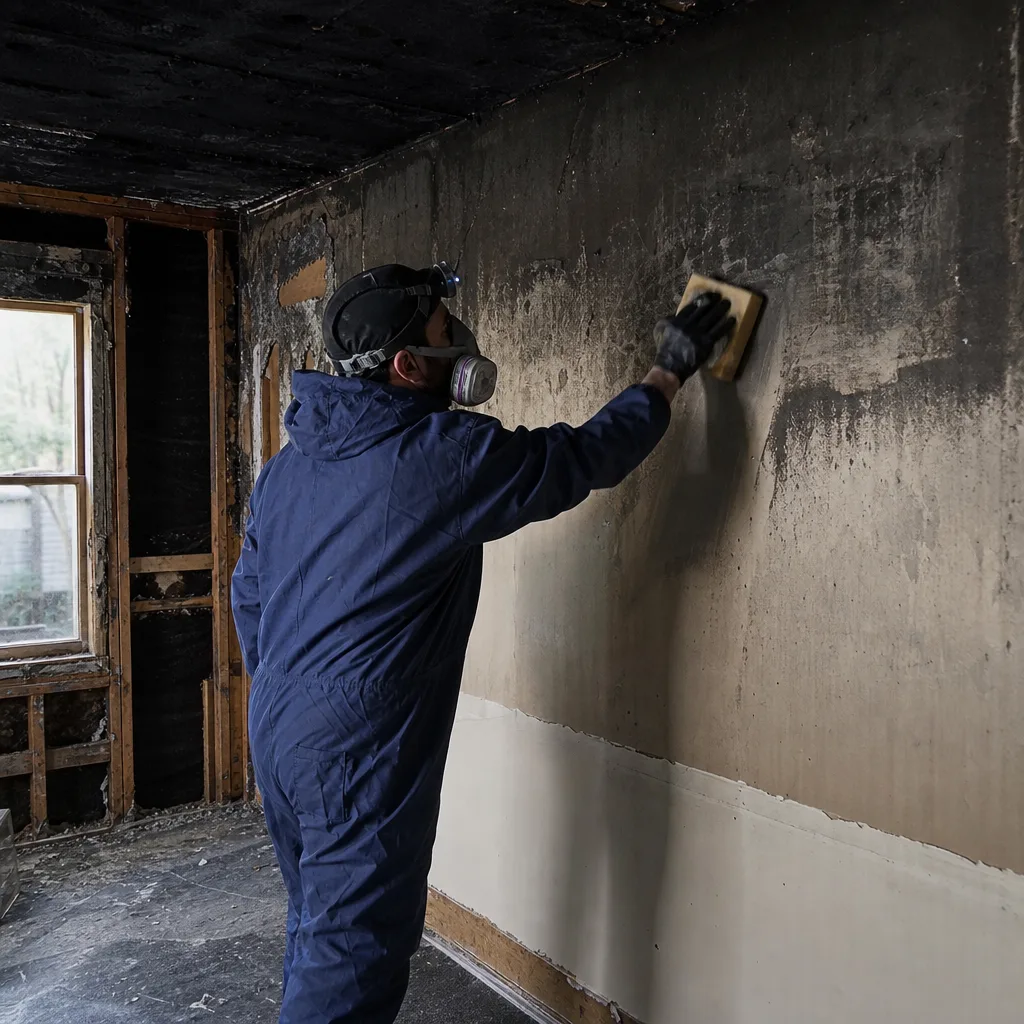
Black mold, typically Stachybotrys chartarum, grows where moisture has been present for weeks, not days. In Saint Anthony, that’s usually a basement wall that’s been weeping since spring thaw near the river corridor, or a ceiling under an ice-dam leak. Black mold remediation in Saint Anthony runs $2,200 to $6,400. We contain the affected area with negative air pressure, HEPA-vacuum every surface, remove contaminated drywall and insulation, and treat framing and block with an antimicrobial rated for the strain we identified. Clearance air sampling follows before we hand the space back.
Crawl Space Treatment
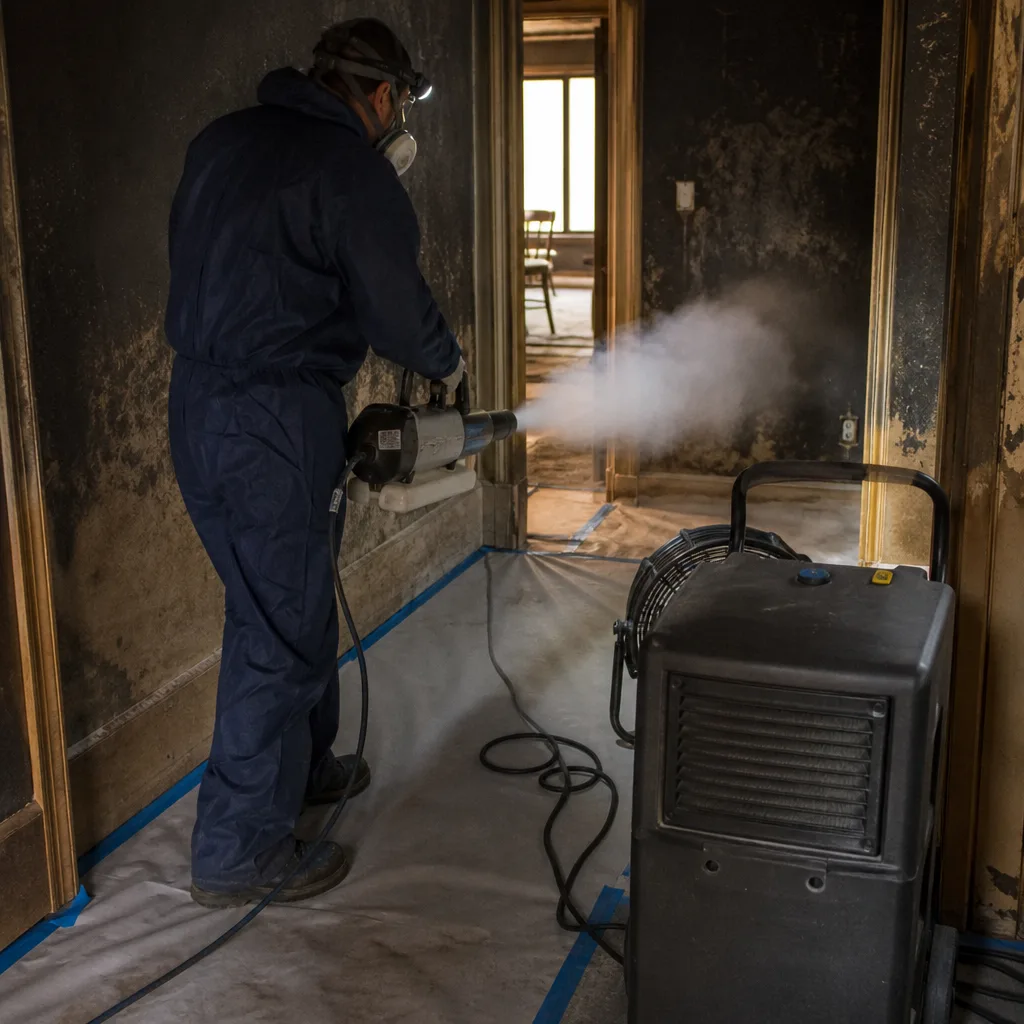
Homes in the older Saint Anthony neighborhoods along St. Anthony Boulevard and Silver Lake Road often have crawl spaces that were built with original foundation vents now half-buried by landscaping or blocked by years of silt. Mold in these spaces is common, and the fix isn’t just spraying a fungicide. Crawl space treatment in Saint Anthony costs $900 to $2,200. We remove contaminated debris, treat exposed framing, address the venting or drainage issue that caused the moisture, and in many cases install a vapor barrier. The goal is a crawl space that stays dry on its own, because your 1960s floor joists weren’t designed to sit in humid air.
Air Quality Restoration
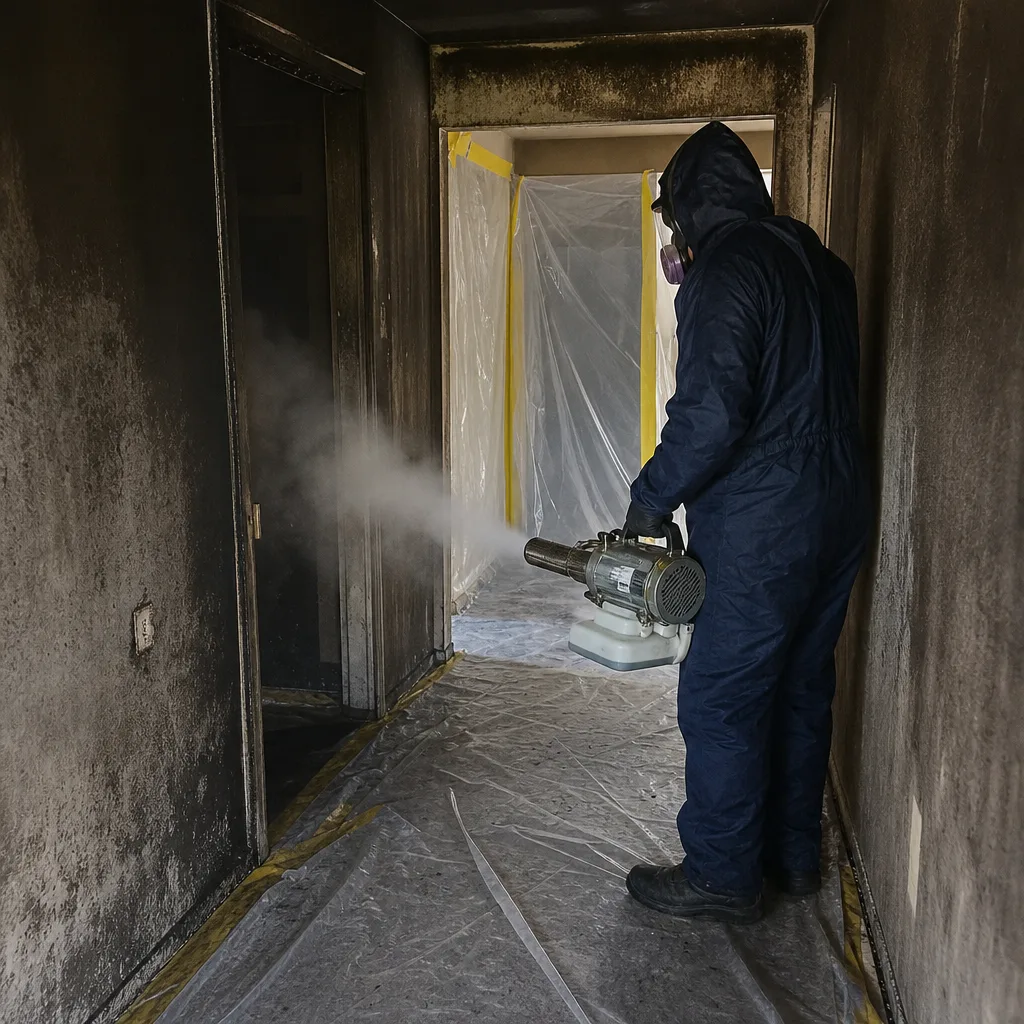
Mold spores don’t stay in the basement. Saint Anthony homes with forced-air furnaces pull basement air upward and distribute it through every room, which is why we test the air upstairs too. Air quality restoration for Saint Anthony homes costs $400 to $1,400 depending on square footage and whether duct cleaning is needed. We run HEPA air scrubbers during active remediation and can clean ductwork after the source is removed. Our techs know that a 1950s concrete-block basement with a recently-remediated wall can still leave spores in the duct returns, and we address that before you move couches back in.
What happens when you call
- 1
A real person answersNo phone trees - you reach a local pro.
- 2
You get an upfront price rangeHonest numbers before anyone is dispatched.
- 3
A background-checked tech heads outLicensed & insured, dispatched right away.
- 4
You approve before work beginsNothing starts until you say go.
Trusted Brands We Service in Saint Anthony
We work on homes of every vintage, and the equipment we bring is what separates a real remediation from a wipe-down. Our crews use Dri-Eaz LGR dehumidifiers, Phoenix air movers, XPOWER air scrubbers, B-Air ventilation units, and Injectidry wall-drying systems. We stage this gear specifically for Saint Anthony jobs, because older concrete-block construction holds moisture longer than modern poured walls and needs more aggressive drying. We don’t subcontract the work out. The same certified team that reads the moisture map on day one handles daily readings and hands you the final log.
Common Mold Remediation Problems We See in Saint Anthony Homes
- Post-remediation moisture rebound. In 1950s to 1970s concrete-block basements along the Mississippi corridor, we routinely see mold return within weeks of a previous remediation because the contractor never addressed collapsed or root-bound clay drain tile. The wall dries, looks clean, and then spring groundwater rises and re-wets the block from the outside in. We identify failed perimeter drainage before we call a job done.
- Treating river-driven sewage backup as clean water. When the river rises in Saint Anthony, hydrostatic pressure pushes groundwater into basements, but it often arrives carrying sewage from collapsed laterals. That’s Category 3 water, not clean groundwater. Skipping the biohazard protocol leaves pathogens under cove joints and behind base plates. We inspect for this every time because we’ve seen it too often in the blocks closest to the river.
- Hidden mold behind low-pitch roof sheathing. Minnesota’s -20°F winters build ice dams on the older rooflines common in Saint Anthony’s 1940s to 1960s housing stock. Repeated attic leaks saturate sheathing, and mold grows above the drywall where nobody sees it. We check the attic during every Saint Anthony inspection because it’s the most common overlooked source we find.
- Spore spread from aggressive drying without source control. Turning on high-speed fans before the mold source is contained just launches spores into the air and into your ductwork. We set containment and negative pressure before we start drying, so the mold stays where we’re treating it, not in your bedroom upstairs.
Pricing for Mold Remediation in Saint Anthony, MN
Saint Anthony pricing tracks with the construction reality of the area. Concrete-block basements need more drying time, and homes built between the 1940s and 1970s often have original clay sewer laterals that complicate water removal. Here’s what we see in this market.
- Inspection and testing: $300 to $650
- Crawl space treatment: $900 to $2,200
- Air quality restoration: $400 to $1,400
- Black mold remediation (single room): $2,200 to $4,500
- Full basement remediation with drainage correction: $4,000 to $6,400
What moves the number is the scope: how far the growth spread, whether we’re stripping drywall down to the framing, and whether the water source needs excavating. We give you a written scope before any work starts, and we don’t start until you’ve read it. The estimate is free. Call (888) 861-1852 and a live person picks up, day or night. We also offer $50 off any repair over $250, an $89 seasonal tune-up, and a 5% discount for seniors and veterans, always.
We Also Serve Cities Near Saint Anthony
Our crews work throughout the north metro, and if you’re in Columbia Heights, Falcon Heights, New Brighton, or Roseville, we’ll get there just as fast. You can also see our full coverage on the Mold Remediation in Saint Anthony page for details specific to this area.
Serving Saint Anthony, MN - Our Local Coverage Area
We’re based in the Saint Anthony area and know this community well. Use the map below to see our service coverage - if you’re nearby, we can almost certainly help.
FAQs - Mold Remediation in Saint Anthony
Because the water source hasn’t stopped. In Saint Anthony, spring groundwater from Mississippi River snowmelt pushes up through original clay drain tile, many segments of which collapsed decades ago. You can scrub the wall surface clean, but the block is still wicking moisture from the outside. We fix the drainage first, then remediate the mold. Call (888) 861-1852 and we’ll show you where the water is actually entering.
In many Saint Anthony basements, especially near the river, it’s Category 3, which means contaminated. When the river rises, groundwater mixes with sewage from collapsed or root-bound clay laterals. That’s not clean water, and it requires biohazard protocol, not just drying. Our techs test and document this before recommending a treatment plan.
Hydrostatic pressure from the Mississippi River. Saint Anthony’s water table sits close to the surface, and spring snowmelt pushes groundwater upward into basements through aging drainage systems. Inland suburbs a few miles west sit higher and drier. The remediation itself isn’t different; the frequency of recurrence and the need for drainage correction is.
Yes. Concrete block absorbs water and holds it far longer than modern poured concrete or insulated concrete forms. In a 1960s Saint Anthony basement, moisture can sit between the block and finished wall framing for months before you see any staining. Our inspectors use moisture meters to map what’s happening behind the drywall, not just on it.
In most cases, yes. We treat the framing and install a vapor barrier, and we can often improve the existing vents rather than tearing them out. The key is getting the moisture source under control. In some Saint Anthony crawl spaces, we recommend sealing the space and adding a dehumidifier instead, which keeps the original construction intact. Call (888) 861-1852 and we’ll assess yours.
The Reason Saint Anthony Basements Mold Differently
Saint Anthony sits directly adjacent to the Mississippi River, and its compact housing stock is built over a groundwater table that surges each spring when Minnesota snowmelt swells the river. What this means in practical terms is simple: basement water intrusion is a near-annual event here, not an occasional one. In the blocks closest to the river, original clay perimeter drain tiles have frequently collapsed or become root-bound over 60-plus years. When spring flooding hits, groundwater and sewage backup often arrive together, turning what looks like a straightforward water loss into a Category 3 biohazard job. Our technicians encounter this combination in the 55418 ZIP far more often than in drier, higher-elevation suburbs just west. That’s why we don’t treat mold in Saint Anthony the way we’d treat it in an inland suburb. We look for the drainage failure, we document the water class, and we build the fix around keeping the river out of your basement, not just scraping the mold off the wall.
On a 1950s block near the Mississippi in 55418, our crew responded to a basement that had flooded during spring thaw. The river had risen and pushed groundwater up through a collapsed segment of original clay drain tile. The concrete-block walls had wicked moisture for weeks, and we found black mold along the cove joint and sill plate. Our techs removed the contaminated material and set Dri-Eaz LGR dehumidifiers and Injectidry wall-drying systems to pull moisture from the block. Then we replaced the failed clay tile with perforated PVC at the foundation perimeter, installed a sump pump, and treated the block with an antimicrobial. Air sampling confirmed clearance before the family moved anything back. That’s the right sequence, and it’s what we do on every Saint Anthony job that presents this way.
Who Answers When You Call About Mold in Saint Anthony
A real person. At 2 a.m. or 2 p.m., a live dispatcher answers (888) 861-1852. There’s no phone tree. You won’t leave a message and hope somebody calls back tomorrow morning with mold spreading in the basement. Our Saint Anthony clients tend to be homeowners who’ve lived in the same house for twenty years and plan to stay. They remember dealing with a contractor who promised one thing and did another. They want someone who shows up on time, writes down the scope, and stands behind the work. We’ve built Floodline Restoration Co. around that expectation, from background-checked technicians to direct insurance billing to the written 90-Day Done Right Promise. We’ll be there when we say, and we’ll hand you a moisture log and a written guarantee before we leave.
Written by Curt Bowman, Owner at Floodline Restoration Co., serving Saint Anthony and the surrounding north metro for over 42 years.