

Mold Remediation in Cottage Grove: What It Costs, What We Find, and How We Fix It
Mold remediation in Cottage Grove typically runs $1,800 to $6,500 for a contained basement or crawl space job, depending on square footage, how far the growth has spread, and whether the moisture source is a one-time leak or an ongoing drainage failure. Most containment, removal, and antimicrobial treatment can be completed in two to five days. We serve the entire 55016 zip code and answer the phone live at (888) 861-1852, any hour, any day.
What most Cottage Grove homeowners don’t know until they’re standing in it: a mold problem here is rarely just about the mold. It’s about the clay under the foundation, the drain tile that was undersized when the house went up, and how close the neighborhood sits to the Mississippi River. Our Mold Remediation crews get called to the same Cottage Grove streets after nearly every heavy rain, and we know exactly what to look for before we cut the first hole in the drywall.
Key Takeaways for Cottage Grove Homeowners
- Typical mold remediation in Cottage Grove runs $1,800 to $6,500, with black mold and multi-room containment at the higher end.
- Late-1990s and early-2000s subdivisions south and west of Jamaica Avenue are repeat-call zones due to undersized original drain tile in clay-heavy soil.
- Emergency response to Cottage Grove is available around the clock. A live person answers at (888) 861-1852, not a recording.
- Every job includes a written scope before work starts and the 90-Day Done Right Promise in writing when it’s finished.
- We coordinate directly with your insurance carrier, including photo documentation and moisture logs your adjuster can review.
Why Floodline Restoration Co. of Minneapolis Is Cottage Grove’s Preferred Mold Remediation Company
Floodline Restoration Co. has been running restoration crews in Washington County for over 42 years. Our name is built around a dispatch board, not a sales desk, and that’s how Cottage Grove customers reach us: a live person answers at (888) 861-1852, says “Floodline,” and starts arranging a crew. Not a voicemail tree, not a callback form.
We know Cottage Grove’s streets. We know the ranch homes in the 55016 southern subdivisions that were framed out in the 1990s with finished basements meant to be lived in, not stored in. We know that when those basements get wet, the water doesn’t just sit in a corner; it travels behind baseboards, wicks up studs, and feeds mold inside wall cavities where nobody sees it for months. That’s the mold we’re called to remove most often.
Curt Bowman founded this company in 2010 around a simple principle: do the job right, document it, and stand behind it in writing. Every Cottage Grove project gets a background-checked, uniformed crew trained to IICRC, RIA, and IFA standards. And every job ends with the 90-Day Done Right Promise. If it’s not done right, we make it right. No arguing, no paperwork battles. That’s the Keystone Standard, and we put it in writing because our name is on the line.
When a Cottage Grove homeowner calls us at 2 a.m. because a sump pump failed and water is rising in a finished basement, a live dispatcher picks up. The crew arrives the same visit, extraction starts, and daily moisture readings get logged until the dry standard is met. That log goes to you and your insurance carrier, so nobody has to guess what was done.
Our Mold Remediation Services in Cottage Grove
Cottage Grove homeowners call us for everything from a musty crawl space to full black mold containment behind finished drywall. Here are the services we run most often in this area.
Mold Inspection & Testing
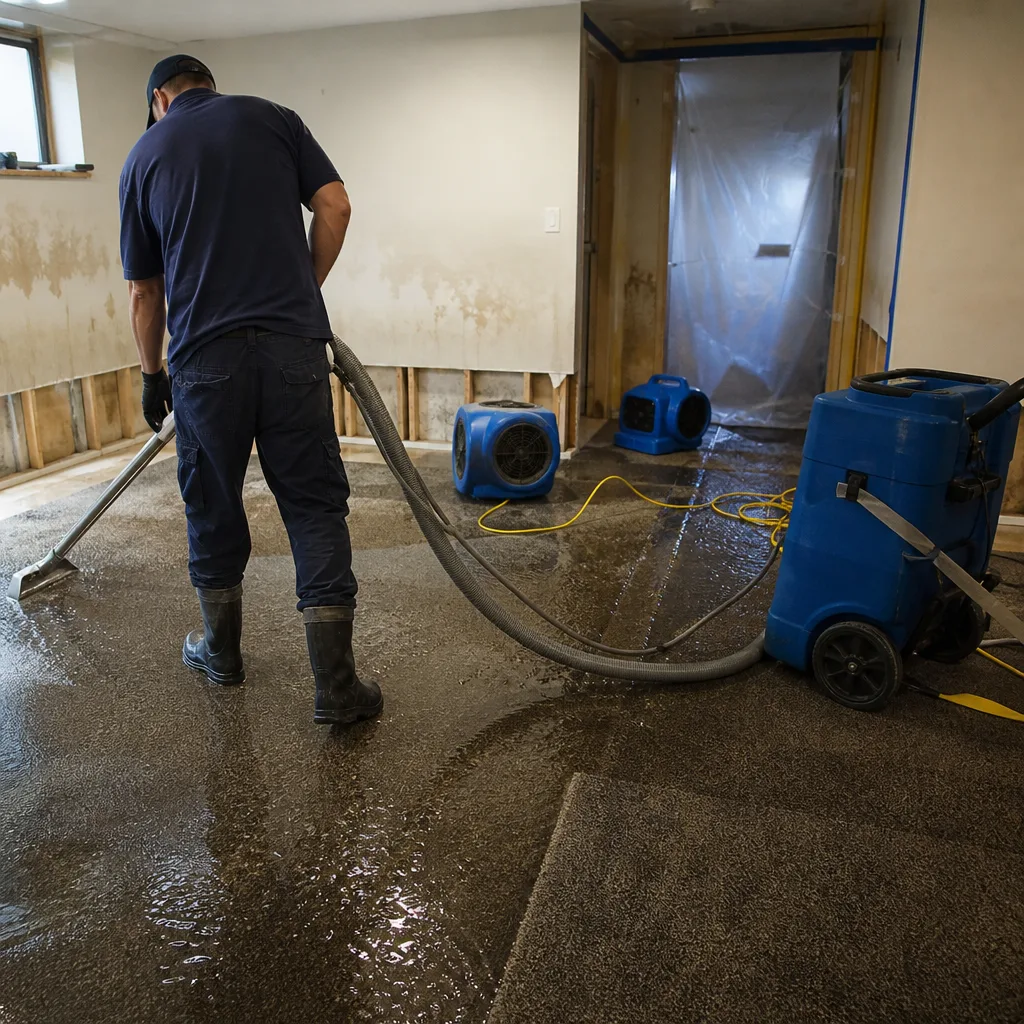
A real mold inspection in Cottage Grove starts with a moisture map, not a swab kit. We run moisture meters across basement floors and lower wall cavities, pull back carpet edges where needed, and check for the humidity signature that clay-heavy Washington County soil leaves on foundations long after the rain stops. If testing is warranted, we collect samples and send them to a third-party lab. You get a written report that tells you what’s there, what’s not, and what needs to happen next. No scare tactics. Inspection and testing in Cottage Grove typically runs $300 to $600.
Mold Removal
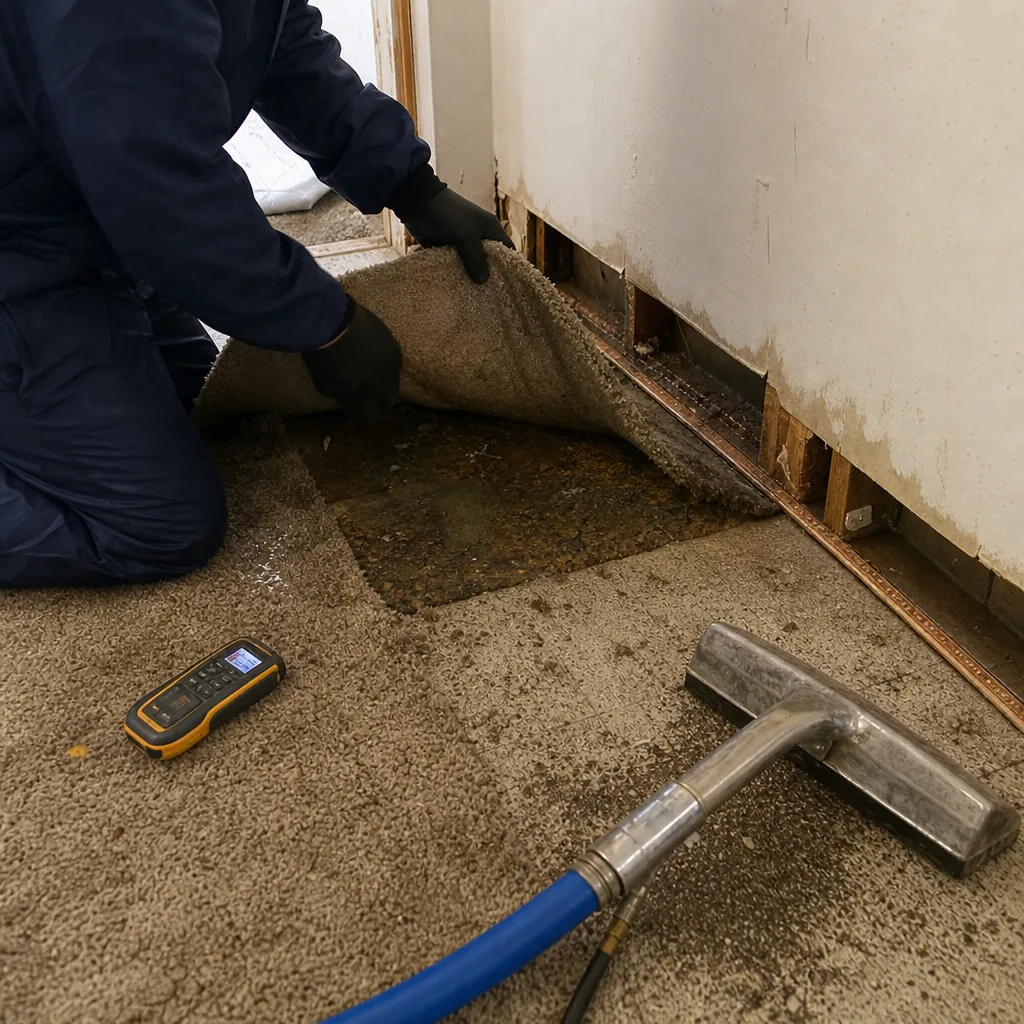
Mold removal means physically removing affected materials and cleaning what remains. In Cottage Grove’s finished basements, that usually means cutting out wet drywall, pulling insulation from stud cavities, and treating the framing with an antimicrobial. We use containment barriers and negative air pressure so spores don’t spread to the upstairs living space during removal. Typical mold removal in a single finished basement room runs $1,800 to $4,200, depending on how far the growth has traveled behind the walls.
Black Mold Remediation
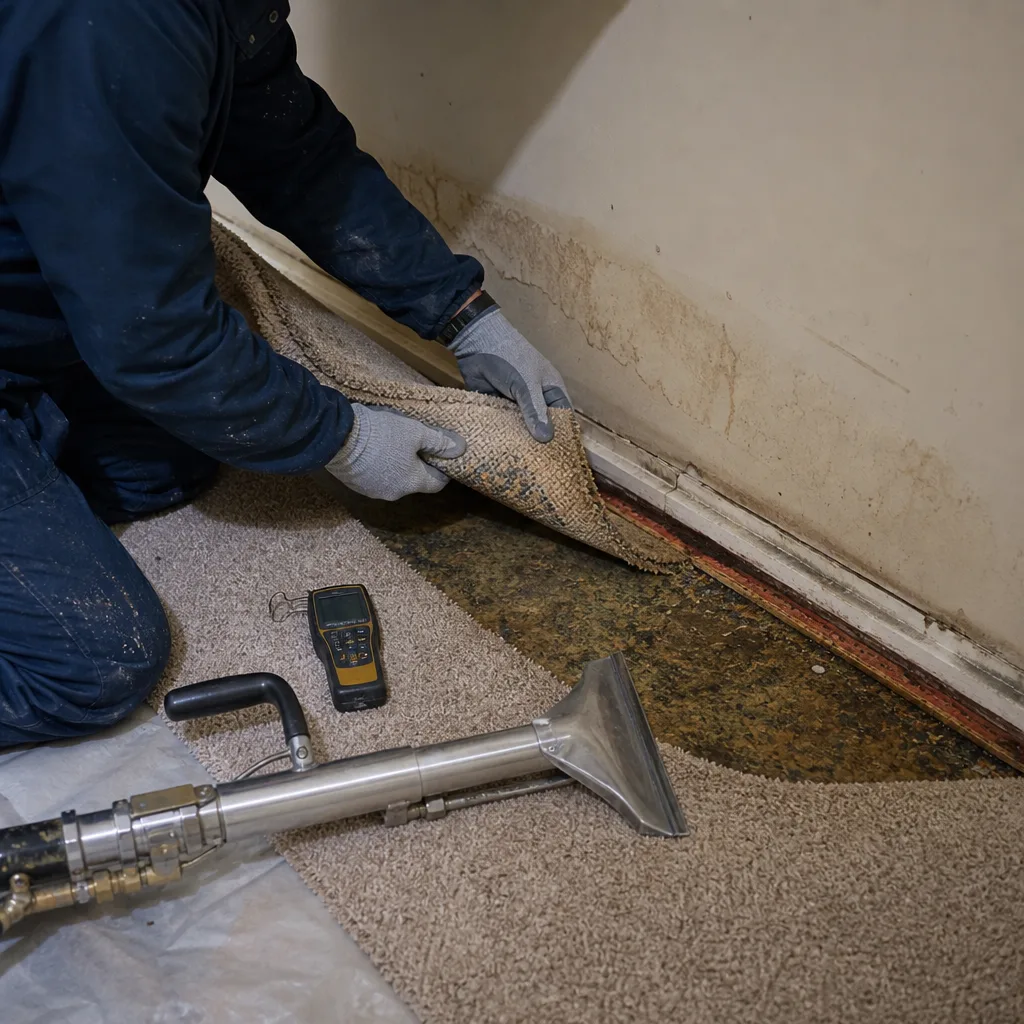
Black mold (Stachybotrys) gets the headlines, and in Cottage Grove it’s usually the result of chronic moisture, not a single leak. Homes in the late-90s and early-2000s subdivisions south of Jamaica Avenue are especially prone because the original drain tile was undersized for the clay it sits in. The moisture never fully stops, and black mold colonizes the back side of drywall where nobody checks. Black mold remediation requires full containment, HEPA air filtration, removal of affected materials, and aggressive drying. Expect $3,000 to $6,500 for a typical finished basement containment in Cottage Grove. We will not cut corners on your family’s air.
Air Quality Restoration
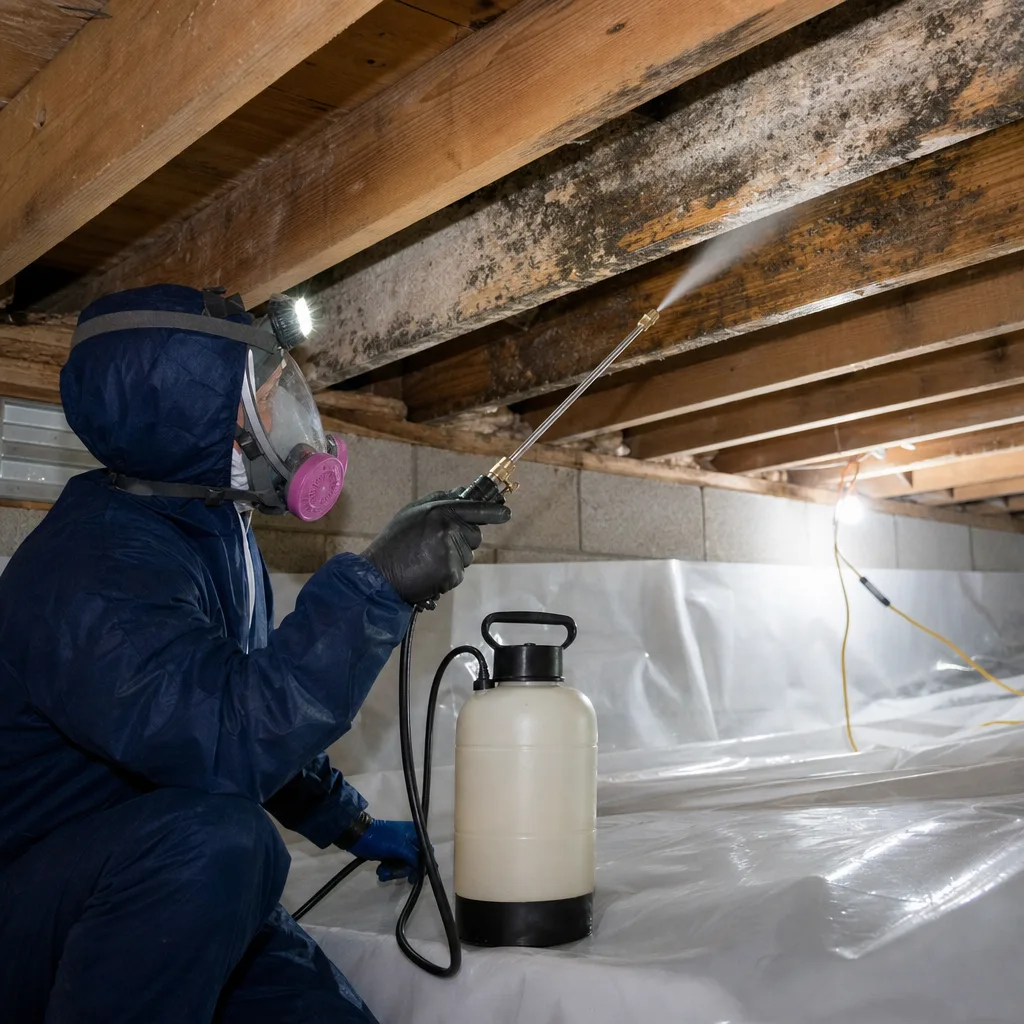
After the visible mold is gone, the air in the house still holds what the removal kicked up. We run XPOWER air scrubbers and HEPA filtration during and after remediation to pull spores, dust, and microbial particles out of the living space. In Cottage Grove homes near the Mississippi River corridor, where lower-level humidity runs higher than inland suburbs, we also recommend a follow-up check of the HVAC system and ductwork if the mold was located near a return vent. Air quality restoration typically adds $400 to $1,100 to a remediation job.
What happens when you call
- 1
A real person answersNo phone trees - you reach a local pro.
- 2
You get an upfront price rangeHonest numbers before anyone is dispatched.
- 3
A background-checked tech heads outLicensed & insured, dispatched right away.
- 4
You approve before work beginsNothing starts until you say go.
Trusted Brands We Service in Cottage Grove
We don’t show up with rented equipment from a big-box store. Our Cottage Grove crews run professional-grade Phoenix and Dri-Eaz dehumidifiers, XPOWER air scrubbers, and B-Air filtration units on every job. We stock replacement filters, HEPA cartridges, and containment materials locally, so a Cottage Grove job doesn’t get delayed waiting on parts from a warehouse. If you’ve got a crawl space, a finished basement, or a drywall cavity that’s holding moisture, our equipment list is built for exactly what Cottage Grove clay and river humidity throw at it.
Common Mold Remediation Problems We See in Cottage Grove Homes
- Undersized original drain tile in late-90s and early-2000s plats. Builders sized the tile for average conditions, not for Cottage Grove’s clay-heavy lots. After a two-inch rain, groundwater backs up, hydrostatic pressure builds, and water finds the path of least resistance: through the cove joint and into the finished basement. Mold follows.
- High clay content in Washington County soil. Clay holds water long after the storm ends. That means sump pumps run for days, not hours. When they overload or fail, the basement floods repeatedly. Each flood feeds the mold that the last flood left behind.
- Mississippi River floodplain saturation. Homes in Grey Cloud Island and low-lying areas along the riverbank stay wet long after the river recedes. Sustained ground saturation slows structural drying and leaves hidden mold behind baseboards, under sill plates, and inside wall cavities.
- Finished basements built as living space. Cottage Grove’s 1970s through 2000s housing stock leans heavily toward ranch and two-story homes with fully finished basements: rec rooms, bedrooms, home offices. A mold problem in an unfinished storage room is one thing. A mold problem behind a child’s bedroom wall is another. We treat both with the same containment protocol.
Pricing for Mold Remediation in Cottage Grove, MN
Here’s what Cottage Grove homeowners can expect to pay, based on the jobs we run most often in the 55016 zip.
- Mold inspection with moisture mapping: $300-$600
- Contained mold removal, single finished basement room: $1,800-$4,200
- Black mold remediation with full containment and HEPA filtration: $3,000-$6,500
- Air quality restoration with ductwork check: $400-$1,100
- Crawl space mold treatment with vapor barrier repair: $1,500-$3,800
What moves a Cottage Grove job from the low end to the high end: how many rooms are affected, whether the mold is behind finished drywall or in an open crawl space, and whether the moisture source is still active. If we find the drain tile was undersized from the start, we’ll tell you before we quote remediation, because removing mold without fixing the water is a bill you’d pay twice. We give a written scope before any work starts. No surprises on the bill, and we bill your insurance carrier directly when coverage applies. Call (888) 861-1852 for an exact quote. Estimates are free.
A Field Look: What Mold Remediation in Cottage Grove Actually Looks Like
Our crew responded to a ranch home in the southern 55016 subdivisions after a spring rain event revealed black mold behind the finished basement drywall. The original 1998 drain tile couldn’t handle the clay-heavy lot, so groundwater wicked up the studs. We isolated the space, ran Dri-Eaz dehumidifiers and XPOWER air scrubbers, and removed the affected drywall and insulation, then treated the framing with an antimicrobial before the homeowner scheduled a drain-tile retrofit. That’s the pattern we see over and over in Cottage Grove: the mold is a symptom, the water is the disease, and the fix has to address both or you’ll call us again next spring. We’d rather prevent the second call than bill for it.
Why Cottage Grove’s Soil and River Make Mold Different Here
Cottage Grove sits directly on the east bank of the Mississippi River, and that one fact changes everything about how we approach mold. Inland Washington County suburbs like Woodbury or Oakdale deal primarily with surface water and foundation seepage. Cottage Grove deals with riverine flooding, storm-sewer backups tied to Mississippi water levels, and sustained ground saturation that keeps foundations wet for weeks after a flood event. Homes in the Grey Cloud Island area and adjacent low-lying sections of the 55016 zip get groundwater that doesn’t drain away; it lingers, and lingering water is what mold needs to establish itself inside a wall cavity.
There’s a second Cottage Grove factor that doesn’t show up on generic mold guides. The city’s clay-heavy soil drains poorly, so spring snowmelt and summer deluges pressurize foundations hydrostatically long after the rain stops. Sump pump overload and failure is the single most common restoration trigger in this market. And in the late-1990s and early-2000s subdivisions south and west of Jamaica Avenue, the original drain-tile systems were often undersized for the clay-heavy lots they serve. Those addresses generate repeat water intrusion claims after nearly every significant rain event. Restoration crews who work Cottage Grove regularly know those plats by heart. That’s local knowledge you can’t fake, and it’s why we recommend a moisture assessment before a simple mold wipe-down in this part of town.
We Also Serve Cities Near Cottage Grove
Floodline Restoration Co. runs mold remediation and restoration crews throughout the southeast metro. If you’re in Saint Paul Park, Woodbury, Inver Grove Heights, or South Saint Paul, we answer the same phone, at the same hour, with the same written guarantee. Cottage Grove is our home turf, but we cover the whole Washington County side of the river.
Serving Cottage Grove, MN - Our Local Coverage Area
We’re based in the Cottage Grove area and know this community well. Use the map below to see our service coverage - if you’re nearby, we can almost certainly help.
FAQs - Mold Remediation in Cottage Grove
Because a working sump pump only handles water that reaches the sump basin. In Cottage Grove’s clay-heavy soil, hydrostatic pressure pushes groundwater up through the cove joint and through foundation cracks, not just into the sump. If the original drain tile was undersized, as it was in many late-90s and early-2000s subdivisions south and west of Jamaica Avenue, the water bypasses the tile entirely and wets the slab and lower wall cavities. The sump pump keeps running, the basement looks dry, and mold grows behind the finished drywall where nobody sees it. The fix is a drainage assessment, not a bigger sump pump. Call (888) 861-1852 and we’ll moisture-map the problem before quoting anything.
Sustained ground saturation adds one to three days to structural drying in floodplain homes compared to drier inland Cottage Grove neighborhoods. The soil holds water against the foundation long after the river recedes, which means our dehumidifiers and air movers run longer, and we hold off on rebuilding until the moisture log reaches the dry standard. That’s the right way. Rebuilding early traps moisture inside the wall and guarantees the mold comes back. We give you the drying log daily while it’s happening.
In our experience, it’s the drainage issue more often than the one-time leak. A single washing machine overflow doesn’t usually produce black mold unless the water sat for days; chronic groundwater wicking from undersized drain tile does. Cottage Grove’s ranch homes, especially those built on clay-heavy lots south of Jamaica Avenue, show a pattern of black mold behind the lower drywall on exterior walls. If we find it, we trace the moisture source before we quote remediation. Removing the mold without fixing the water is a bill you’d be paying twice. Call (888) 861-1852 and we’ll walk you through what we’re seeing.
Yes. Scattered older farmstead structures on the rural eastern edges of Cottage Grove occasionally contain asbestos in drywall joint compound, floor tiles, or pipe insulation. If we’re cutting out mold-affected drywall or insulation in a pre-1970s home, we check for materials that require testing before we cut. If asbestos is present, we bring in a licensed abatement contractor for that portion while we continue the mold work on unaffected areas. The last thing we want is to solve a mold problem and create an asbestos exposure. We flag it, document it, and handle it in the written scope.
Prevention in a Cottage Grove crawl space starts with moisture control, not bleach. We install or repair vapor barriers, seal rim joist penetrations, address exterior grading so water drains away from the foundation, and in many cases recommend a crawl space dehumidifier sized for the space. The clay soil keeps the air damp year-round, so ventilation alone won’t fix it. We also check that downspouts and discharge lines carry water at least six feet from the foundation, not just to the wall. Every prevention job ends with a written maintenance checklist and the 90-Day Done Right Promise.
Call Floodline Restoration Co. for Mold Remediation in Cottage Grove
If you smell something musty in your Cottage Grove basement, see staining on drywall, or just bought a home in the 55016 zip and want a moisture assessment before you finish the lower level, call us. A live person answers at (888) 861-1852. We’ll ask a few questions, schedule a walkthrough, and give you a written scope before any work starts. We bill your insurance carrier directly when coverage applies, and every job is backed by the 90-Day Done Right Promise. Done right, and backed in writing. That’s the only way we work, and it’s how Cottage Grove homeowners have gotten their basements back for over 42 years.
Written by Curt Bowman, Owner at Floodline Restoration Co., serving Cottage Grove and the southeast metro with full-cycle restoration since 2010.