
How to Choose the Right Damage Restoration Company in Minneapolis
Choosing a damage restoration company in Minneapolis comes down to one question most homeowners never ask: who handles the rebuild after the drying equipment leaves? The answer separates full-cycle companies from mitigation-only crews that disappear once the moisture meter reads dry. If you’d rather not sort through the details yourself, call (888) 861-1852 and we’ll walk you through it.
We pulled a water heater out of a basement in Linden Hills last March where the homeowner had already called three other companies. Two of them quoted extraction and drying only. When she asked about the drywall that needed replacing, both said they’d “get her a referral” for the rebuild. That’s not a restoration company. That’s a handoff with extra steps. The right choice keeps the whole job under one roof, one crew, and one written guarantee.
Ask Who Handles the Rebuild - and Get It in Writing
Most “how to choose” guides in Minneapolis stop at checking IICRC badges and Google reviews. Those matter, but here’s what they miss: certification tells you a technician passed a course. It does not tell you whether the company will still answer the phone in 60 days when the paint is bubbling over the wall cavity they dried. The credential that actually protects you is a written guarantee covering the finished rebuild, not just the drying phase.
Before you sign anything, ask this exact question: “Who handles the rebuild, and is that scope included in this contract?”
Listen to how they answer. If they say “we have a guy we work with” or “we’ll get you a quote for that later,” you’re about to become the project manager for your own disaster. You’ll be the one coordinating schedules, relaying messages to your insurance carrier, and chasing down whoever was supposed to finish the trim work. In Minneapolis, where freeze-thaw cycles and spring storms create compound damage, a partial restoration is a future problem with a lag time.
At Floodline Restoration Co. of Minneapolis home, the rebuild is part of the same contract from day one. The same certified crew that extracts and dries is the crew that hangs the drywall and matches the paint. No handoffs, no “that’s a different department,” no phone tag with a subcontractor you’ve never met.
What a Written Guarantee Should Actually Contain
Verbal assurances mean nothing when a project manager leaves the company or a crew foreman forgets what he told you in the driveway. A real guarantee has four components, and if any one of them is missing, you don’t have a guarantee. You have a conversation.
Here’s what to look for:
- Duration: How long does the company stand behind the work? Thirty days is common. Ninety days means they’re actually confident the moisture is gone, because that’s long enough for hidden problems to show up. Mold takes time to develop. Wood movement takes a full season. A 30-day warranty expires before the problem announces itself.
- Coverage: What defects does it actually cover? Ask specifically whether the guarantee extends to the rebuild work - paint, trim, flooring - or only to the drying. Many companies will guarantee the drying and call it a day. The drying is the easy part to stand behind. The rebuild is where shortcuts show up.
- Claim contact: Who do you call when something goes wrong? If the answer is “the guy who did the work” and that guy gave you a cell number, you have a personal warranty, not a company warranty. Ask for the name of the person and the office line that will be answered.
- Written terms: If it’s not on paper, it doesn’t exist. Request the guarantee in writing before you sign the initial authorization. Not after. Before.
Floodline Restoration Co. provides a written 90-Day Done Right Promise, which we call the Keystone Standard internally, on every job in Minneapolis. If it’s not done right, we make it right. No paperwork battles, no arguing. It’s tied to our K.E.Y.S. values code: Krafted right, Every time, Your home first, Standing behind it. That’s not a marketing line. It’s the document you hold in your hand when we leave.
How to Read a Moisture Log Like a Proof of Work
Every legitimate drying crew in Minneapolis should produce a moisture log. The log is the paper trail of the drying process, and it’s the single most useful document a homeowner can review to know whether the work was done correctly. Don’t let anyone tell you it’s “internal paperwork.” It’s your proof, and you should see it before you sign a certificate of completion.
A proper moisture log contains three things:
- Readings: Daily moisture readings from multiple points in the affected area - walls, floors, subfloor, and the wall cavity if it was opened. Numbers should show a clear downward trend. Water damage drying is not magic. Moisture content drops steadily when equipment is placed correctly. If the numbers plateau for three days straight, something is wrong - a missized dehumidifier, a sealed cavity that isn’t breathing, or a re-wetting source that hasn’t been found.
- Timestamps: Readings should be dated and time-stamped, not scrawled on a legal pad. Digital moisture meters record this automatically. If a company hands you a single-page printout with no dates, treat it as incomplete.
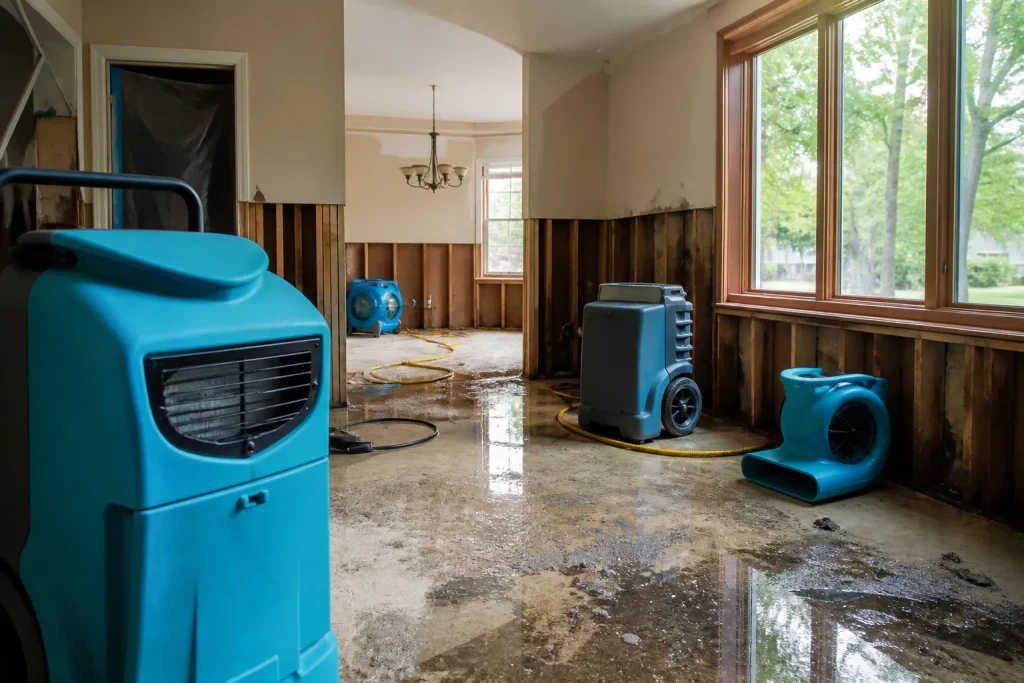
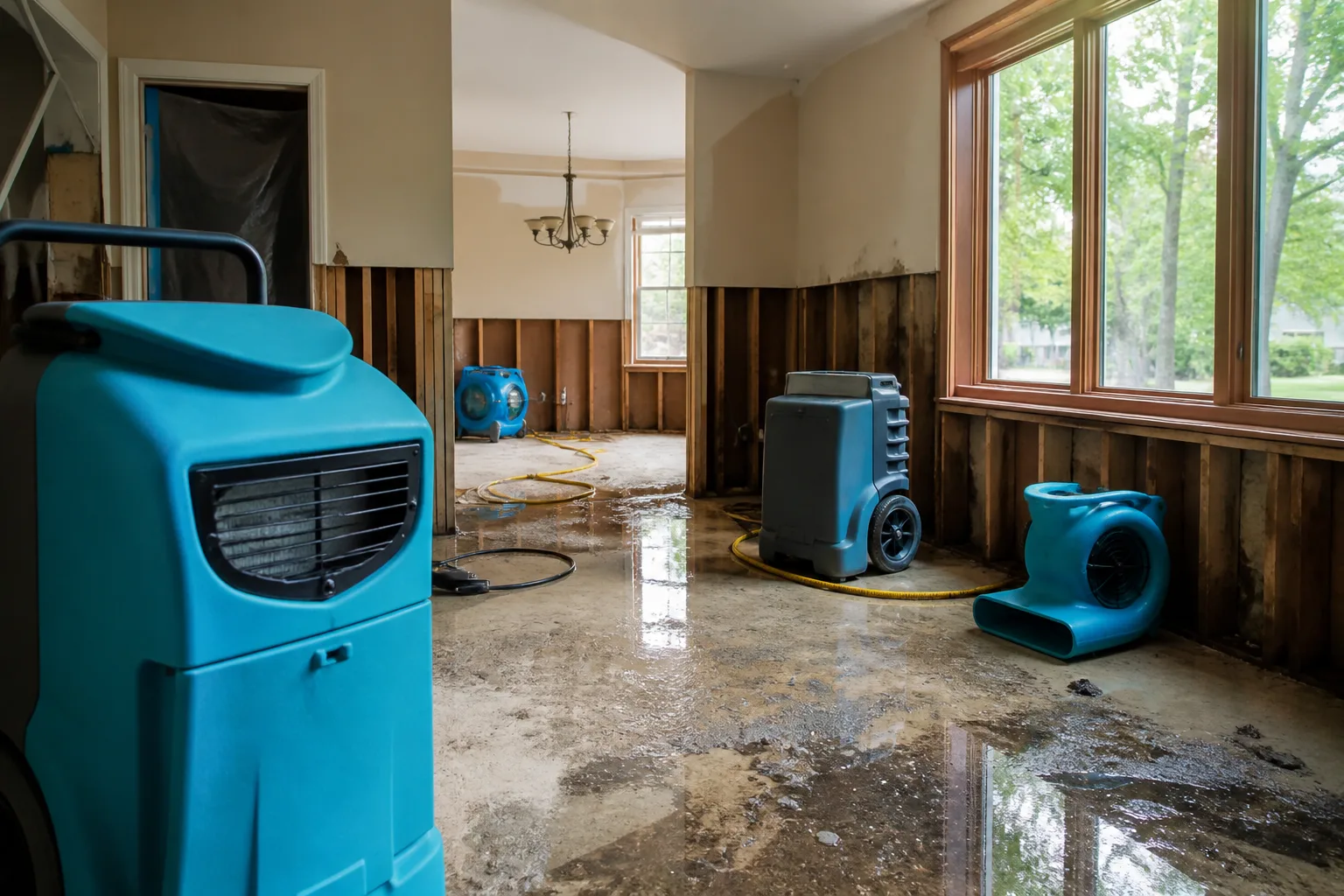
- Equipment records: The log should note which pieces of equipment were running, when they were placed, and when they were removed. Professional-grade gear - Dri-Eaz and Phoenix dehumidifiers, Injectidry drying mats for hardwood, B-Air and XPOWER air movers - moves a lot of air and pulls a lot of water. But a dehumidifier running in the wrong room does nothing. The equipment record shows the crew was thinking, not just plugging things in.
Ask to see the log before you sign off. We hand ours to the homeowner and the carrier on every Minneapolis job - daily readings, logged until the dry standard is met. It’s been that way since Curt Bowman founded this company in 2010 around a dispatch board, not a sales desk.
The Insurance Question That Reveals Everything
Before you sign an authorization form in Minneapolis, ask this: “Do you bill the carrier directly, or do I receive the check and pay you?”
The answer tells you more about a restoration company’s operational maturity than any review or certification. A company that bills the carrier directly is comfortable with the insurance process. They’ve done it hundreds of times. They know how to write a scope that a claims adjuster will approve, how to document damage with photos that support the claim, and how to coordinate with the carrier without you playing messenger.
A company that expects you to receive the check and pay them is putting the administrative burden on you. That’s not always a dealbreaker - some homeowners prefer to handle their own claim - but it means you’ll be the one tracking payment deadlines, reconciling supplements, and arguing about line items if the carrier disputes something. After a flood in your Minneapolis basement, the last thing you need is a part-time job in insurance administration.
We bill insurance carriers directly. We’ve done it for years, and our office handles the paperwork, the photos, the moisture documentation, and the adjuster calls. The homeowner never plays messenger between us and the carrier. That’s part of what we mean by a square deal: no surprises on the bill.
Local Crews vs. Storm Chasers: How to Verify Permanent Presence
Minneapolis has a storm-chaser problem. After every major hail event, windstorm, or spring flood, out-of-state companies roll into town with rented equipment, temporary crews, and a post office box that goes quiet in six weeks. They do aggressive volume, then they leave. When the caulk fails or the subfloor cups, you can’t reach anyone who remembers your address.
Here are specific indicators to verify a company’s permanent local presence in Minneapolis:
- Equipment ownership: Ask whether the crew runs their own dehumidifiers and air movers or rents them per job. Permanent local companies own their equipment. Storm chasers rent it from a national supplier and return it when the surge ends. We run our own Dri-Eaz, Phoenix, XPOWER, B-Air, and Injectidry units - maintained, tested, and ready in Minneapolis every day of the year.
- Staff longevity: Ask how long the crew leads have worked for the company. A company that trains apprentices into journeymen keeps people around. A company that hires day laborers for each storm surge doesn’t. We hire local, train to IICRC, RIA, and IFA standards, and background-check every technician who walks through your door in uniform.
- Phone answer: Call the number at 2 a.m. on a Tuesday. A live person should answer. Storm chasers have voicemail. We have a live dispatcher, 24/7, every day - not a recording. A certified crew reaches the job and extraction is running the same visit.
- Local history: Ask how long the company has served Minneapolis specifically. We’ve been doing this for over 42 proud years in local communities - a company that plans to be in town in thirty years hires local, trains people, and answers the phone with a person. That’s not a bolt-on. It’s the business model.
Red Flags to Watch For on the First Call
You can learn more in a ten-minute phone call than in an hour of reading reviews. Here’s what to listen for when you call a restoration company in Minneapolis:
- “We’ll get there when we can.” Water damage compounds by the hour. A company that can’t promise an arrival window doesn’t have dispatch under control. Ask for a specific time, then hold them to it. We’ll be there when we say.
- “Just sign this and we’ll figure out the scope after we start.” Never sign a blank authorization. A written scope should come before work begins, with clear line items for extraction, drying, and rebuild.
- “You’ll have to call your insurance about that.” Some policy questions do require the homeowner to speak with the carrier directly. But a restoration company that treats insurance as your problem, not a shared process, is signaling they won’t be useful when the adjuster wants documentation.
- No mention of the rebuild. If the estimate covers only drying and demolition, ask about the reconstruction before you sign. If they can’t answer, call someone else. Related to this, our Water Damage Restoration in Minneapolis page explains what a complete scope should include from extraction through finish work.
When to Call a Pro
Some damage is obvious the moment you see it - a flooded basement, smoke in the rafters, a ceiling bowed from a plumbing leak. Other damage is quieter. Musty smells that persist after a spill, drywall that feels cool or soft to the touch weeks after a leak, paint that starts bubbling over a wall cavity in a Minneapolis winter when warm indoor air hits a wet stud bay. These are signs that moisture is still present behind finished surfaces. If you see any of them, don’t wait. Hidden moisture breeds mold inside the wall cavity, and by the time it’s visible on the surface, the remediation scope has grown substantially. Call a professional who can map the moisture properly - not just wipe the surface and spray a deodorizer. For suspected hidden moisture, see our Mold Remediation in Minneapolis page.
Related services in Minneapolis: Fire & Smoke Damage Restoration in Minneapolis covers what to do in the first 72 hours after a fire, and our main site has the full service list from sewage cleanup to full reconstruction.
The Bottom Line
Most restoration guides in Minneapolis tell you to check for certification and read reviews. Do that. But then go further. Ask who handles the rebuild, and get it in writing. Ask what the guarantee actually covers and for how long. Ask to see the moisture log before you sign a completion certificate. Ask about insurance billing before you sign the authorization. Ask whether the crew is local, permanent, and equipped with their own gear. Those questions take ten minutes and they eliminate most of the risk in choosing a restoration partner.
If you’re in Minneapolis and need help, Floodline Restoration Co. of Minneapolis offers free estimates. Call (888) 861-1852 and you’ll reach a live person - day or night, every day. We’ll come look, write the scope, and hand you the 90-Day Done Right Promise in writing before we start. No surprises on the bill, no handoffs, no vanishing acts after the dehumidifiers leave.
Frequently Asked Questions
Most extraction jobs are completed the same visit, and drying typically runs three to five days depending on the affected materials, the size of the area, and Minneapolis weather conditions. A full restoration from extraction through rebuild can take two to four weeks. Your restoration company should give you a written timeline before work starts. Call (888) 861-1852 for an estimate specific to your situation.
Most Minneapolis homeowner policies cover sudden and accidental water damage, fire damage, and storm damage, but coverage varies by carrier and cause. A restoration company that bills insurance directly - and documents the damage with photos and moisture logs - can reduce your out-of-pocket surprises and keep the claim moving. Ask your carrier about your specific policy, and ask your restoration company whether they coordinate with adjusters directly.
Visible discoloration, persistent musty odors, and allergy symptoms inside the home are common indicators. But mold commonly grows inside wall cavities and under flooring where you can’t see it, especially in Minneapolis homes with older construction and organic materials behind the drywall. A professional moisture inspection with a thermal camera and moisture meter can identify hidden damp areas before mold becomes a full-scale remediation project.
Shut off the water source if you can do so safely. Shut off electricity to the affected area. Move valuables and furniture out of the water. Call a restoration company with 24/7 dispatch - the sooner extraction starts, the less damage compounds. Do not use a regular household vacuum on water. Call (888) 861-1852 and we’ll have a certified crew on the way.
Written by Curt Bowman, Owner at Floodline Restoration Co. of Minneapolis, serving Minneapolis since 2010.
Need Damage Restoration Help?
Call Floodline Restoration Co. of Minneapolis - licensed & insured, here with fast after-hours help in Minneapolis.
(888) 861-1852