

Fast, Reliable Storm & Disaster Restoration Across Plymouth
Storm and disaster restoration in Plymouth usually starts with a phone call made at the worst possible moment. A tree limb through a bedroom window. Four inches of water across a finished basement off Zachary Lane. A garage door bowed inward after a June squall line. We answer that call at 2 a.m. with a live dispatcher, and a certified crew reaches your Plymouth home ready to extract, tarp, board up, and dry the structure. We know Plymouth’s housing stock, its clay soils, its freeze-thaw cycles, and the way spring melt hits whole cul-de-sacs at once. Call (888) 861-1852 and we’ll be there when we say.
Why Floodline Restoration Co. of Minneapolis Is Plymouth’s Preferred Storm & Disaster Restoration Company
Floodline Restoration Co. of Minneapolis has answered storm calls in Plymouth long enough to know the streets, the subdivisions, and the failure patterns that come with them. We do not send a salesperson first. We send background-checked, uniformed technicians trained to IICRC, RIA, and IFA standards. The same crew that tears out saturated carpet on day one handles daily moisture readings, hands the log to you and your carrier, and rebuilds what needs rebuilding. No mid-job handoff. No inherited crew.
Our Storm & Disaster Restoration team works in Plymouth neighborhoods from the lake homes near Medicine Lake to the ramblers and two-story colonials stacked through the 1980s and 1990s subdivisions. We know that homes here sit on Hennepin County’s heavy glacial clay, that finished basements are the rule rather than the exception, and that a failed sump pump off Zachary Lane rarely means just one wet house. When thaw hits, we often get flagged down by a neighbor two doors down while we’re still running equipment at the first job.
Every job is backed by the 90-Day Done Right Promise. That’s the Keystone Standard, in writing, tied to our K.E.Y.S. values: Krafted right, Every time, Your home first, Standing behind it. If it’s not done right, we make it right. No paperwork battles. No arguing.
Our Storm & Disaster Restoration Services in Plymouth
Wind Damage Repair
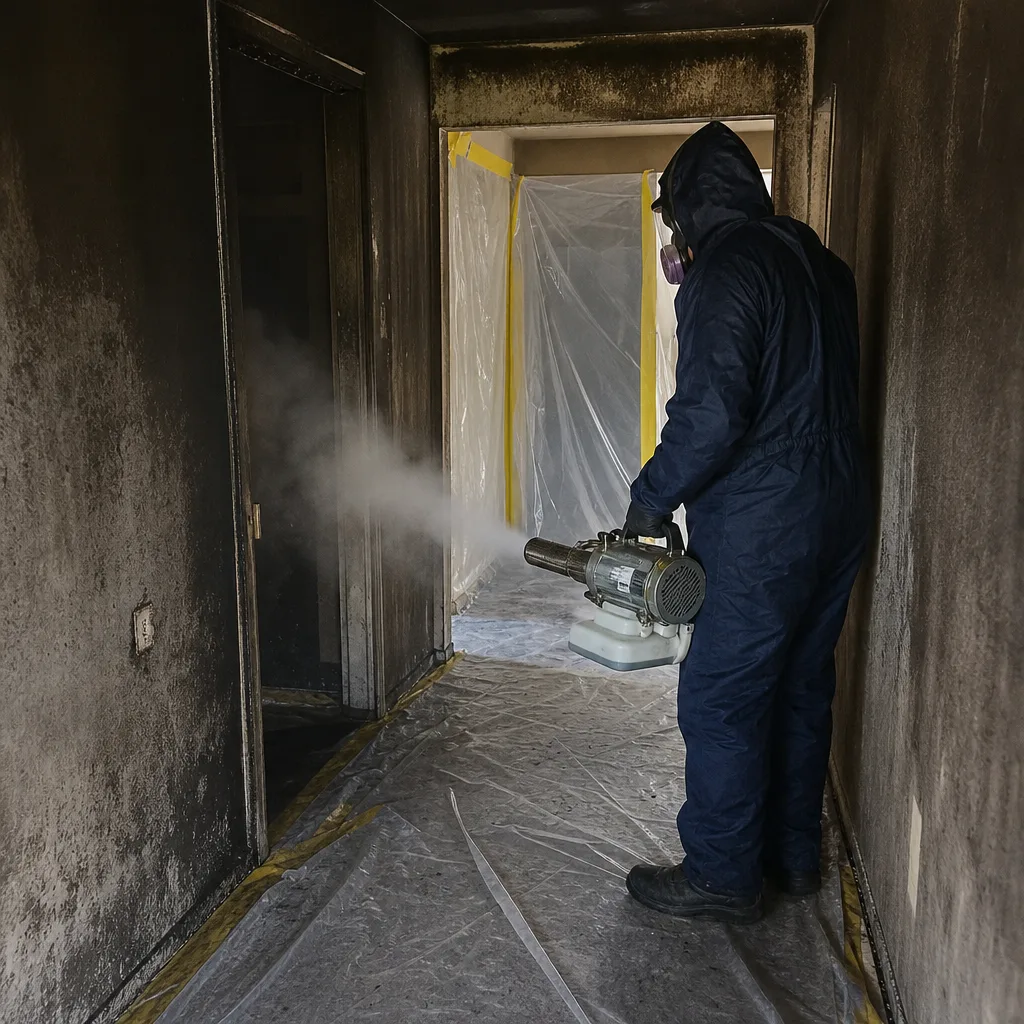
Plymouth’s late spring and summer storms put real lateral force on roofs, siding, and overhead garage doors. Wind-rated and impact-rated door reinforcement matters here, because an unrated decade-old door can blow in under pressure, pressurize the garage, and lift roof decking. That’s structural loss, and standard policies don’t always cover it. We repair track and panel damage, replace buckled sections, and reinforce door assemblies before the next system rolls through.
Flood Damage Restoration
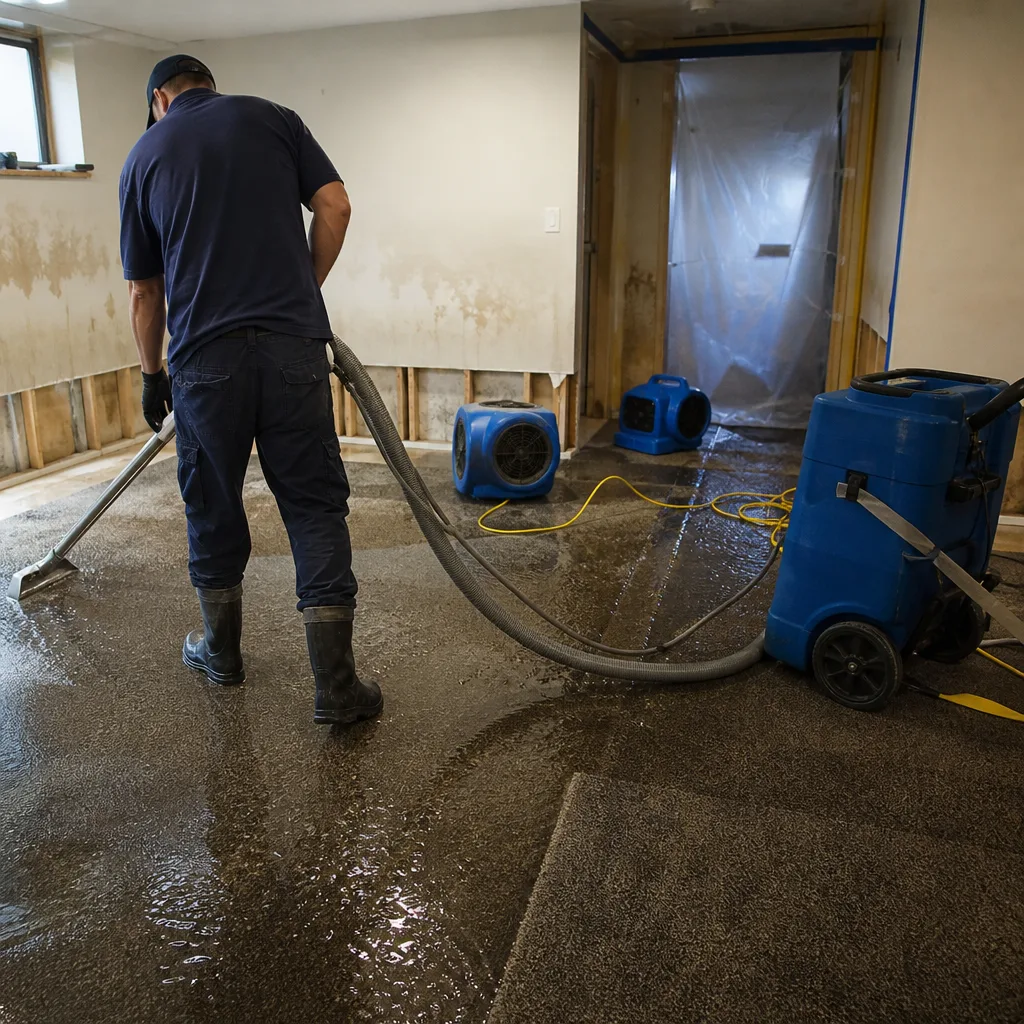
Flood damage in Plymouth is rarely an isolated event. The city’s 1980s and 1990s residential boom placed thousands of finished-basement homes directly on or over fill soils near Medicine Lake and the wetland buffers. When spring snowmelt saturates the ground and the interconnected drainage swales back up, sump systems fail simultaneously across entire blocks. We extract first, then dry to IICRC standard using Dri-Eaz LGR dehumidifiers and XPOWER air movers. We hand you the moisture log, not a promise.
Emergency Board-Up
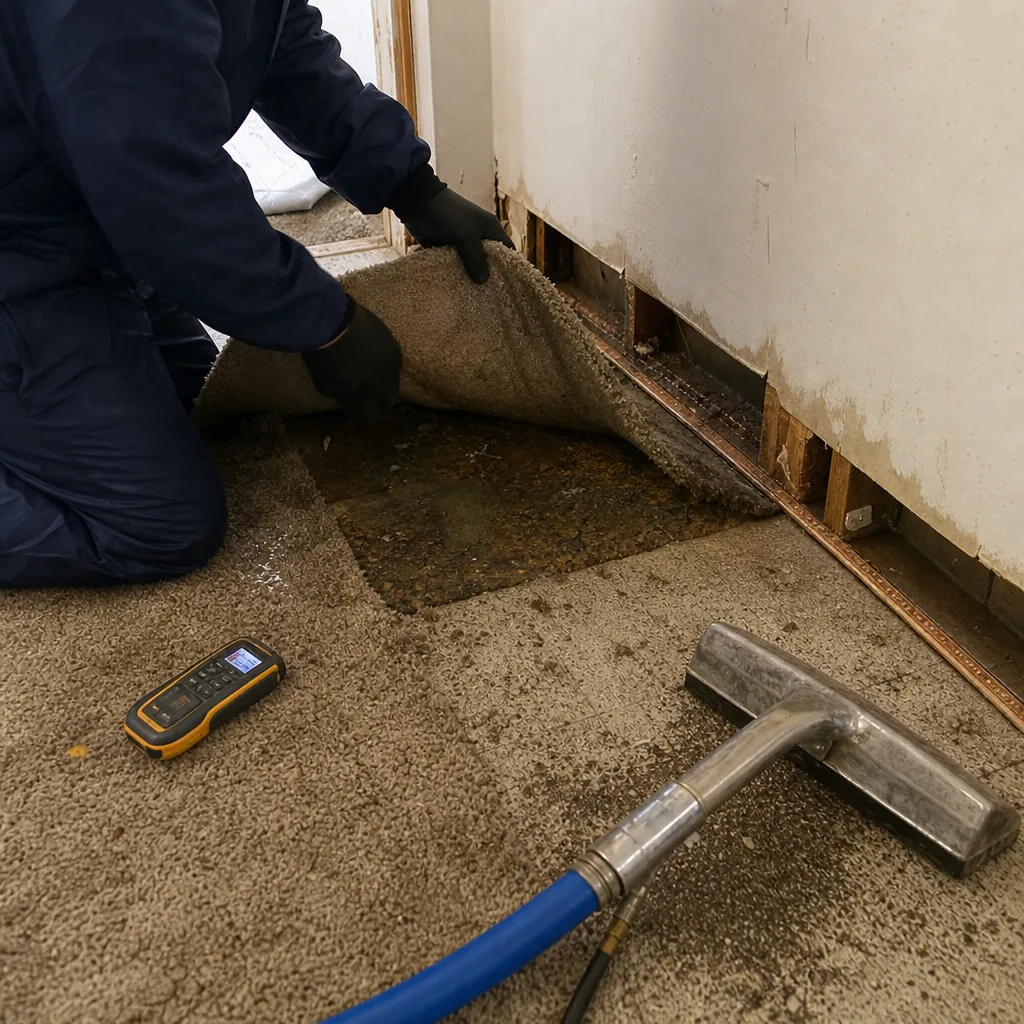
After a tree limb or windborne debris takes out a window or wall section, the first need is security and weather closure. We board up the opening same visit, using materials that will hold through the next storm rather than just until the adjuster arrives. Our crews work Plymouth neighborhoods quickly because we understand the street layout and can navigate to your door without a map.
Roof Tarping
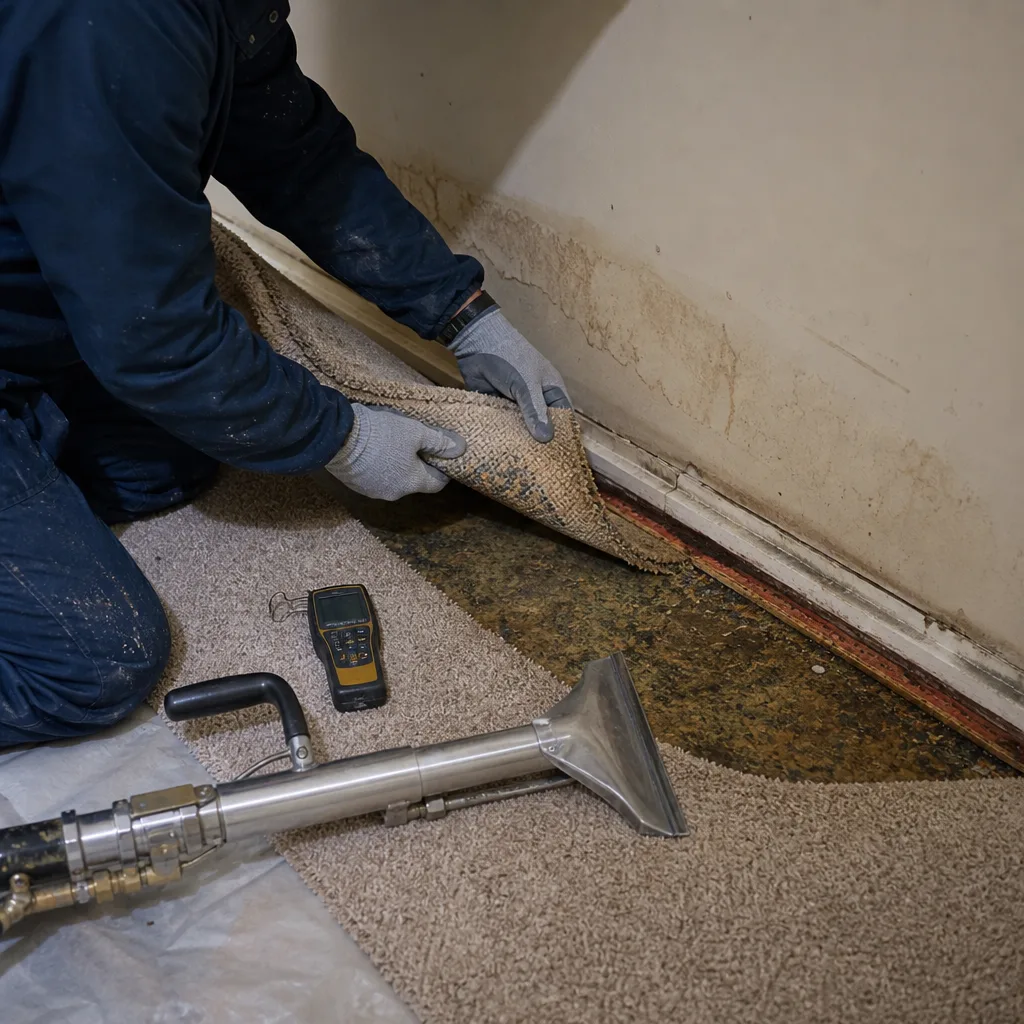
A tarp job in Plymouth needs more thought than just staples and plastic. The 8/12 to 10/12 roofs common across the city shed rain fast but hold snow and ice differently. Freeze-thaw cycles force meltwater behind fascia and into attic insulation, and a tarp placed without checking the ice-and-water shield condition will hide that problem until mold shows up months later. We check the pitch, the flashing, and the shield before we secure the tarp, and we document everything for your carrier.
What happens when you call
- 1
A real person answersNo phone trees - you reach a local pro.
- 2
You get an upfront price rangeHonest numbers before anyone is dispatched.
- 3
A background-checked tech heads outLicensed & insured, dispatched right away.
- 4
You approve before work beginsNothing starts until you say go.
Trusted Brands We Service in Plymouth
What we install and what we use matters to people in Plymouth who’ve been burned by shortcuts before. We run professional-grade equipment from Dri-Eaz, Phoenix, XPOWER, B-Air, and Injectidry, moisture-mapped from the first day and logged daily until the dry standard is met. Our technicians hold IICRC, RIA, and IFA certifications, which means they’ve trained on the exact failure modes Plymouth’s climate produces: freeze-thaw supply line bursts, ice dam soak-through, and clay-swell foundation pressure. When your carrier asks what equipment was used, you’ll have a real answer in writing.
Common Storm & Disaster Restoration Problems We See in Plymouth Homes
- Finished basements flooding in shared cul-de-sacs. Plymouth’s fill-grade subdivisions near Medicine Lake and the wetland buffers share interconnected drain tile loops. One failure pulls neighbors in within days. If your basement is wet, call before the water migrates up the drywall and into the framing.
- Polybutylene supply lines failing under freeze-thaw stress. Homes built from the late 1980s through the early 1990s in Plymouth may still carry these gray plastic supply lines. Minnesota’s pressure cycling weakens them, and they can burst behind drywall without warning, producing a loss that looks like storm damage but isn’t covered the same way.
- Ice dams driving meltwater behind fascia. Heavy snow followed by rapid thaw sends water into attic insulation on the 8/12 to 10/12 roofs common across Plymouth. The visible ceiling stain is the last sign, not the first. By the time you see it, the sheathing may already be compromised.
- Garage doors failing under wind load. A sagging or buckled overhead door is not a cosmetic issue before a severe thunderstorm. An unrated door can blow inward, pressurize the garage, and lift roof decking. That’s a structural claim, and insurers scrutinize it hard.
Pricing for Storm & Disaster Restoration in Plymouth, MN
Storm damage cleanup in Plymouth typically runs $1,200 to $4,500 depending on the scope of extraction, demolition, and drying. Flood damage restoration for a finished basement with carpet, drywall, and baseboard removal usually lands between $2,800 and $7,500. Emergency board-up for a single window or door runs $250 to $700, and roof tarping for a typical two-story colonial runs $500 to $1,400. Wind damage repair pricing depends on the components involved: a garage door track realignment and panel replacement runs $600 to $1,800, while full door assembly replacement with impact-rated materials can exceed $3,500. We give you a written scope before work starts, bill your carrier directly, and offer a free estimate at (888) 861-1852. Current offers: $50 off any repair over $250, $89 seasonal tune-up, and a 5% senior and veteran discount, always.
We Also Serve Cities Near Plymouth
Our crews cover Plymouth and the surrounding communities including Maple Grove, Minnetonka Mills, New Hope, and Medina. If you’re in one of those areas, the same live dispatch line and the same certified technicians are available 24/7. Call (888) 861-1852 and a real person answers.
Serving Plymouth, MN - Our Local Coverage Area
We’re based in the Plymouth area and know this community well. Use the map below to see our service coverage - if you’re nearby, we can almost certainly help.
FAQs - Storm & Disaster Restoration in Plymouth
Plymouth’s glacial clay holds water against foundation walls and slows evaporation, which means a flooded finished basement here has a much shorter window for effective drying than a home on sandy soil. We start extraction the same visit and run professional-grade Dri-Eaz and B-Air equipment daily until the dry standard is met. Delaying even 48 hours in Plymouth’s soil conditions often means cutting out drywall and carpet that could have been saved. Call (888) 861-1852 the moment you see standing water.
Call us before the storm arrives. A door track pulling from the wall means the assembly has already lost structural connection, and wind load on that door can blow it inward, pressurize the garage, and lift roof decking. We’ll send a technician to assess the track, fasteners, and panel condition, and reinforce or replace the door before the pressure event. That’s a repair that prevents a structural claim.
Because Plymouth’s 1980s and 1990s subdivisions were built on shared fill grades and interconnected drainage swales near the city’s wetland buffers and Medicine Lake. When thaw saturates the clay and the swales back up, sump systems on the same drain tile loop fail in sequence. We see it every spring: finish one basement, get flagged down by a neighbor two doors down the same day. Call (888) 861-1852 and we’ll get your home on the schedule before the water migrates into framing.
Plymouth generally requires a permit for structural overhead door replacement where framing or header work is involved, especially when upgrading to an impact-rated or wind-rated assembly. Our team handles the permit paperwork and coordinates with the city so the job is not in limbo. We’ll walk you through it and keep the scope in writing before we start.
Yes, and it often is in Plymouth. Late 1980s and early 1990s homes near Medicine Lake and the surrounding subdivisions may still have polybutylene supply lines, which weaken under Minnesota’s freeze-thaw cycles and burst behind drywall. The resulting water loss can look like storm or flood damage, but the cause changes the claim. We trace the source, document it with photos, and coordinate with your adjuster directly so the loss gets classified correctly. Call (888) 861-1852 and we’ll sort it out.
What to Do Before, During, and After a Plymouth Wind or Flood Event
Before a severe thunderstorm, walk the exterior. Look at your garage door. Is the track pulling from the wall? Is the door bowed or sagging? An unrated door under wind load can blow in and turn a thousand-dollar repair into a six-figure structural loss. Check downspouts and sump discharge lines. In Plymouth’s clay-heavy soils, water has nowhere to go but back toward your foundation. During the storm, if water enters the basement, kill power to the affected area and call us. After the event, do not wait. Plymouth’s finished basements are drywall and carpet below grade, and every hour of water contact multiplies the demolition scope. The line the water left is where we start.
One spring thaw, in a 1990s cul-de-sac off Zachary Lane, we responded to a finished-basement flood caused by a failed sump pump after the city’s interconnected drainage swales backed up. Our crew set up Dri-Eaz LGR dehumidifiers and XPOWER air movers, then traced a hidden leak to a polybutylene supply line that had burst behind drywall. We removed saturated carpet and drywall in the finished basement, dried the structure to IICRC standards, and coordinated with the homeowner’s insurance on the multi-room loss. That job was not unusual for Plymouth. It was a Tuesday.
If you’ve got water where it shouldn’t be, a roof that’s open to the sky, or a garage door that’s no longer doing its job, call (888) 861-1852 now. A live person answers. A certified crew comes. The work is backed in writing. Done right, or made right.
Written by Curt Bowman, Owner at Floodline Restoration Co. of Minneapolis, serving Plymouth and surrounding communities since 2010.