

Fast, Reliable Storm & Disaster Restoration Across Minnetonka
Storm and flood damage in Minnetonka is never just a cleanup job. It’s a basement full of groundwater, a downed limb through a back window, or ice-dam water tracking through a ceiling. Most storm restoration calls in Minnetonka run between $2,800 and $9,400 depending on how far the water traveled and what it touched. We respond to Minnetonka homes 24 hours a day, with a live person answering at (888) 861-1852, and crews typically on site within 60 to 90 minutes for active water intrusion.
We know Minnetonka’s houses. We know the 1960s ramblers off Hopkins Crossroad where the original sump pit sits five feet below the water table, and the split-levels near Nine Mile Creek where the back slope drains directly against the foundation wall. This is our Storm & Disaster Restoration work, and we’ve been doing it since Curt Bowman founded Floodline Restoration Co. in 2010. The line the water left is where we start.
Why Floodline Restoration Co. of Minneapolis Is Minnetonka’s Preferred Storm & Disaster Restoration Company
Minnetonka homeowners call us because we answer the phone. Not a recording. Not a callback queue. A live dispatcher, at two in the morning when a sump pump fails during a spring thunderstorm, and you need someone to tell you exactly what to do in the next thirty minutes. That’s the first thing people mention after the job is done: a real person picked up.
We’ve spent 42 years earning our reputation across the west metro, and Minnetonka is a core part of that. Homeowners in Glen Lake, Ridgedale, and the neighborhoods around Williston Fitness Center have seen our background-checked, uniformed technicians show up with professional-grade equipment, not rented fans from a hardware store. Every job is backed by the 90-Day Done Right Promise, the Keystone Standard, given in writing. No arguing. If it’s not done right, we make it right.
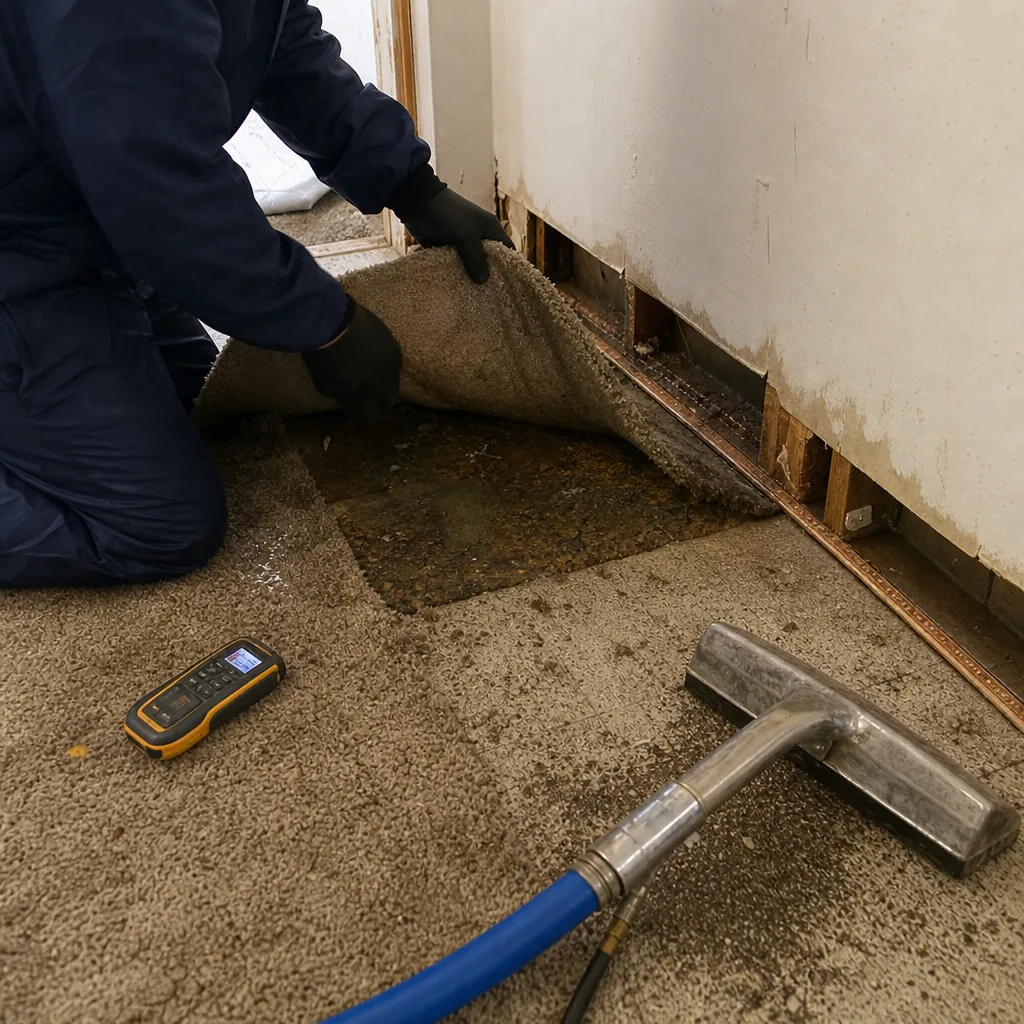
Most Minnetonka storm jobs are completed in a single visit because we send the right crew with the right equipment the first time. We use Dri-Eaz and B-Air drying systems, XPOWER air movers, and Injectidry for deep cavity drying, and we log moisture readings daily until the structure meets dry standard. The same crew that reads the moisture map on day one stays through rebuild. No mid-job handoff to a crew you’ve never met.
Our Storm & Disaster Restoration Services in Minnetonka
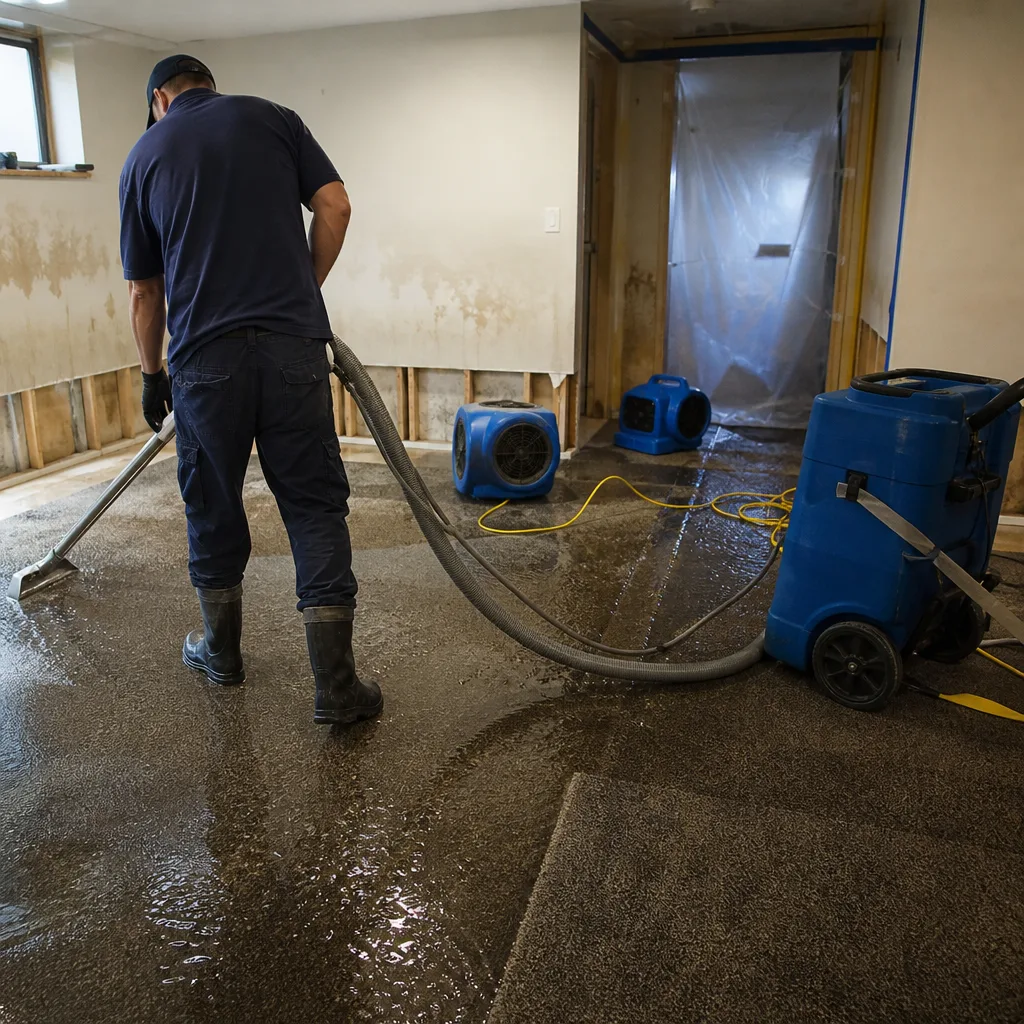
Flood Damage Restoration
This is the call we make most often to Minnetonka, and it’s rarely about rain coming through a window. It’s groundwater rising through a hairline crack in a 55-year-old poured-concrete basement wall after snowmelt saturates the clay-heavy soil. In wetland-adjacent Minnetonka lots, the water table sits high all year, so a basement that seeps in March usually weeps again in June after a heavy storm. We extract, dry, and then we figure out why the water got in, because if you don’t fix the intrusion path, you’re renting our equipment every spring.
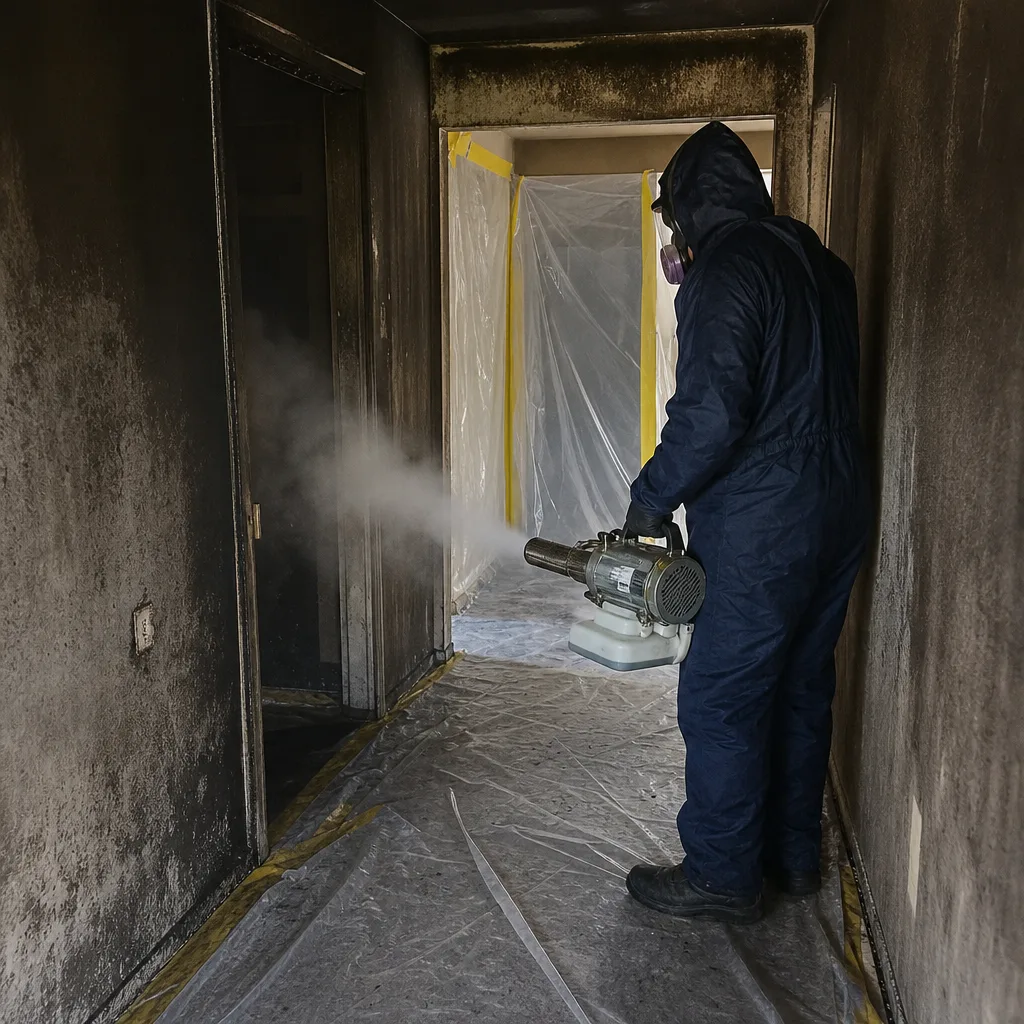
Storm Damage Cleanup
Straight-line winds and hail take down limbs onto roofs, decks, and windows across Minnetonka every summer. We clear the debris, secure the opening, and assess what’s damaged versus what’s water-compromised. On the steeply wooded lots behind Ridgedale and along Glen Lake’s north shore, runoff from storm-scoured slopes channels directly against foundation walls, so we check the downspouts and grading while we’re there. A downed tree is a mess. The water it redirects toward your basement is a problem.
Emergency Board-Up
When a branch comes through a sliding glass door or wind pressure blows out a window, the opening has to be secured before sunset. We board up the opening with plywood cut to fit, tarp the roof if shingles shifted, and document everything with photos for your carrier. In Minnetonka’s split-levels, a breached basement window facing the rear slope becomes an entry point for every heavy rain until it’s sealed, so we typically board the interior as well as the exterior when the ground slopes toward the house.
Roof Tarping
The low-pitched rooflines on Minnetonka’s mid-century ramblers are ice-dam magnets. When snow loads build up and a warm day starts the melt-freeze cycle, water pushes under the shingles and into the ceiling assembly. We tarp the damaged section with reinforced polyethylene, secured at the eaves and ridge, and recommend a thermal inspection to locate where the insulation gap let heat escape in the first place. A tarp stops the leak. Fixing the heat loss stops the next one.
What happens when you call
- 1
A real person answersNo phone trees - you reach a local pro.
- 2
You get an upfront price rangeHonest numbers before anyone is dispatched.
- 3
A background-checked tech heads outLicensed & insured, dispatched right away.
- 4
You approve before work beginsNothing starts until you say go.
Trusted Brands We Service in Minnetonka
We don’t sell equipment; we use it. Our techs work daily with Dri-Eaz dehumidifiers, XPOWER air movers, B-Air dryers, and Injectidry drying mats, and they’re trained to IICRC and RIA standards, with IFA certification for fire and smoke work. We keep replacement parts and drying units stocked for Minnetonka jobs so a mid-job equipment swap doesn’t add a day to your dry time. When you see our techs rolling equipment into your basement, you’re looking at the same gear we’d put in our own homes.
Common Storm & Disaster Restoration Problems We See in Minnetonka Homes
- Recurring basement flooding from high water table lots. Minnetonka’s wetland protections mean many 1960s and 1970s homes sit on lots where the water table sits just a few feet below the slab. The original sump pit was sized for a different climate and a less saturated soil profile.
- Ice dams on low-pitched rambler roofs. The rooflines common in Minnetonka’s mid-century housing stock hold snow longer and channel meltwater against eaves where it refreezes. The result is water backing up under shingles and into bedrooms below.
- Surface runoff from steeply wooded rear slopes. Homes in the Ridgedale area and around Glen Lake often have backyards that slope toward the house. Decades ago, that looked like good drainage. Today it routes every heavy rain directly against the foundation wall.
- Moisture trapped in concrete block behind paneling. A basement that seeped for weeks before anyone noticed holds water in the block itself. Surface drying alone leaves that moisture in place, and mold blooms behind finished walls a month later.
Pricing for Storm & Disaster Restoration in Minnetonka, MN
We give Minnetonka homeowners real numbers, not vague ranges. A straightforward basement extraction from a failed sump pump typically runs $2,800 to $4,600 including drying equipment and monitoring. Storm cleanup with debris removal and tarping usually lands between $3,200 and $6,800 depending on tree size and roof access. Full flood restoration with structural drying, drywall removal, and rebuild work runs $7,500 to $14,000 in Minnetonka’s split-levels and ramblers. Emergency board-up alone runs $450 to $900. We bill your insurance carrier directly, and you’ll always get a written scope before work starts. Call (888) 861-1852 for an exact quote. Estimates are free, and we’ll give you a number you can hold us to.
We Also Serve Cities Near Minnetonka
Floodline Restoration Co. covers all of Storm & Disaster Restoration in Minnetonka and the surrounding west metro, including Hopkins, Minnetonka Mills, Chanhassen, and Eden Prairie. Wherever the storm hit, our crews are dispatched from the Minneapolis-St Paul metro office with equipment loaded and ready.
Serving Minnetonka, MN - Our Local Coverage Area
We’re based in the Minnetonka area and know this community well. Use the map below to see our service coverage - if you’re nearby, we can almost certainly help.
FAQs - Storm & Disaster Restoration in Minnetonka
Your basement floods every spring because snowmelt saturates the clay-heavy soil around Minnetonka’s wetland-adjacent lots and the water table rises above the level of your footer drain or sump pit. It’s not a storm event; it’s groundwater pressure finding the weakest point in a 40-to-60-year-old foundation wall. If you’re seeing water in March or April without a storm overhead, the fix is drainage and intrusion sealing, not just extraction. Call (888) 861-1852 and we’ll trace the water to its source.
Almost never. Original sump pumps in 1960s Minnetonka homes were sized for a lower water table and less frequent saturation, and they’re now running 55-plus years past installation. The basin is often too shallow, the pump lacks the horsepower for sustained spring snowmelt, and there’s no battery backup for the power outage that always hits during the worst storm. We typically recommend a higher-capacity pump, deeper basin, and battery backup on wetland-adjacent Minnetonka lots. Call us for a site read; the fix is usually under $1,600 for the pump and basin upgrade.
Look at when the dampness appears and where. Storm-driven water shows up right after rain and puddles near the point of entry, usually a window well or stair drain. High water table seepage arrives days after snowmelt or during dry spells, appears as uniform dampness along floor-wall joints, and often carries a musty smell that never fully leaves. In Minnetonka split-levels, persistent dampness without a visible leak is almost always hydrostatic pressure from groundwater, not a storm. We’ll map the moisture and tell you which one you have, and what it costs to fix.
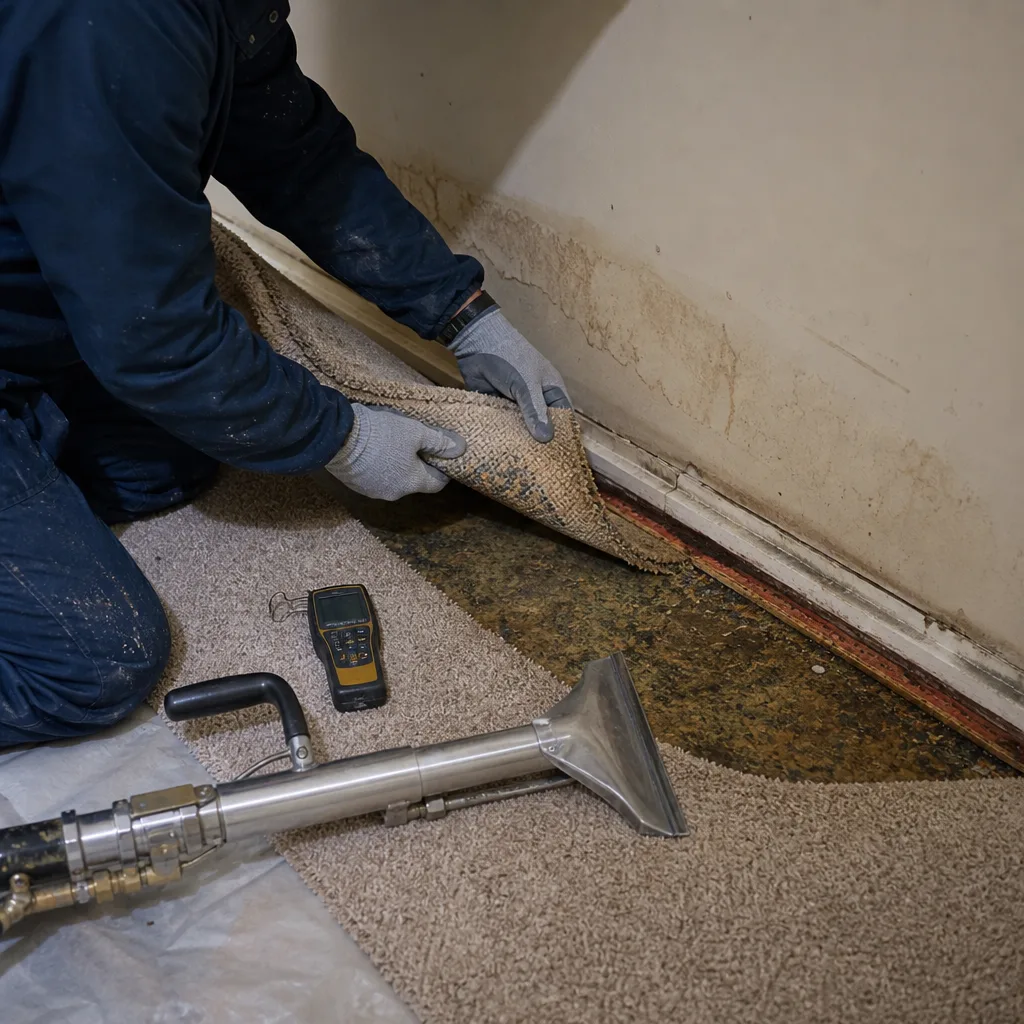
You can’t just run a box fan and call it dry. Concrete holds moisture for weeks, and if the seepage has been ongoing, you need deep-cavity extraction with Injectidry mats or a Dri-Eaz system pulling water from the slab and wall cavities, plus daily moisture readings until the concrete reaches the dry standard. Surface drying alone leaves moisture trapped in the block, and mold starts blooming behind paneling and drywall within three to four weeks. Call (888) 861-1852 and we’ll set up the right equipment the same day.
Most Ridgedale-area ramblers with recurring basement water need drainage correction first: re-grading the rear slope, extending downspouts away from the foundation, and upgrading the sump system. Foundation repair becomes necessary only when the crack is structural, meaning it’s wider than a quarter-inch, offset, or running diagonally from a corner. We’ve seen homes in the Ridgedale area where a $900 downspout and swale fix stopped water that a $12,000 foundation quote would have over-treated. We’ll give you an honest read, with photos, and you decide.
Written by Curt Bowman, Owner at Floodline Restoration Co., serving Minnetonka and the west metro since 2010.