

Fast, Reliable Storm & Disaster Restoration Across Falcon Heights
Storm damage in Falcon Heights moves fast, and the cleanup decision can’t wait until morning. Wind-driven rain gets behind siding on Larpenteur Avenue homes, hail cracks the low-pitched rooflines that define this 1940s and 1950s housing stock, and a downed tree limb on a Cleveland Avenue garage becomes an emergency board-up before nightfall. Our Storm & Disaster Restoration team reaches Falcon Heights promptly from our Minneapolis-St Paul dispatch office, with a live person answering at (888) 861-1852 whenever you call. We know the fairgrounds access restrictions, the narrow alleys off Hamline Avenue, and the way freeze-thaw cycles beat up cast-iron drain lines in a 1950s basement. That local knowledge means the first truck arrives prepared, not just fast.
Why Floodline Restoration Co. of Minneapolis Is Falcon Heights’s Preferred Storm & Disaster Restoration Company
Falcon Heights homeowners keep our number because we show up when the street is blocked, the basement is wet, and the adjuster hasn’t called back yet. Curt Bowman founded this company in 2010 with a simple operating rule: answer the phone with a person, put a certified crew on the road, and finish the job to a written standard. Falcon Heights customers call us after the State Fair ends, after the first hard freeze, after a convective storm dumps two inches in an hour. They’ve heard about contractors who disappear after demolition or send a different crew every day. We don’t work that way. The same certified, background-checked technicians who set the drying equipment read the moisture log daily, hand it to the homeowner and the carrier, and handle the reconstruction and cleanup through finished trim. The 90-Day Done Right Promise goes in writing before we leave. If it’s not done right, we make it right. No arguing.
Response time matters when water is wicking up drywall in a Falcon Heights basement, which is why our Falcon Heights water damage restoration crews prioritize speed. Our live dispatch at (888) 861-1852 means a real person coordinates the next available certified crew, whether it’s 2 p.m. on a Tuesday or 2 a.m. after a storm front. For storm and disaster work in Falcon Heights, we typically reach homes within 60 to 90 minutes of the call. That’s the window where extraction prevents a soaked carpet from becoming a mold remediation project and a tarp over a cracked roof section stops ceiling collapse.
Our Storm & Disaster Restoration Services in Falcon Heights
Roof Tarping
Falcon Heights roofs are almost uniformly low-pitch, originally built with materials that predate modern ice-and-water shield underlayment. When wind lifts shingles or a tree limb punches through decking, water enters the attic within minutes. Our roof tarping service in Falcon Heights secures the damaged section with reinforced, UV-resistant tarping, fastened to withstand the next storm while insurance assesses the full repair or replacement. We tarp roof sections on homes near the State Fairgrounds, on Snelling Avenue side streets, and throughout the 55108 zip code, then document everything photographically for the carrier.
Flood Damage Restoration
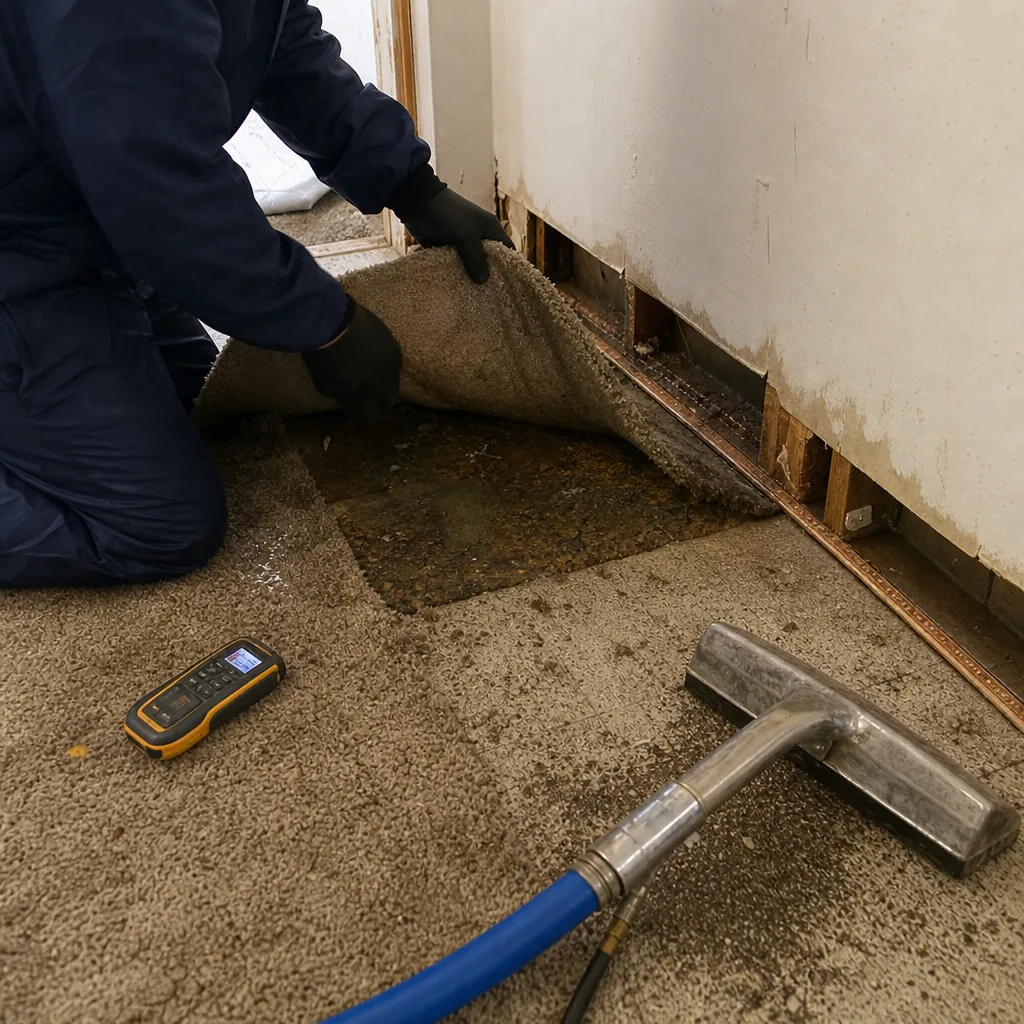
Basement flooding in Falcon Heights almost always traces back to one of three local conditions: a sewer lateral that cracked under freeze-thaw stress, a sump pump that failed during a fair-season rental overload, or surface water pooled against a poured-concrete foundation after a heavy convective storm. Our Storm & Disaster Restoration in Falcon Heights crews extract standing water the same visit, set professional-grade drying equipment from XPOWER and B-Air, and log moisture readings daily until the structure meets the dry standard. We don’t hand the job off after extraction. The same crew manages drying, repairs, and the rebuild.
Storm Damage Cleanup
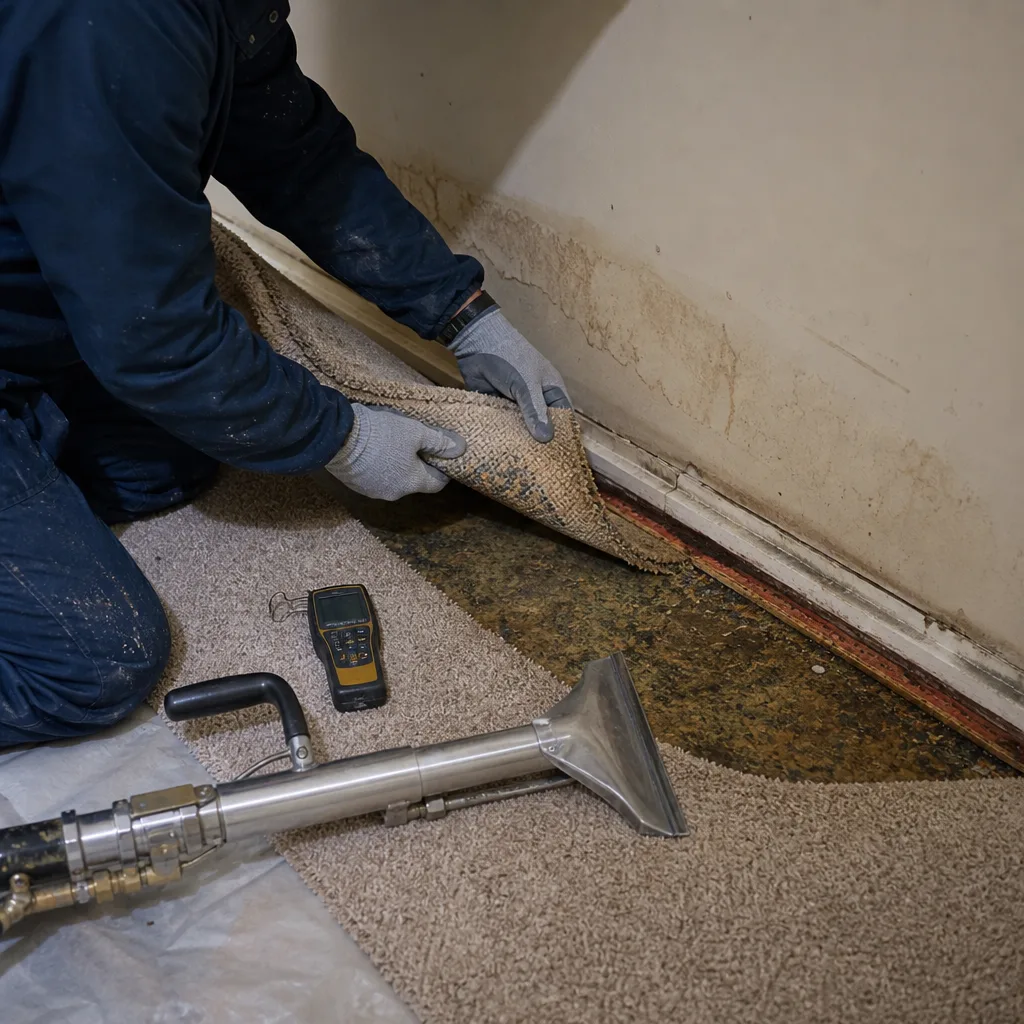
Falcon Heights streets are lined with mature trees that drop heavy limbs in wind events. Storm damage cleanup here means removing debris without damaging the original cast-iron drain lines or 1960s concrete walkways that sit just below the surface. We cut and haul fallen branches, clear roof debris from low-pitch eaves, and separate hazardous material from ordinary storm litter so disposal is proper and documented. When fair-season rentals leave a home unoccupied during a storm, we often find the cleanup is larger than expected because water sat undisturbed for days, sometimes requiring biohazard and crime scene cleanup protocols if contamination is present. We handle that too, without turning a cleanup into an upsell.
Emergency Board-Up
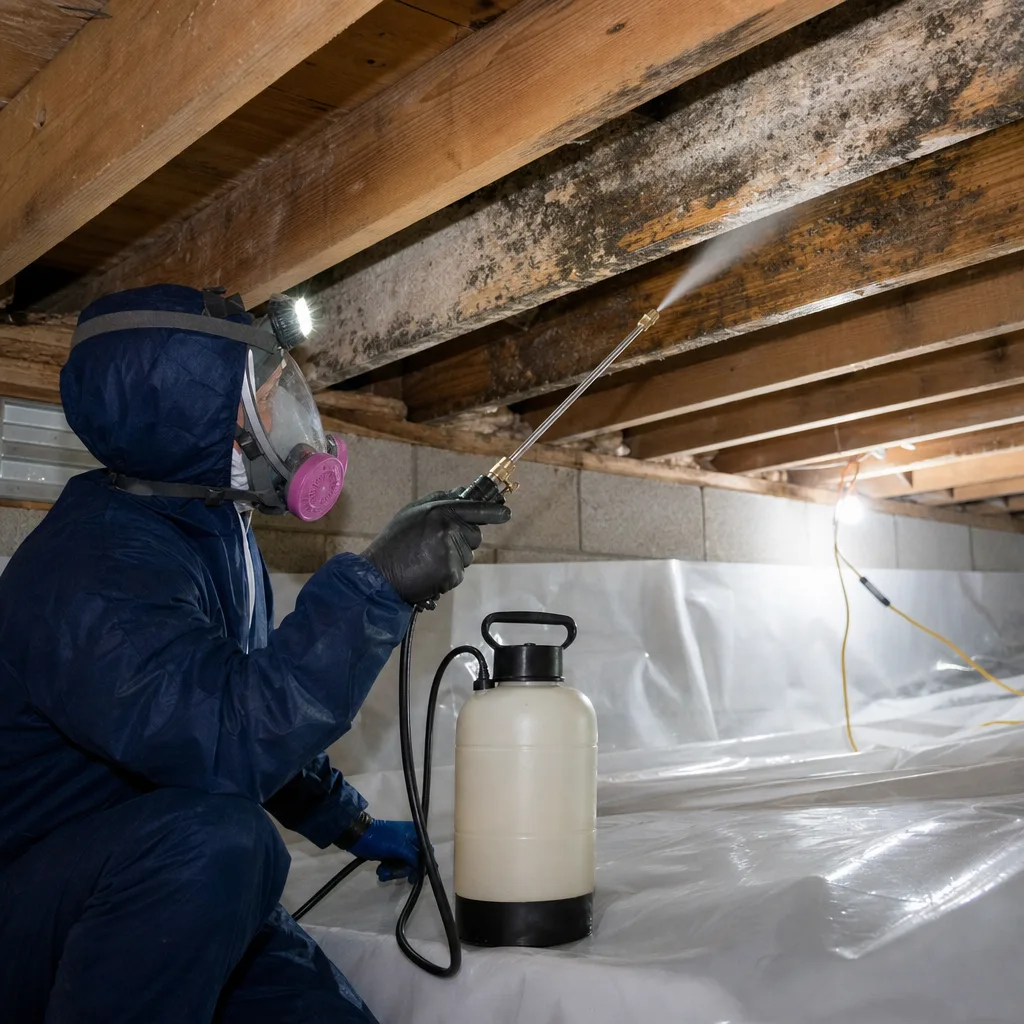
A broken window on a Falcon Heights bungalow is an invitation. Emergency board-up stabilizes the opening with weather-resistant sheeting until permanent repair is scheduled. We board windows, doors, and roof punctures on homes near Cleveland Avenue, Larpenteur Avenue, and the residential streets ringing the fairgrounds, and we use fasteners that will not strip the original wood framing that’s been holding these homes together for 70-plus years. Security and weather protection done right, with a written scope before work starts.
What happens when you call
- 1
A real person answersNo phone trees - you reach a local pro.
- 2
You get an upfront price rangeHonest numbers before anyone is dispatched.
- 3
A background-checked tech heads outLicensed & insured, dispatched right away.
- 4
You approve before work beginsNothing starts until you say go.
Common Storm & Disaster Restoration Problems We See in Falcon Heights Homes
- Cast-iron drain line failures in spring. Falcon Heights homes from the 1940s and 1950s still have original cast-iron sewer laterals. Ground frost penetrating 40 to 60 inches in hard winters stresses those clay and iron joints, and by early spring they crack. The result is a slow sewer backup that goes unnoticed for weeks, then turns into a full restoration job when the first heavy rain hits.
- Ice damming on low-pitch roofs. Shallow-pitched mid-century roofs ice-dam every hard winter. Homeowners who tarp only the visible drip line leave attic insulation saturated, and by the time ceiling stains appear in the living room, mold is already growing in the sheathing. The fix is not just a tarp; it’s drying the attic space and often retrofitting ice-and-water shield.
- Sump pump and perimeter drain overload during fair season. When a Falcon Heights home is sublet during the 12-day State Fair, rental use adds water load to aging sump pumps and perimeter drains. A heavy convective storm during the fair can overwhelm the system, and street restrictions make access slow. By the time a crew reaches the property, water has wicked up drywall and into insulation.
- Post-Labor Day discovery damage. Homeowners who rent to fairgoers or leave town in late August return to find water infiltration, mold, or storm damage that developed weeks earlier. That’s predictable in Falcon Heights. So is the scheduling pressure: a large share of the year’s restoration volume lands in the first few weeks of September.
Pricing for Storm & Disaster Restoration in Falcon Heights, MN
Storm and disaster restoration pricing in Falcon Heights follows the scope, not a sales script. Roof tarping on a standard 1950s ranch typically runs $450 to $950, depending on roof size, pitch, and whether the damage is a single section or multiple penetrations. Emergency board-up for a window or door opening usually runs $250 to $600 per opening. Flood damage extraction and drying in a typical Falcon Heights basement ranges from $1,800 to $4,200, with variations based on square footage, how long water sat, and whether the cast-iron drain line needs repair. Storm debris removal runs $350 to $1,100 depending on volume and tree limb size. Every job gets a written scope before work starts. We bill the carrier directly when insurance is involved, and estimates are always free. Senior and veteran homeowners receive 5% off. The $50 off any repair over $250 and $89 seasonal tune-up offers apply to eligible work.
Trusted Brands We Service in Falcon Heights
Falcon Heights homeowners trust equipment that dries fast and logs data objectively, and that’s what we run. Our crews use Dri-Eaz LGR dehumidifiers, XPOWER air movers, and B-Air filtration systems on storm and flood jobs throughout Falcon Heights, with Injectidry systems for hard-to-reach cavities like wall interiors and under-cabinet spaces. The moisture readings from day one to the day we hit the dry standard go into a written log, which we hand to the homeowner and the insurance carrier. Technicians are certified to IICRC standards, trained in the restoration procedures that apply to the mid-century materials and construction details we find in every Falcon Heights home.
We Also Serve Cities Near Falcon Heights
Our storm and disaster restoration crews cover the full inner-ring area around Falcon Heights, including Roseville, Little Canada, Saint Anthony, and Saint Paul. If your home sits just over the Falcon Heights line, the same certified crew, the same written guarantee, and the same live dispatch at (888) 861-1852 apply. We serve the Falcon Heights area and its neighbors with the 90-Day Done Right Promise on every job.
Serving Falcon Heights, MN - Our Local Coverage Area
We’re based in the Falcon Heights area and know this community well. Use the map below to see our service coverage - if you’re nearby, we can almost certainly help.
FAQs - Storm & Disaster Restoration in Falcon Heights
Falcon Heights’s housing stock is older and more uniform than Roseville’s. Virtually all residential structures in Falcon Heights were built between the 1940s and 1960s, and most still run on original cast-iron drain lines. Roseville has more post-1970 construction with PVC laterals and newer foundation drainage. Falcon Heights’s cast-iron lines crack under repeated freeze-thaw stress, and when ground frost penetrates 40-plus inches, the cracked joints open up. Spring snowmelt then flows into the loosened soil, and the sewer backup follows within days. If you notice a slow drain or a basement odor in early spring, call (888) 861-1852 before it becomes standing water.
Yes, with some planning. Street access around the fairgrounds is severely restricted during the 12-day fair window, and parking for large box trucks is difficult on residential streets off Snelling Avenue and Larpenteur Avenue. Our crews coordinate arrival times to avoid fair-traffic peaks and often park on arterial roads with a short equipment walk to the property. We also stage equipment for fair-season jobs so that a smaller vehicle can bring what’s needed without a large truck idling in a restricted zone. If you have storm damage during the fair, call the live dispatch line anytime. We’ll work with fair access, not against it.
The post-Labor Day surge is the predictable cluster of restoration calls that hits Falcon Heights in the first few weeks of September, after homeowners return from vacations or end fair-season subletting arrangements. They discover water infiltration, mold, or storm damage that went unaddressed for weeks. Scheduling tightens during this window. The best way to protect your position is to call as soon as you notice a problem, not after the first weekend back. We prioritize active water intrusion and safety hazards like exposed electrical wiring or a compromised roof section, and we keep crews on call for the surge every year.
Poured-concrete basements resist groundwater differently than block basements, but they are not waterproof. Falcon Heights homes from the 1940s and 1950s were built without modern exterior drainage membranes or perimeter drain tiles on many properties. After decades of freeze-thaw cycles, hairline cracks and cold joints in the concrete open up. Heavy convective summer storms overwhelm the aging perimeter drainage, and hydrostatic pressure pushes water through those openings. The water you see on the floor is not a foundation failure; it’s the natural consequence of a mid-century drainage system meeting a modern storm. The fix is drying, sealing where appropriate, and often improving exterior grading and downspout discharge, which we scope and price in writing.
It depends on the type of damage. A one-piece garage door on a Falcon Heights home is often original to the 1950s or 1960s construction. If storm damage is limited to surface dents or a loose hinge, repair is usually safe and cost-effective. But if the door is racked, the spring is broken, or the track is bent, replacement is the safer choice. Vintage one-piece doors are heavy, and the high-tension springs that counterbalance them store enough energy to cause serious injury if mishandled. Do not attempt to repair or adjust a garage door spring yourself. A trained professional with the right tools and tensioning procedure should handle it. We can assess the door, tarp it if needed, and give you a straight answer on repair versus replacement, with a written scope before any work starts. Call (888) 861-1852.
Written by Curt Bowman, Owner at Floodline Restoration Co., serving Falcon Heights and the surrounding communities. Our team has answered live calls for storm and disaster restoration since 2010.