

Fast, Reliable Sewage Cleanup Across Plymouth
Raw sewage in a finished basement is urgent. Sewage cleanup in Plymouth, MN requires immediate extraction, disinfecting, and drying before bacteria and moisture spread into drywall, carpet, and framing. We answer the phone with a live dispatcher at (888) 861-1852 day or night, and a certified crew is typically on site within 60-90 minutes anywhere in the 55392 zip code. We know Plymouth’s 1980s and 1990s finished-basement homes, the clay-heavy soils around Medicine Lake, and how fast spring thaw turns a slow floor drain into a black water emergency. The line the water left is where we start.
Why Floodline Restoration Co. of Minneapolis Is Plymouth’s Preferred Sewage Cleanup Company
Plymouth homeowners don’t want a sales pitch when there’s sewage in the rec room. They want a crew that shows up, gets the mess contained, and stands behind the work. That’s how we’ve built our name here. Curt Bowman founded Floodline Restoration Co. around a dispatch board, not a sales desk, and every job still runs that way. We’ve been proud to serve local communities for over 42 years, and the homeowners who call us from Plymouth tend to be the kind who’ve lived in the same house for twenty years and plan to stay another twenty.
When a crew arrives in Plymouth, they’re background-checked, uniformed, and certified to IICRC, RIA, and IFA standards. Most sewage jobs are completed in a single visit using professional-grade Dri-Eaz, Phoenix, and XPOWER equipment. We don’t hand the job off to a different crew after extraction. The same people who read the moisture map on day one handle the daily readings, give you the moisture log for your insurer, and rebuild what needs rebuilding. Every job is backed by the 90-Day Done Right Promise, in writing. If it’s not done right, we make it right. No arguing.
We also coordinate directly with your insurance carrier. You don’t play messenger between us and the adjuster. Photo documentation, written scope, direct carrier billing. That’s the square deal.
Our Sewage Cleanup Services in Plymouth
Sewage Backup Cleanup
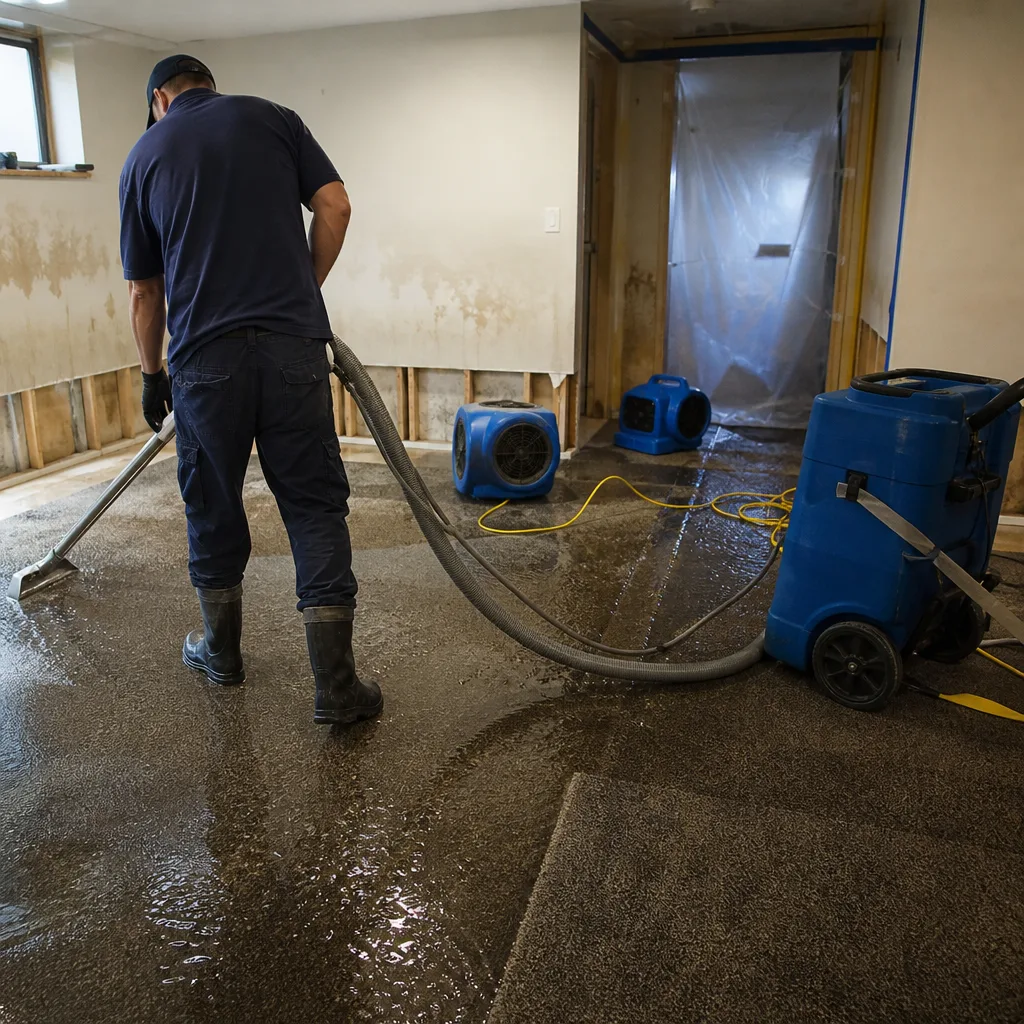
In Plymouth, sewage backups usually happen one of two ways: a municipal lift station near a wetland buffer overwhelms during rapid snowmelt, or a floor drain in a finished basement receives groundwater that carries waste back into the home. Both are common in the 55392 zip code. We extract the standing black water, remove contaminated materials, sanitize hard surfaces, and dry the space to the IICRC dry standard. A written moisture log is yours at the end of every day we’re on site.
Toilet Overflow Cleanup
Toilet overflows in Plymouth homes often involve more than the bathroom floor. In finished-basement homes from the 1980s and 1990s, overflow water travels under baseboards and into carpet and pad within minutes. We pull the affected materials, treat the area with hospital-grade disinfectants, and run Phoenix air movers until the structure is dry. If the overflow reached a floor drain that was already backed up, we treat it as a Category 3 black water job without hesitation.
Septic Failure Cleanup
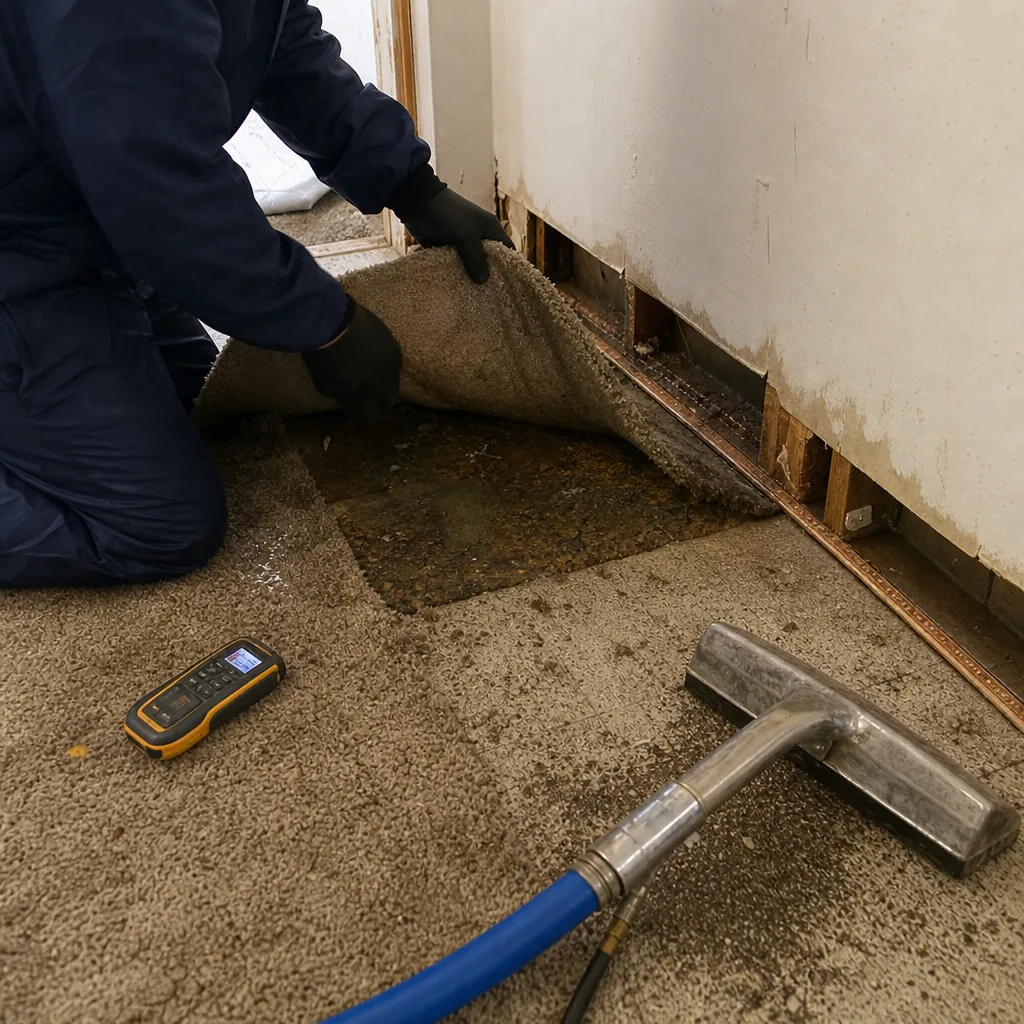
Some Plymouth properties, particularly larger-lot homes on the city’s western and northern edges near wetland buffers, still rely on private septic systems. When a drain field saturates during spring thaw, the failure usually shows up inside the home as slow drains and sewage odor before a full backup. We respond fast, extract what’s come inside, and work with your septic contractor to coordinate the cleanup while the system gets repaired. In Plymouth’s clay-heavy glacial soils, saturated drain fields are a reality we see every March and April.
Black Water Extraction
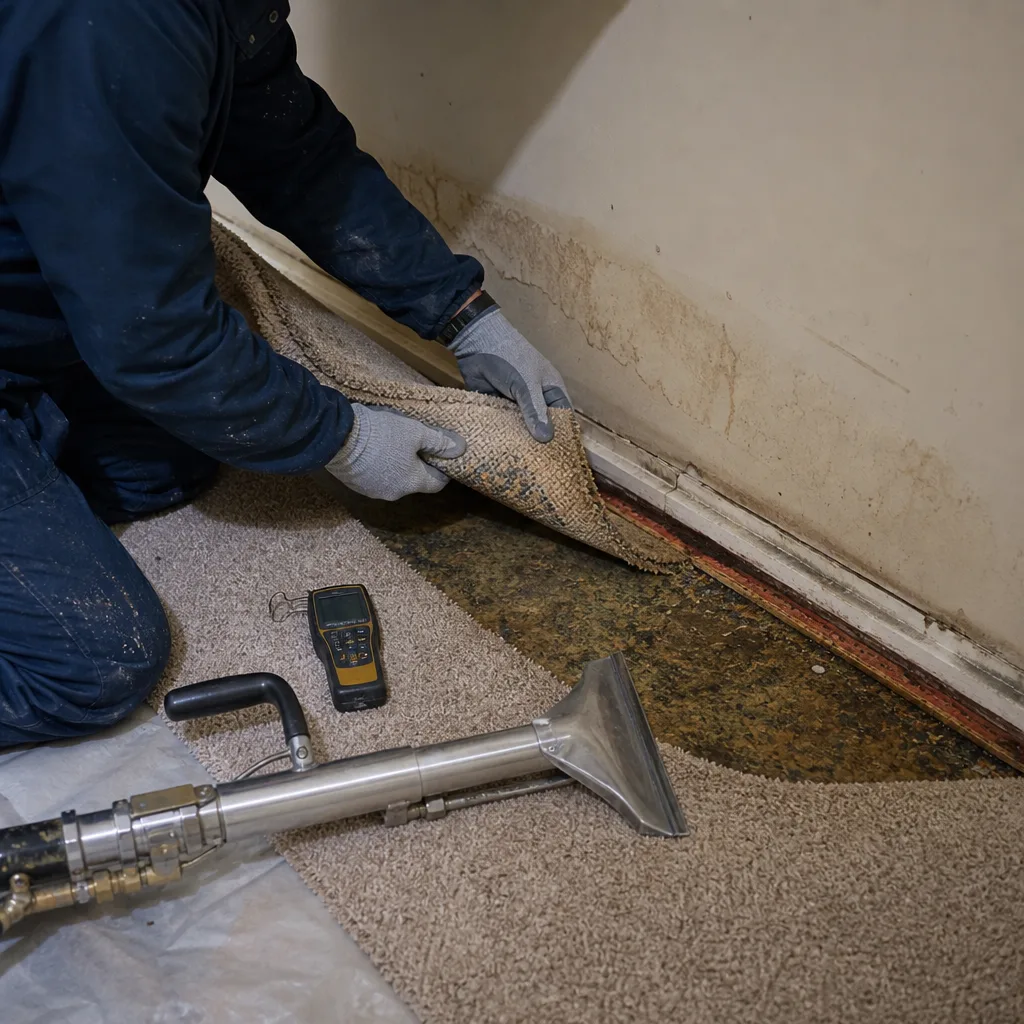
Black water is water carrying human waste, and it demands a full Category 3 response. We use truck-mounted Dri-Eaz extraction units and portable pumps to remove standing sewage from finished basements, crawl spaces, and slab-on-grade utility rooms. Every porous material that absorbed the water comes out. Carpet, pad, drywall, insulation. Then we disinfect and dry. On 1990s cul-de-sac homes near Plymouth’s wetland buffers, we’ve extracted from multiple houses on the same street within the same week when shared drainage swales overwhelmed simultaneously.
What happens when you call
- 1
A real person answersNo phone trees - you reach a local pro.
- 2
You get an upfront price rangeHonest numbers before anyone is dispatched.
- 3
A background-checked tech heads outLicensed & insured, dispatched right away.
- 4
You approve before work beginsNothing starts until you say go.
Trusted Brands We Service in Plymouth
We don’t use rental-grade equipment. Every Floodline truck serving Plymouth carries professional-grade Dri-Eaz extraction units, Phoenix dehumidifiers, XPOWER air movers, and when floor cavities or wall voids need targeted drying, Injectidry systems. That matters when a sewage backup inside a finished basement needs to be dried behind drywall without tearing out the entire wall. We keep common parts and replacement materials stocked locally, so a Plymouth crew doesn’t burn half a day running back to the shop for a fitting or a moisture sensor. The job moves. The house dries. The rebuild follows.
Common Sewage Cleanup Problems We See in Plymouth Homes
- Shared drainage swales in 1990s wetland-adjacent subdivisions. When snowmelt overwhelms a municipal lift station, multiple homes in the same cul-de-sac back up within days. We’ve had neighbors flag our crews down from the street during spring thaw events.
- Cast-iron drain pipes cracking under Plymouth’s clay-heavy soils. Frost heave in expansive glacial soils puts pressure on 1980s-era slabs, and cast iron eventually cracks. Sewage seeps into crawl spaces and finished basements with no visible backup. That’s a hidden contamination problem.
- Polybutylene supply lines in late-1980s homes. These lines fail under Minnesota’s freeze-thaw pressure cycling. Clean water floods a finished basement, then mixes with sewage from a backed-up floor drain. What starts as a supply leak becomes a biological hazard.
- Sump pump failure during rapid spring thaw. Plymouth’s dense network of lakes and wetlands means high groundwater. When a sump pump fails on a finished-basement home, groundwater carrying sewage from the footing drain system enters through the floor drain. It’s the single most common emergency call we take in the 55392 zip code each spring.
Pricing for Sewage Cleanup in Plymouth, MN
Sewage cleanup in Plymouth, MN typically runs between $2,800 and $7,500 depending on how far the water traveled and what was exposed. A contained toilet overflow where the water stays in a tile bathroom runs on the low end, around $2,800-$3,400. A finished basement backup that soaks carpet, pad, drywall, and baseboards through a 900-square-foot rec room typically lands between $4,200 and $6,900. Crawl space sewage removal in Plymouth runs $3,500-$6,500 because access and containment take longer. If structural drying takes more than three days or rebuild is needed, the scope is written out and priced before that work begins. No surprises. We give a written scope before work starts, and we bill your carrier directly. Call (888) 861-1852 for a free estimate. Current offers include $50 off any repair over $250, the $89 seasonal tune-up, and a 5% senior & veteran discount, always.
We Also Serve Cities Near Plymouth
Our crews cover the full northwest metro. Beyond Plymouth, we regularly handle sewage cleanup calls in Maple Grove, Minnetonka Mills, New Hope, and Medina. If you’re just outside the 55392 zip code and dealing with a basement backup, call us. We’ll tell you straight whether we’re the right crew for the job.
Serving Plymouth, MN - Our Local Coverage Area
We’re based in the Plymouth area and know this community well. Use the map below to see our service coverage - if you’re nearby, we can almost certainly help.
FAQs - Sewage Cleanup in Plymouth
Homes built in the same 1990s subdivision often share the same fill grades and interconnected drainage swales near Plymouth’s wetland buffers. When rapid snowmelt saturates those swales, municipal lift stations can’t keep up, and sewage backs up through floor drains in several homes at once. We’ve extracted black water from three houses on the same Medicine Lake-area cul-de-sac within 48 hours of each other. If your neighbors have water, check your own floor drains. Call (888) 861-1852 and we’ll have a crew there fast.
It increases the risk indirectly. Polybutylene lines fail under freeze-thaw pressure, flooding your finished basement with clean water. That water travels to the floor drain, which may already be backed up with sewage from the municipal side. You now have a Category 3 contamination event instead of a clean water leak. In Plymouth homes from the late 1980s and early 1990s, this combination is a known failure pattern. If you have polybutylene, know where your main shutoff is. If a line bursts, shut the water off and call us.
Clay holds water. When Plymouth’s glacial soils saturate, hydrostatic pressure pushes groundwater through foundation cracks and into crawl spaces. Sewage from cracked cast-iron drain lines then mixes with that groundwater. Crawl space sewage removal in Plymouth takes longer because the dense clay slows drying and requires more aggressive dehumidification. We use Phoenix dehumidifiers rated for crawl space work and run daily moisture readings until the space meets the dry standard. We’re in Plymouth weekly during spring thaw, and we know how these soils behave.
Get everyone out of the basement, shut off power to the affected area if you can do so safely, and call (888) 861-1852. Don’t run water, don’t flush toilets, and don’t attempt to clean it yourself. Sewage is a Category 3 biohazard. You need extraction, removal of contaminated porous materials, and hospital-grade disinfection before drying can even begin. Our crew arrives the same visit and extraction is running before we leave. We’ll also photograph everything and coordinate directly with your adjuster.
Yes. A 1980s rambler in Plymouth likely has cast-iron drain lines running beneath a slab on expansive clay soil. Frost heave cracks those lines over decades, allowing sewage to seep into the home without an obvious overflow. Newer homes typically have PVC drain lines that resist frost heave better. The cleanup itself follows the same standard: extract, remove contaminated material, disinfect, dry, and document moisture readings. But the scope of source repair is usually larger on older Plymouth ramblers. We’ll write out exactly what needs to happen before that work starts.
Written by Curt Bowman, Owner at Floodline Restoration Co., serving Plymouth and the northwest metro since 2010.