

Fast, Reliable Mold Remediation Across Brooklyn Park
Mold remediation in Brooklyn Park typically costs $1,500-$4,800 for a standard contained room and is usually started within one to two days of your call. Our crews know exactly what they’re walking into in this city: 1970s split-levels with the same under-insulated garage knee walls, the same ice-dam moisture paths, and the same hidden attic cavities that feed mold year after year. If you’ve spotted staining on a ceiling, caught a musty smell that won’t leave, or found black growth behind a finished basement wall, call (888) 861-1852. A live dispatcher answers, day or night.
Why Floodline Restoration Co. of Minneapolis Is Brooklyn Park’s Preferred Mold Remediation Company
We’ve earned our name in Brooklyn Park by understanding the houses here. The 1970s split-levels and ramblers concentrated in the 55443 ZIP repeat the same floorplans block after block. That means the mold problems repeat too. Our techs know to check the garage-ceiling assembly on a split-level before they even set up containment, because that cavity is where heat bleed meets roof snow and produces the same upper-wall staining pattern winter after winter.
Our Mold Remediation team works this city regularly. We carry the equipment suited to these homes: HEPA air scrubbers sized for lower-level family rooms, Injectidry mats for slab-on-grade moisture, and moisture meters calibrated for the specific wall assemblies common in Brooklyn Park ramblers. Curt Bowman founded this company in 2010 around a dispatch board, not a sales desk. Every Brooklyn Park job is backed by the 90-Day Done Right Promise, our written guarantee that if the work isn’t done right, we make it right. No paperwork battles, no arguing.
Background-checked, uniformed technicians arrive in marked trucks. They’re trained to IICRC standards and use Dri-Eaz and XPOWER equipment. Every job gets a moisture log: initial readings, daily tracking, and a final dry standard confirmation. That log is yours. It’s also what your adjuster sees when we bill the carrier directly.
Our Mold Remediation Services in Brooklyn Park
Mold Inspection & Testing
Before any containment goes up, we find the moisture source. In Brooklyn Park, that source is rarely a mystery. On a 1970s split-level near the southern end of 55443, our tech traced recurring black mold stains to the garage-ceiling assembly, where heat bleed had melted roof snow and driven moisture behind the upper wall. We opened the knee-wall cavity, found saturated fiberglass batt and organic growth on the sheathing, and applied HEPA vacuuming with a Dri-Eaz Hepa 700 before treating the framing with an EPA-registered antimicrobial. We then added an air baffle and sealed the assembly to stop the repeated condensation path.
We sample the air, but we also sample the cavities most inspectors skip: attached garage ceilings, knee walls, and rim joists above basement framing. A living-room air test alone misses the hidden mold behind a finished garage ceiling in a Brooklyn Park split-level. We test where the moisture actually lives.
Mold Removal
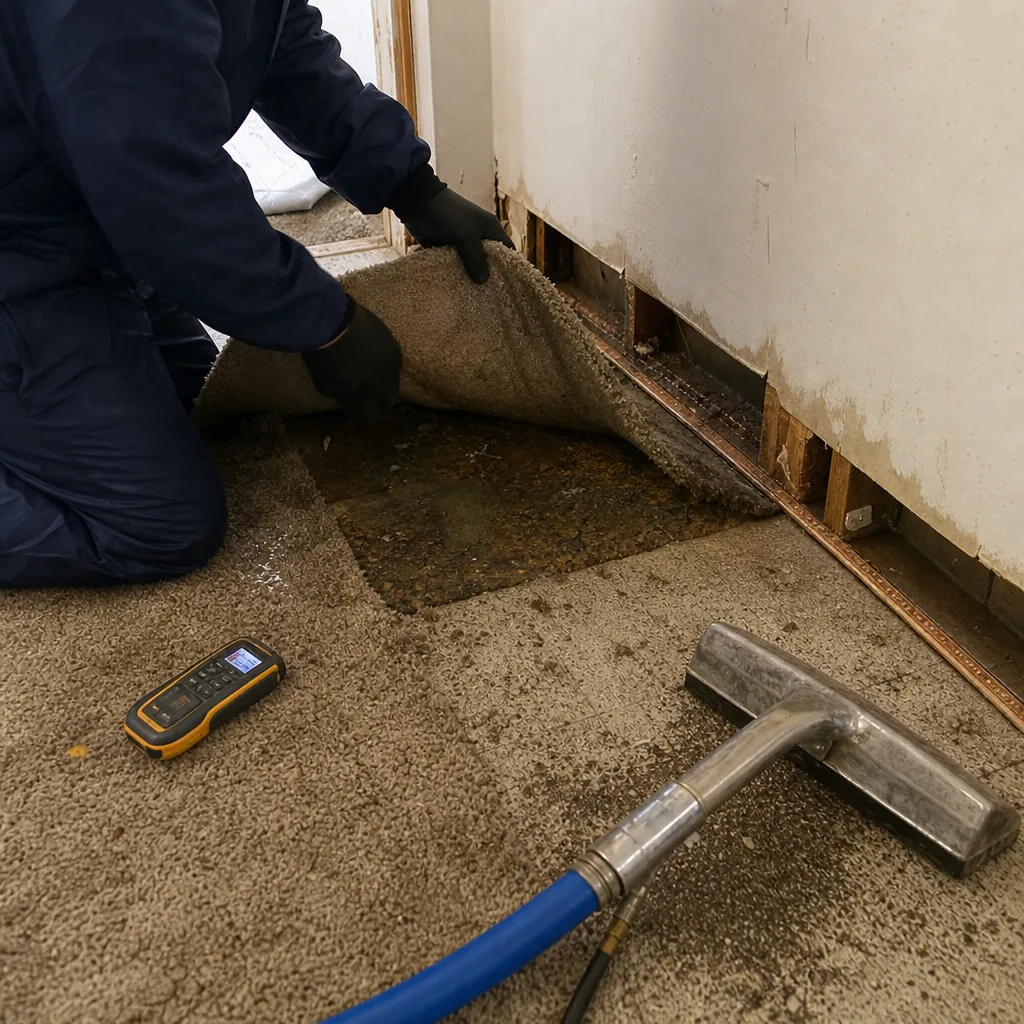
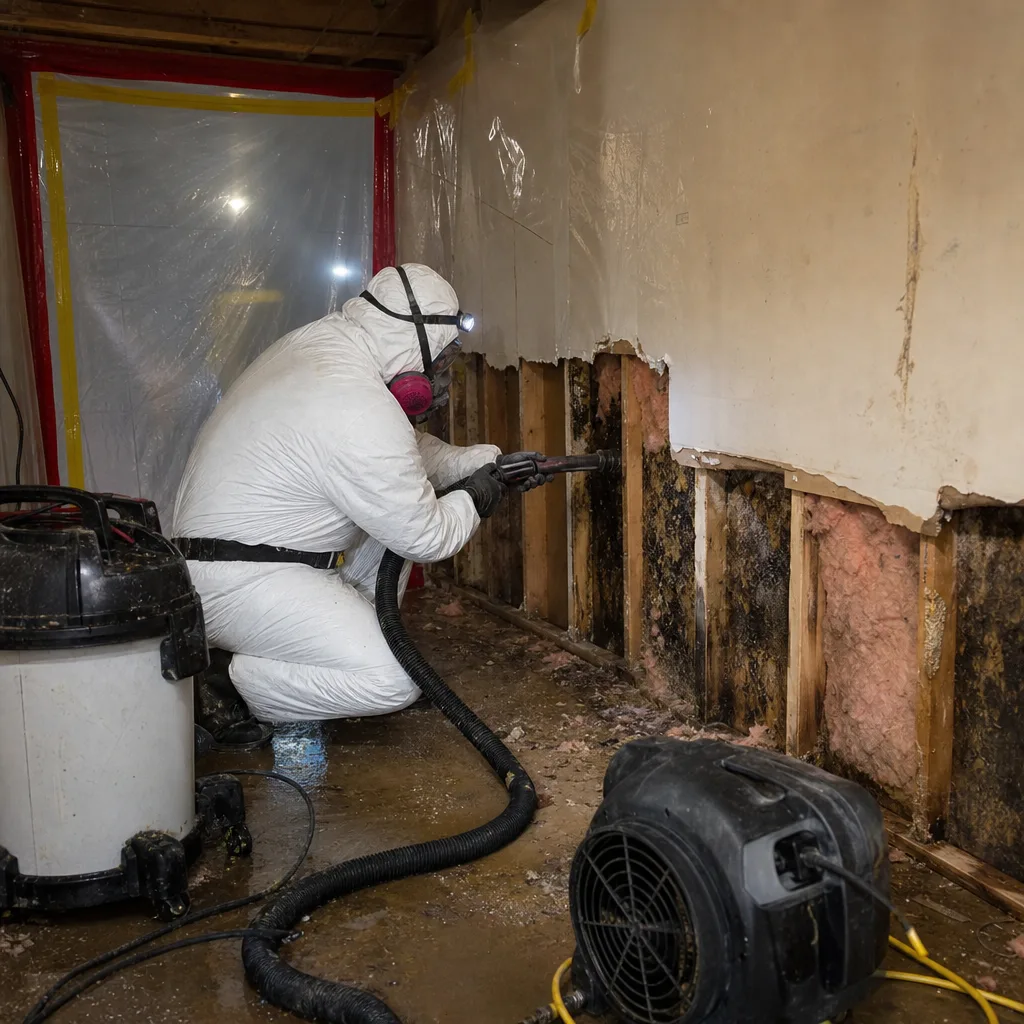
For visible mold that has not penetrated beyond drywall, removal in a Brooklyn Park home usually means containment, HEPA air scrubbing, and careful demolition of affected material. We bag and dispose of contaminated drywall and insulation under negative air pressure so spores do not travel through the rest of the house. On ramblers with shared ductwork, we seal supply and return registers before any disturbance.
In Brooklyn Park’s 55443 neighborhoods, the most common removal jobs we see are ceiling drywall above attached garages, upper-wall cavities behind knee walls, and lower basement wall sections where failed drain tile has fed moisture upward into the framing.
Black Mold Remediation
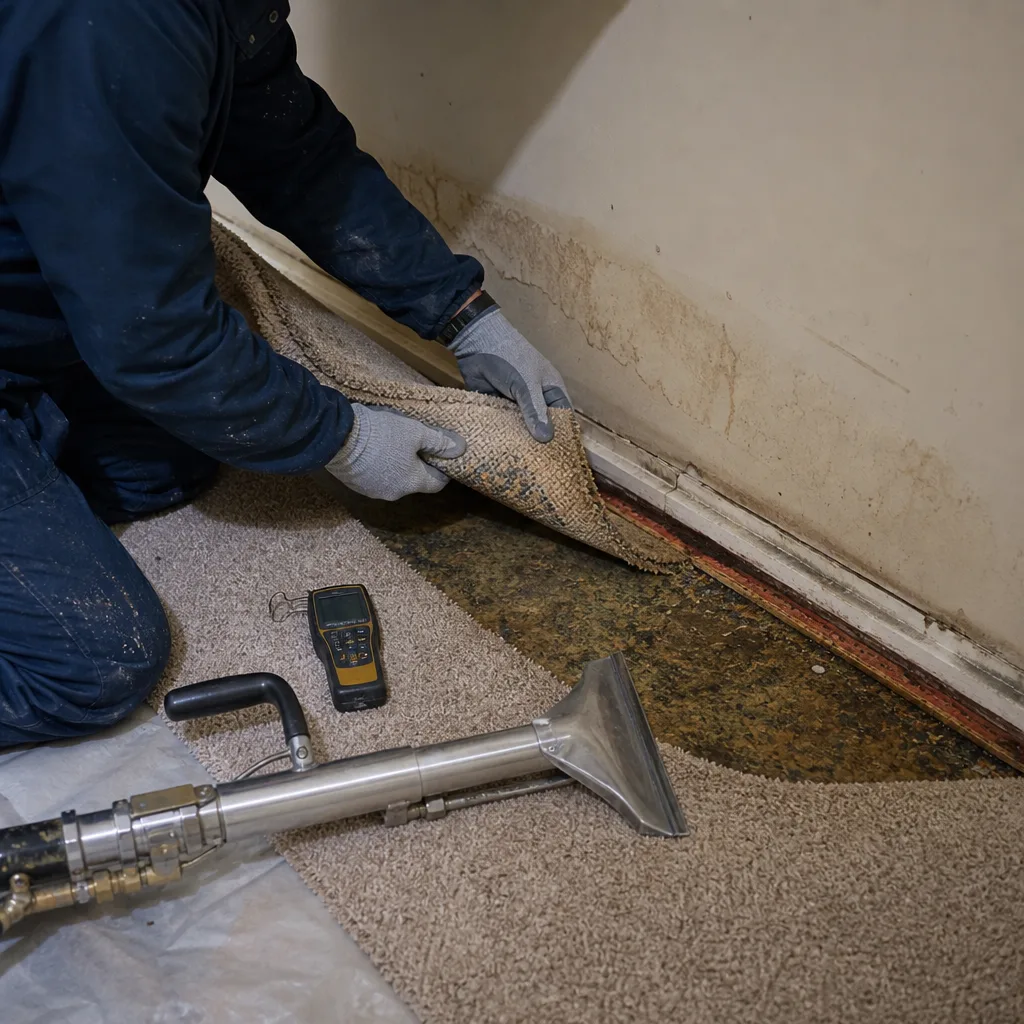
The phrase gets attention, and for good reason. Black mold, often Stachybotrys or Aspergillus species, thrives in the chronically damp, dark cavities Brooklyn Park homes create. The 1970s knee-wall assembly on a split-level is a textbook environment: trapped heat, condensation, settled cellulose dust, and zero airflow. When we find black mold there, we do not treat it with a spray and call it done. We open the cavity, remove the saturated insulation, HEPA-vacuum the framing, treat with an EPA-registered antimicrobial, and only then rebuild the assembly so the condensation path is broken.
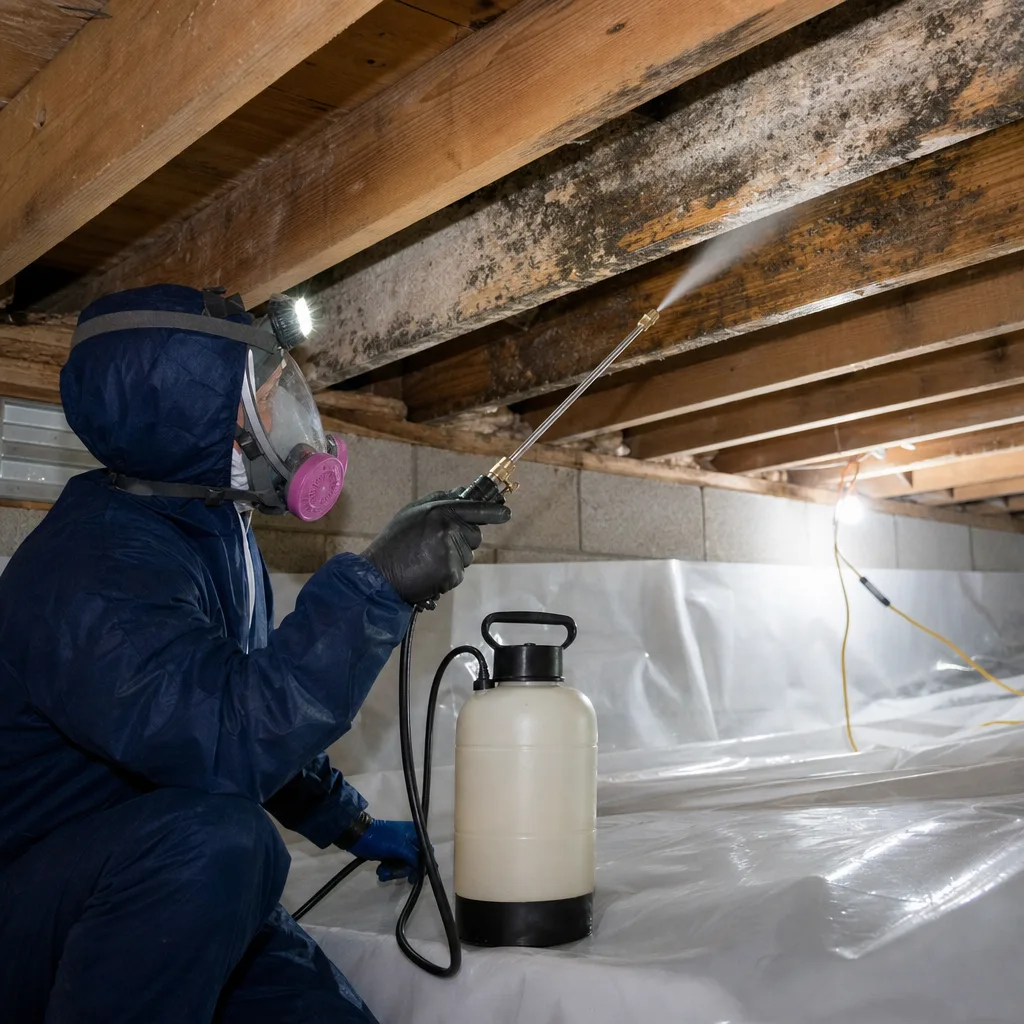
Crawl spaces in Brooklyn Park ramblers are another black mold hotspot. Warm indoor air meets cold foundation walls in a confined dirt-floor space, and dew point condensation produces standing moisture on framing. We address the source with vapor barriers, drainage corrections, and humidity control, not just surface treatment.
Air Quality Restoration
After physical remediation, the air in a Brooklyn Park home can still carry elevated spore counts for days. We run professional-grade HEPA air scrubbers during and after the work, sized for the home’s square footage and duct layout. Post-remediation clearance testing confirms spore counts have returned to baseline before we remove containment. If your home has a forced-air system, we inspect the duct interiors and recommend cleaning where mold has entered the return plenum. This matters in Brooklyn Park concrete-slab ramblers, where ductwork runs through unconditioned space and collects the same humidity that feeds wall mold.
What happens when you call
- 1
A real person answersNo phone trees - you reach a local pro.
- 2
You get an upfront price rangeHonest numbers before anyone is dispatched.
- 3
A background-checked tech heads outLicensed & insured, dispatched right away.
- 4
You approve before work beginsNothing starts until you say go.
Trusted Brands We Service in Brooklyn Park
We service and deploy equipment from the brands restoration professionals actually run: Dri-Eaz, XPOWER, and Injectidry among them. For Brooklyn Park homeowners, that means the air scrubbers running in your living room are the same machines used on commercial loss sites, not rental-store hardware. We keep replacement filters, HEPA bags, and antimicrobial supplies stocked in our local vehicles, which means a Brooklyn Park job does not wait on a parts order from out of state. When you call us for moisture and humidity control, the dehumidifier that lands in your basement is a low-grain refrigerant unit, not a hardware store console model.
Common Mold Remediation Problems We See in Brooklyn Park Homes
- Re-moisturization from the same ice-dam source. A crew removes surface mold but leaves the under-insulated garage knee wall untouched. The cavity regrows mold the next winter because the condensation path was never interrupted. We always trace the moisture before we demo anything.
- Missing the garage-ceiling cavity. Hidden mold behind the finished ceiling of 1970s split-levels goes undetected because inspectors only sample living-space air, not the attached garage assembly. Our inspection protocol includes cavity sampling in garage zones on every split-level in Brooklyn Park.
- Treating below-grade walls without solving exterior hydrostatic pressure. Aging drain tile in 40-50-year-old basements keeps feeding moisture behind new interior vapor barriers. Mold returns behind the finish because the water was never stopped at the foundation. We address exterior drainage and interior drying together.
- Surface-only treatment in crawl spaces. Brooklyn Park ramblers with dirt-floor crawl spaces get sprayed with an antimicrobial but never get vapor barriers or drainage corrections. The moisture remains, and mold recolonizes within months. Our crawl space treatment starts with the moisture source.
Pricing for Mold Remediation in Brooklyn Park, MN
| Service | Typical Brooklyn Park Range |
|---|---|
| Mold Inspection & Testing | $350-$650 |
| Mold Removal (single room, contained) | $1,500-$3,200 |
| Black Mold Remediation (cavity opened, treated, rebuilt) | $2,800-$5,500 |
| Air Quality Restoration (HEPA scrubbing + clearance testing) | $800-$1,900 |
| Crawl Space Treatment (vapor barrier + drainage correction) | $2,500-$6,000 |
| Moisture & Humidity Control (dehumidifier install + duct assessment) | $1,200-$3,400 |
These are real ranges for Brooklyn Park’s housing stock. A contained single-room removal in a 1970s split-level usually lands in the $1,800-$2,600 zone. A black mold cavity job that requires opening a knee wall, removing saturated insulation, treating framing, and rebuilding the assembly typically runs $3,200-$4,500. What moves the number: the size of the affected area, whether ductwork needs cleaning, and whether the moisture source requires structural correction like adding insulation baffles or sealing an assembly. We give a written scope before any work starts. Estimates are free. Call (888) 861-1852.
We Also Serve Cities Near Brooklyn Park
Our crews cover the northwest metro daily. If you’re in Brooklyn Park, Coon Rapids, West Coon Rapids, Brooklyn Center, or Champlin, the same certified team that handles mold in Brooklyn Park’s split-levels will handle yours. Dispatch is coordinated from the Minneapolis-St Paul office, and crews reach any of these cities within the same response window. Call (888) 861-1852 and a live dispatcher routes the nearest available technician to you.
Serving Brooklyn Park, MN - Our Local Coverage Area
We’re based in the Brooklyn Park area and know this community well. Use the map below to see our service coverage - if you’re nearby, we can almost certainly help.
FAQs - Mold Remediation in Brooklyn Park
The mold returns because the moisture source was never eliminated. In Brooklyn Park’s 1970s split-levels, the ceiling above the attached garage is chronically under-insulated. Heat bleeds through that assembly, melts roof snow, and the resulting water drives into the cavity every winter. If a previous contractor removed the surface mold but left the knee-wall insulation and air-sealing untouched, the same condensation path re-forms mold the next season. We trace the moisture source, correct the insulation and ventilation, and only then treat the mold. Call (888) 861-1852 for a full assessment.
Water stains are typically brown or copper-colored, with defined edges and no fuzzy texture. Mold growth appears as black, green, or gray spots that may spread in circular patterns and often carry a musty odor. In Brooklyn Park’s attached-garage split-levels, the two are usually connected: a water stain from ice-dam leakage feeds mold growth over weeks. We sample the cavity and the air to confirm what’s growing, then give you a written finding. If you’re unsure, call (888) 861-1852 and we’ll send a tech to inspect it.
Yes. Brooklyn Park sits in the northwest Twin Cities metro, where spring snowmelt delivers hydrostatic pressure to already-stressed drain tile systems. Water does not need to pool on the floor to feed mold. It moves through foundation cracks, wicks up through the slab, and saturates the bottom plate of framed walls. By the time you see staining on the baseboard, the wall cavity behind it has likely been humid for weeks. We inspect below-grade walls with moisture meters and address exterior drainage so the mold does not return behind new finish work.
The difference is where it lives and why it grows. In a 1970s rambler, the knee wall is a short vertical wall along the roofline, often adjacent to attic space. Heat from the living area leaks through the under-insulated wall, meets cold attic air, and produces condensation on the back side of the drywall. That dark, low-airflow cavity is exactly where black mold colonies establish. The growth is often invisible from the living space and only discovered when staining appears or air testing flags elevated spore counts. Treating it correctly means opening the cavity, removing saturated material, treating framing, and air-sealing the assembly so the condensation stops.
Yes, and in Brooklyn Park’s split-levels it happens through shared ductwork and open stairwells. Mold releases spores that move through the air. If a HEPA scrubber is not running during demolition, opening a mold-contaminated cavity releases those spores into the home. They can settle in ductwork, behind furniture, and in upper bedrooms. That’s why we use containment and negative air pressure during every removal, and why we inspect the duct system when mold is found near a return register. A contained single-room fix done correctly stops the spread. A room sprayed without containment makes it worse. Get the scope in writing before anyone opens a wall. Call (888) 861-1852.
Written by Curt Bowman, Owner at Floodline Restoration Co., serving Brooklyn Park and the northwest Twin Cities metro since 2010.
If you’ve got mold in a Brooklyn Park home, do not wait for it to spread through the ductwork. Call (888) 861-1852 for a free estimate. A live person answers, and we’ll be there when we say. Done right, and backed in writing.